
The complete guide
How to Choose a Silk Sleep Mask That Actually Blocks the Light
The problem with most sleep masks
Most people buy a sleep mask, wear it twice, and quietly stop. The reasons are always the same. It slides off during the night. The elastic digs in behind the ears. Or, most often, light still gets in along the bottom edge and the whole exercise feels pointless.
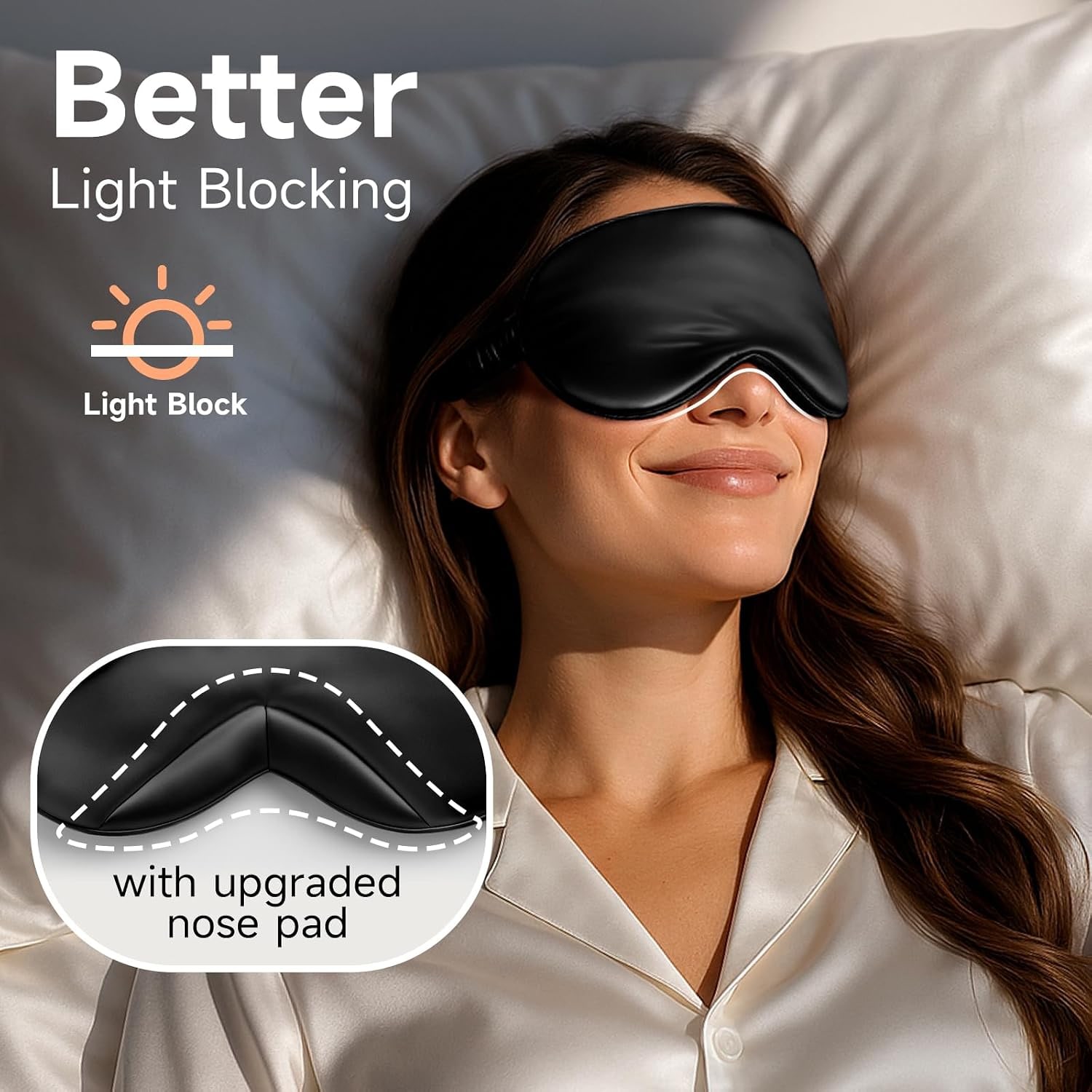
That last one is worth sitting with for a second, because it is the failure that people misdiagnose. They assume the fabric is too thin. Usually the fabric is fine. The gap is the problem. A flat piece of cloth stretched across a face has to bridge the nose, and a nose is a triangular obstacle in the middle of an otherwise flat plane. The mask tents over it. Two small openings form on either side, angled downward, pointing straight at whatever light source is in the room. Streetlight, phone charger LED, morning sun through a curtain edge. It all funnels up through those two gaps and lands on the eyelids.
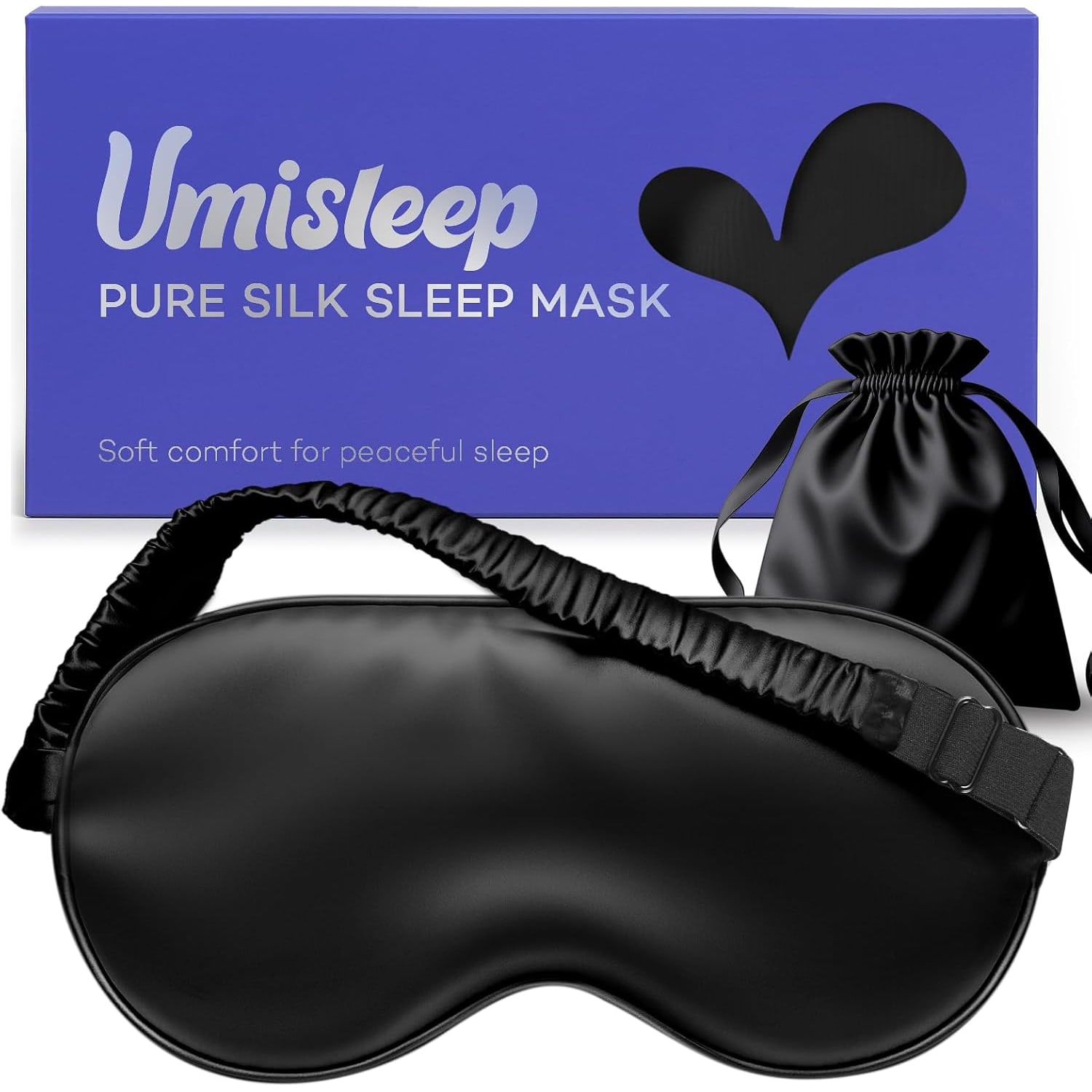
A black 22 momme silk sleep mask with a padded nose section is built to close that gap. The padding sits along the bridge and follows the slope of the nose, so instead of tenting, the lower edge of the mask rests against skin. It is a small change in shape that makes a large difference in how dark the inside of the mask actually is.
What momme means and why 22 is a useful number
Silk is measured in momme rather than thread count. The number refers to how much a fixed area of the fabric weighs, so a higher momme means a denser, heavier silk. For reference, light silk scarves sit around 12 to 16 momme. Good pillowcases tend to land between 19 and 25.
At 22 momme, this mask is at the heavier end of what is practical for something you wear on your face. You notice it immediately when you pick it up. There is body to the fabric. It does not flutter or cling. When you lay it over your eyes it drapes into the shape of the eye socket and stays there rather than flattening down onto the lashes.
Lighter silks have their place, but on a sleep mask they tend to feel insubstantial, and thin silk also lets more light through the weave itself. Going much heavier than 22 starts to feel stiff, which works against the whole point of choosing silk. So 22 momme is a reasonable landing spot for a mask you plan to wear every night.
Why silk rather than cotton or foam
The three common materials for sleep masks are cotton, moulded foam and silk, and they behave differently.
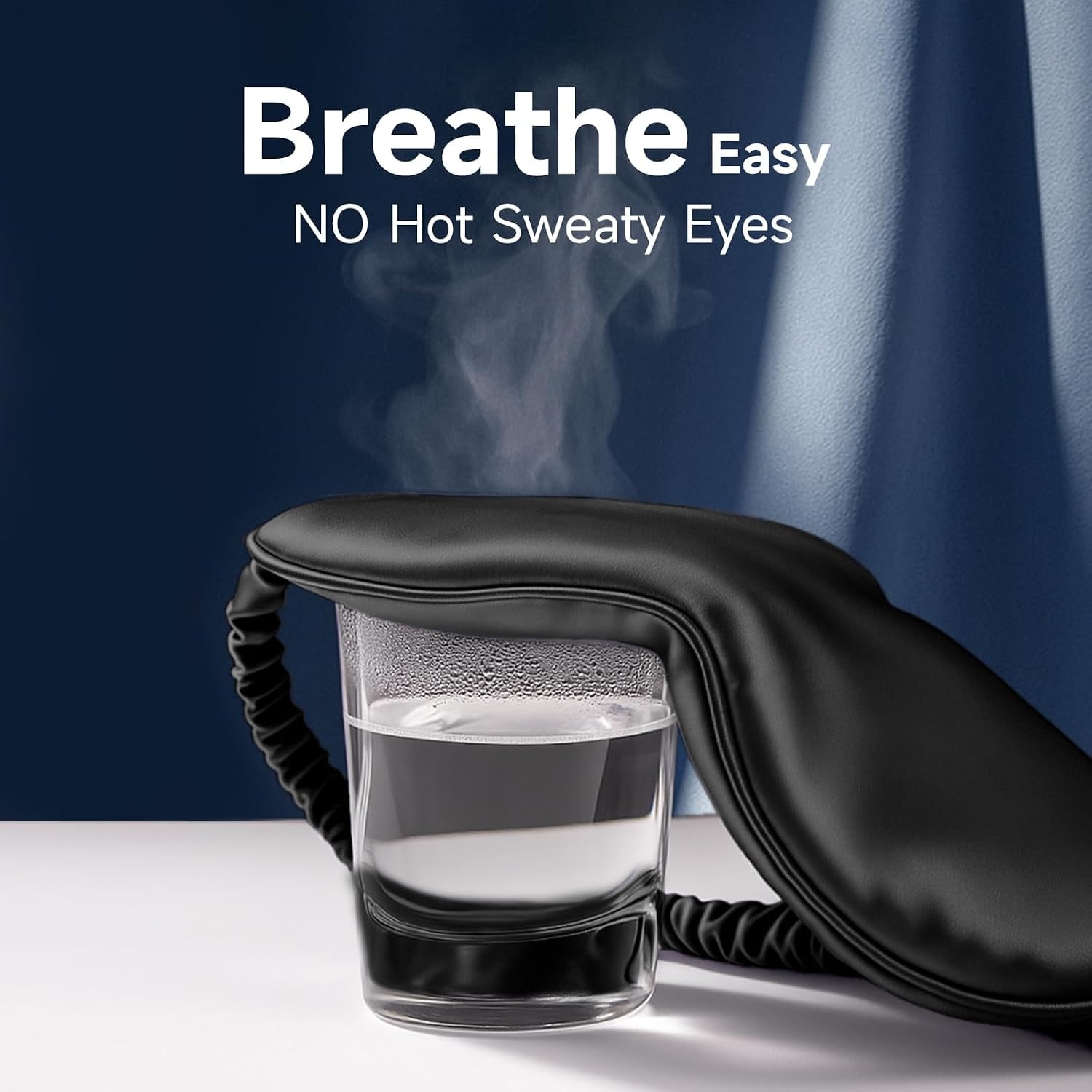
Cotton is cheap and washes easily, but woven cotton has a textured surface. Over seven or eight hours of small head movements, that texture drags against skin. Foam masks block light well because they are contoured, but they are warm, they do not breathe much, and they tend to press firmly around the eye area.
Silk fibres are long, smooth and even, so skin slides over the surface with far less friction than it does over cotton. Silk also has a cool initial feel, which many people prefer on the face. The trade-off is care. Silk wants a hand wash, not a machine cycle, and that is a genuine commitment you should be honest with yourself about before buying.
The strap matters more than people expect
Plenty of otherwise decent masks are ruined by their fastening. Thin elastic bites into the back of the head. Wide elastic without adjustment is either too loose or too tight with no middle ground. And all elastic eventually relaxes, so a mask that fit perfectly in March is sliding off by September.
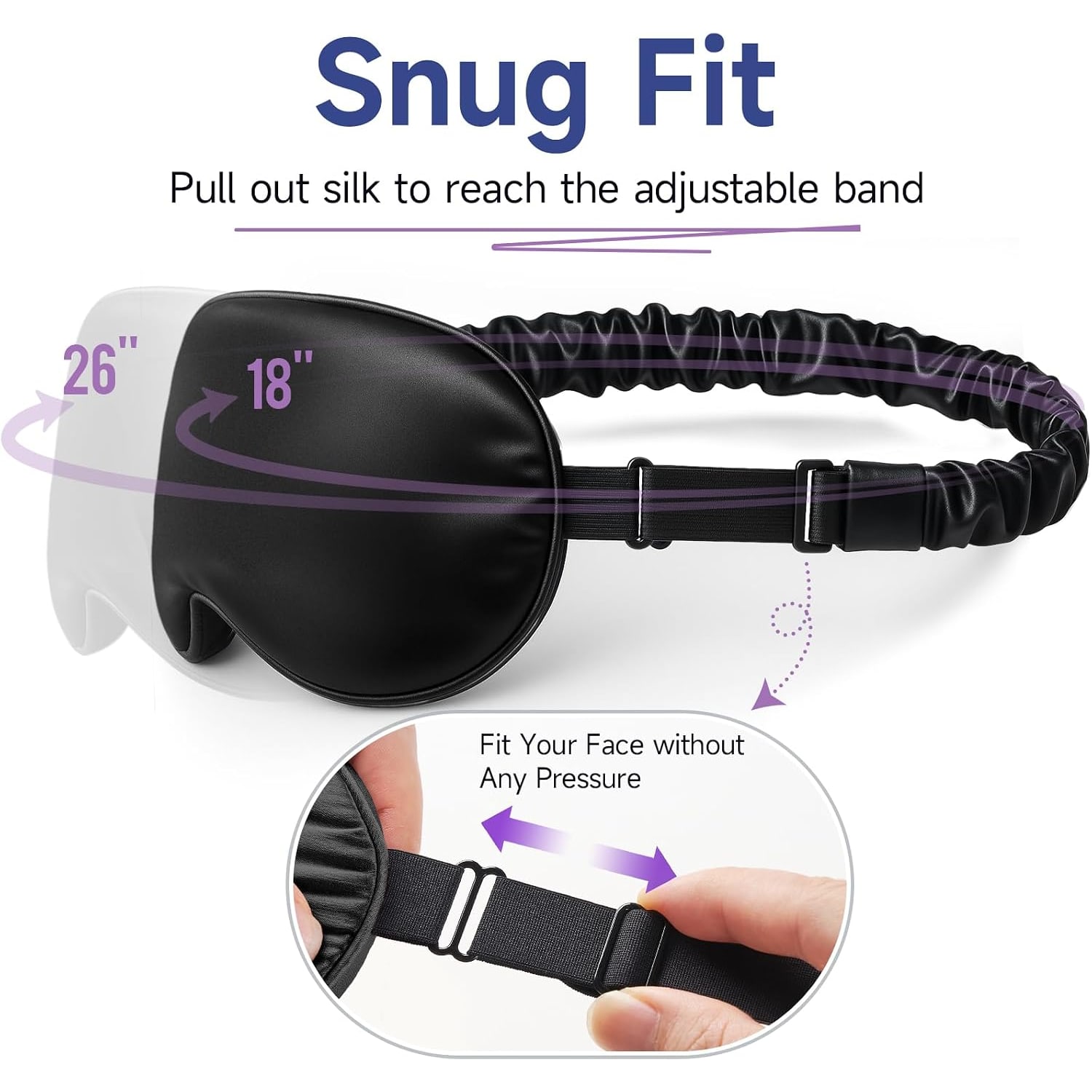
This mask uses a buckle strap with an adjustment range from 18 to 26 inches (46 to 66 cm). Two things follow from that. First, the range is wide enough to cover nearly every adult head and plenty of teenagers, so you are not gambling on sizing. Second, a buckle holds its setting mechanically. You find the tension that feels right, you fasten it, and it stays there. No nightly fiddling, no slow drift toward looseness.
A small practical tip. Side sleepers sometimes find a buckle sits awkwardly against the pillow. Rotating the strap so the buckle rests slightly off-centre, above or below the ear rather than squarely at the back of the head, usually solves it.
Who this suits
Light sleepers are the obvious group. If you wake at the first hint of dawn, a mask with a nose pad is a far better investment than another set of curtains.
Shift workers come next. Sleeping through daylight is the hardest test any mask faces, and the lower light gap is exactly where daytime brightness gets in. If you work nights, prioritize the nose pad over almost every other feature.
Travellers benefit too. A silk mask packs flat, weighs almost nothing and does not crease in a way that matters. On a plane or a train, where you are upright and your head moves, the buckle strap keeps things in place better than elastic that was designed for a flat pillow.
And then there are people who simply want a better texture against their face at night. Silk feels different. If you already sleep on a silk pillowcase, a matching mask is a natural extension.
How to choose between masks
A few things are worth checking whenever you compare options.
Look at the silk content first. "Silk" on a label can hide a blend, and a satin-weave polyester is a completely different material from mulberry silk even though it looks similar in a photo. This mask is stated as 100% mulberry silk.
Then check the momme weight. If a listing does not give one, that is usually because the number is low.
Then look at the nose area. If the photo shows a flat strip of fabric where the nose sits, expect light leakage. A padded or contoured nose section is the single most useful feature on a sleep mask.
Finally, check the strap range in actual numbers. "Adjustable" on its own tells you nothing. A stated range of 18 to 26 inches (46 to 66 cm) tells you whether it will fit.
Looking after it
Hand wash only. That is the instruction and it is worth following.
Fill a basin with cool water, add a small amount of detergent made for delicate fabrics, and swirl the mask through for a minute or two. Do not scrub and do not let it soak for an hour. Rinse in clean cool water until no suds remain.
Never wring silk. Twisting breaks fibres and leaves permanent creases. Instead, lay the mask flat on a clean towel, roll the towel up gently and press. Most of the water comes out that way. Then unroll it and leave the mask flat to finish drying, somewhere out of direct sun and away from a radiator.
Keep bleach well away. Skip the dryer entirely. If the mask needs a press, use the coolest iron setting, work from the reverse side and keep a cloth between the iron and the silk.
Washing about once a week suits most routines. More if you use rich night creams, less if you have a light skincare routine. There is no benefit to washing silk more than it needs.
The short version
The feature that decides whether a sleep mask works is the nose. Close that gap and the rest follows. This one has a padded nose section, which handles the main light leak, and a buckle strap adjustable from 18 to 26 inches (46 to 66 cm), which handles fit and keeps handling it as months pass.
The material is 100% mulberry silk at 22 momme, so it is dense enough to feel like a proper piece of fabric and smooth enough to be pleasant against the face for a full night. The colour is plain black, which is practical for travel and forgiving of ordinary marks.
The one commitment it asks for is a hand wash. If you are fine with that, it should last a very long time.