
The complete guide
How to Choose a Long Silk Scarf That You Will Actually Wear
The scarf problem nobody talks about
Most people own several scarves and wear one. The rest sit in a drawer because they are the wrong size for real life. The little square is too small to keep you warm and too fiddly to tie. The chunky knitted one is warm, but it only comes out for six weeks a year and it will not fit in a handbag. The pretty printed one is polyester, so it traps heat and clings to everything.
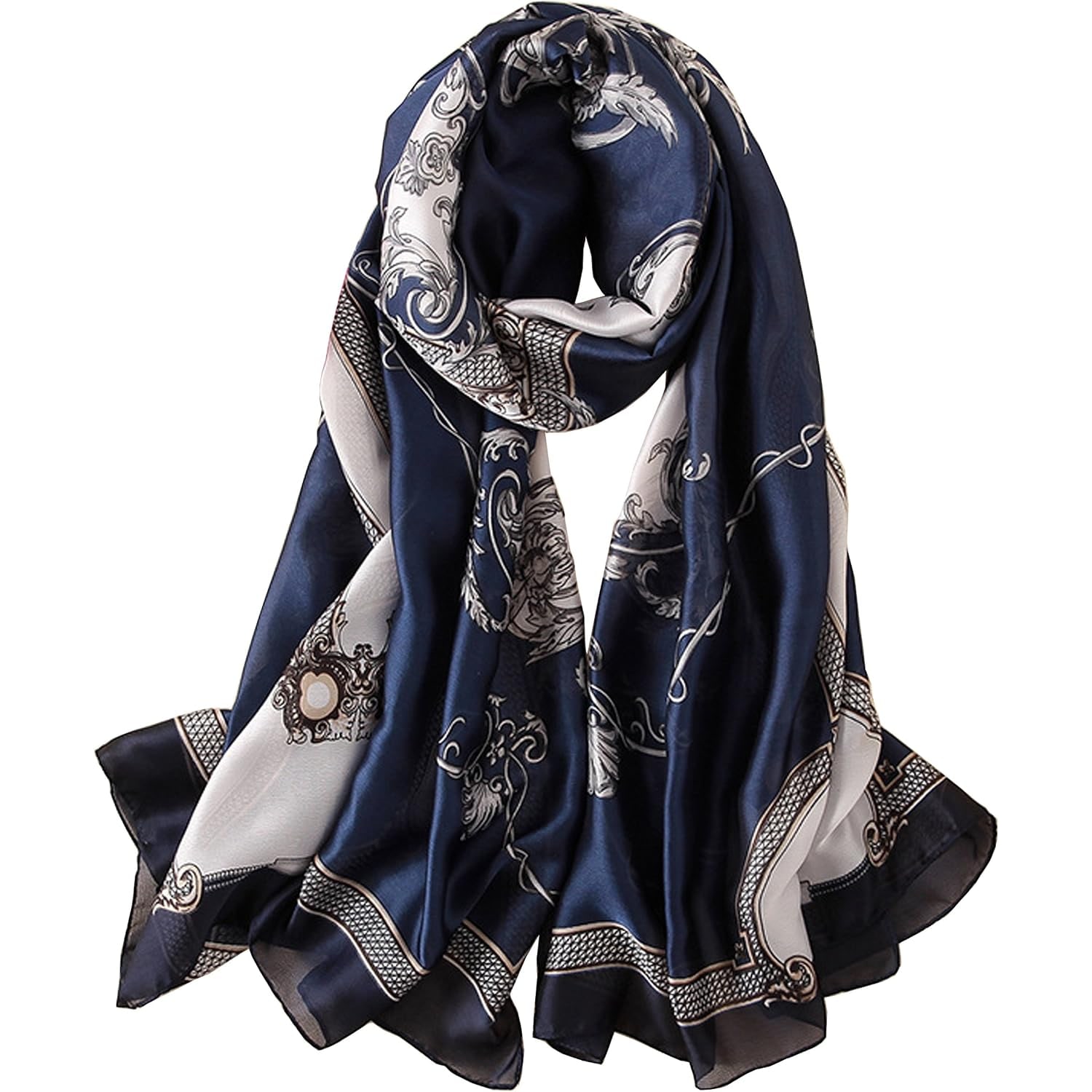
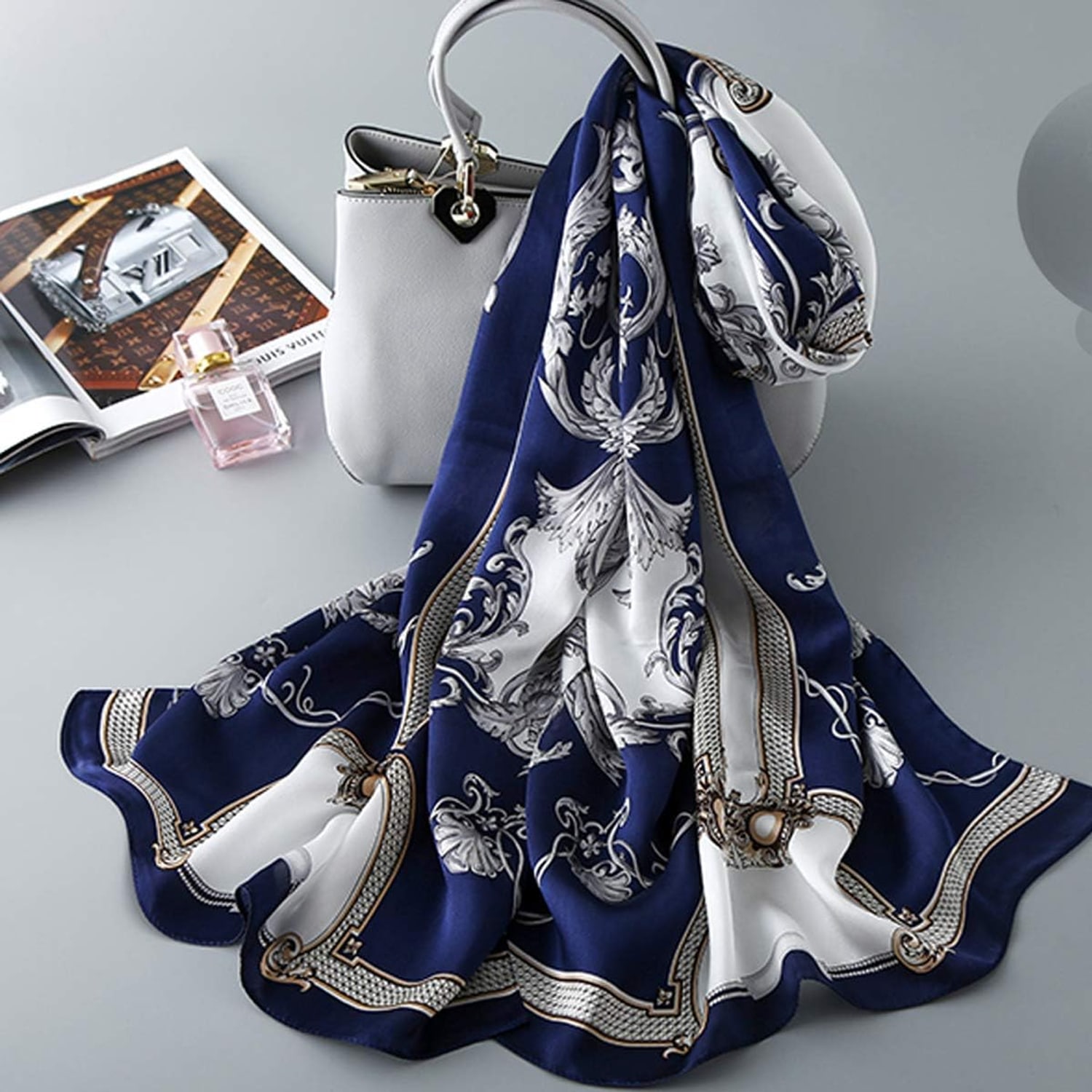
What tends to survive in rotation is a long, light, smooth scarf in a generous size. Big enough to do more than one job, light enough that carrying it costs you nothing. That is the gap a long lightweight mulberry silk scarf fills, and at 70 x 35 inches (180 x 90 cm), this one is cut for exactly that.
Why the dimensions matter more than the pattern
Scarf shopping usually starts with the print and ends in disappointment. The measurement is what decides how it behaves.
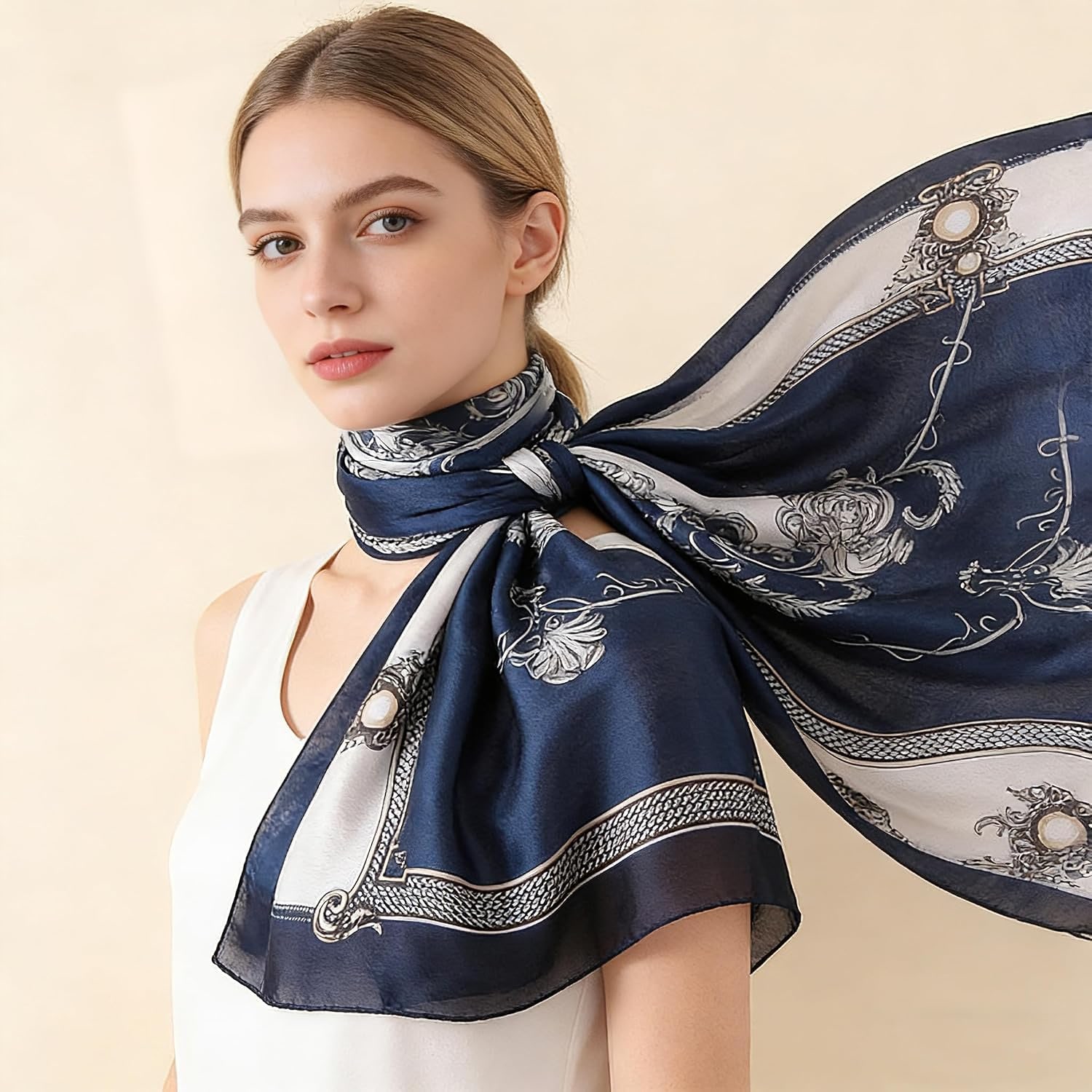
Around 60 inches long is a neck scarf. You can loop it once and tie it. Anything shorter and you are limited to a flat drape or a single knot. Once you get past 70 inches you have enough fabric to wrap the neck twice and still have tails, which is the look most people are actually after when they picture a silk scarf.
Width does the other half of the work. A narrow scarf, say 12 to 20 inches, will never sit on your shoulders properly. At 35 inches you have something that covers both shoulders and the upper arms. That is the point where it stops being a scarf and becomes a large silk shawl wrap, and it is why one piece can go from a train platform to a dinner table without changing character.
The practical test: hold a scarf you already own against a tape measure. If it is under 65 inches long or under 28 inches wide, it will not drape as a wrap, no matter how lovely the fabric is.
What mulberry silk actually does
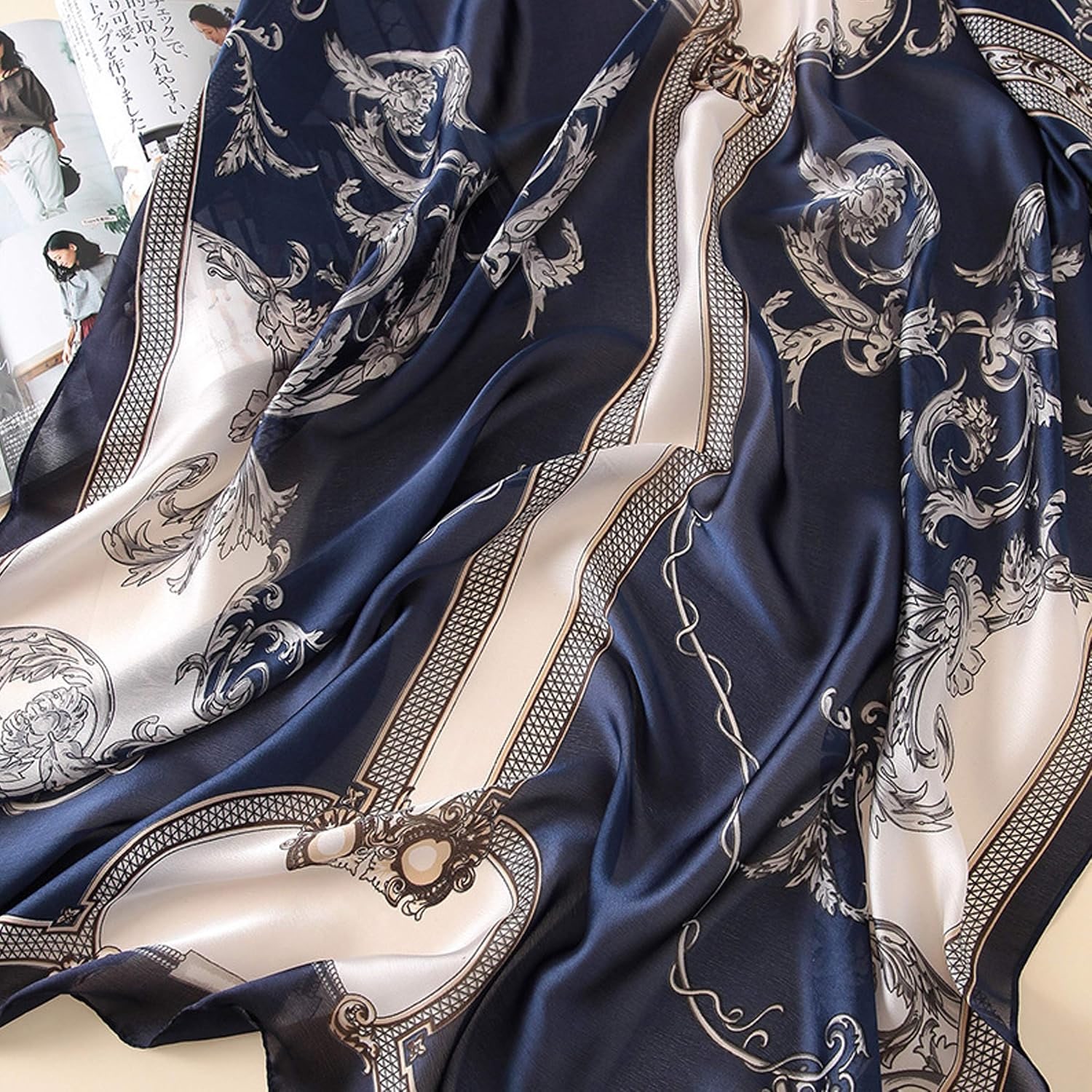
Mulberry silk comes from silkworms raised on a single diet, which produces a long, even filament. Long filaments mean a smoother yarn and a smoother finished fabric with fewer short fibre ends sticking up. In the hand, that reads as a cool, slippery surface that catches the light.
Two things follow from that smoothness. First, it slides over clothing and hair instead of gripping, so it does not pull threads on knitwear or leave fluff on a dark coat. Second, it is comfortable directly against the neck, which matters if you find wool itchy.
Silk is also strong for its weight. A scarf this large is still light enough that you forget it is in your bag. That combination, big surface area and almost no weight, is hard to get in any other fibre. Wool at this size is heavy. Cotton at this size is bulky. A lightweight silk scarf gives you coverage without the carrying cost.
Momme weight, the number used to describe how heavy a silk fabric is, is not stated for this scarf. The listed thickness of about 0.1 inches puts it in lightweight territory, which is what you want in a wrap this large. A heavier silk at 70 x 35 inches would feel like a curtain.
The ways people actually wear it
Worth being specific here, because "versatile" on its own means nothing.
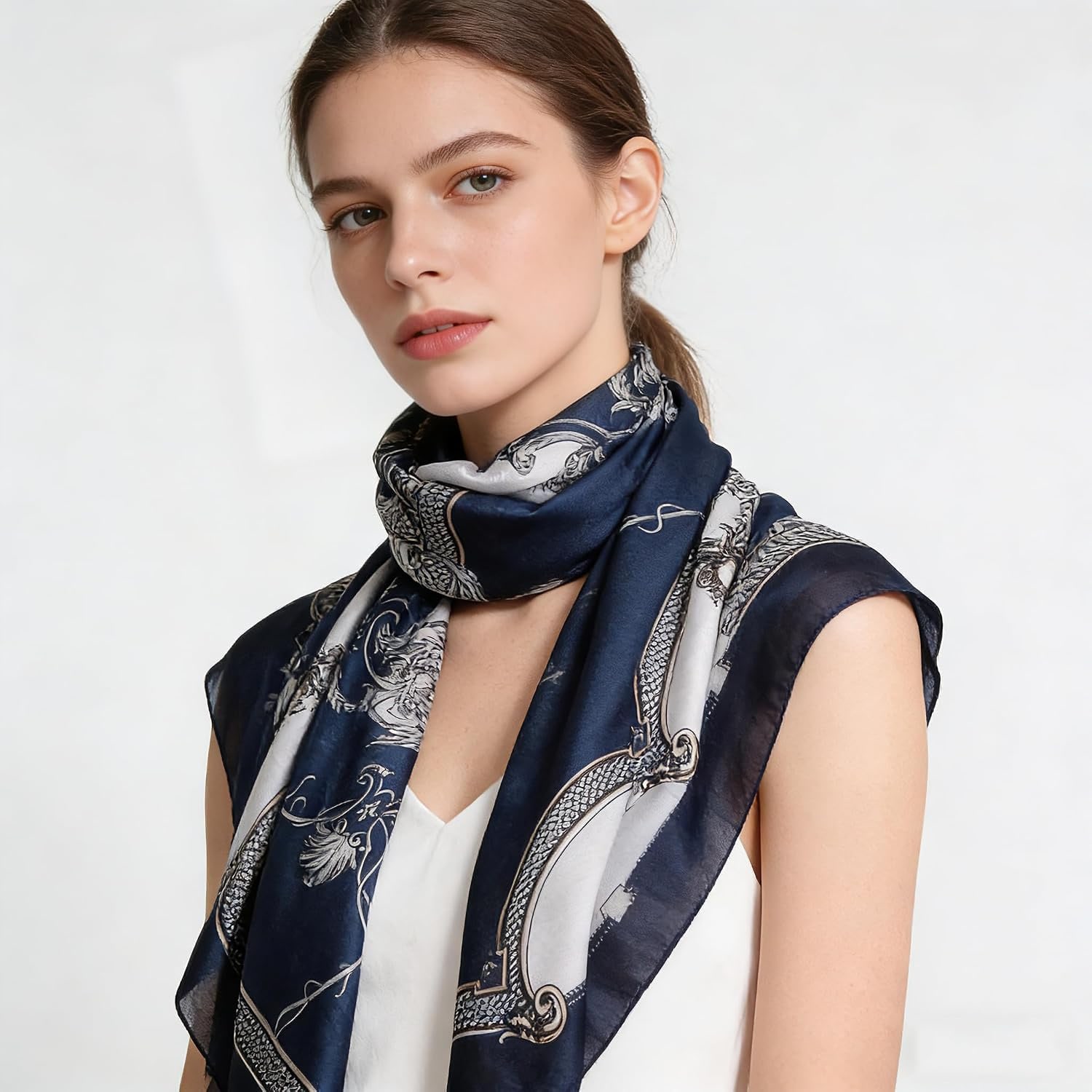
Around the neck, the simplest version is the loop. Fold the scarf in half lengthwise, drape it round the neck, pull the loose ends through the folded loop and tug. Takes two seconds, holds all day, sits flat under a coat collar.
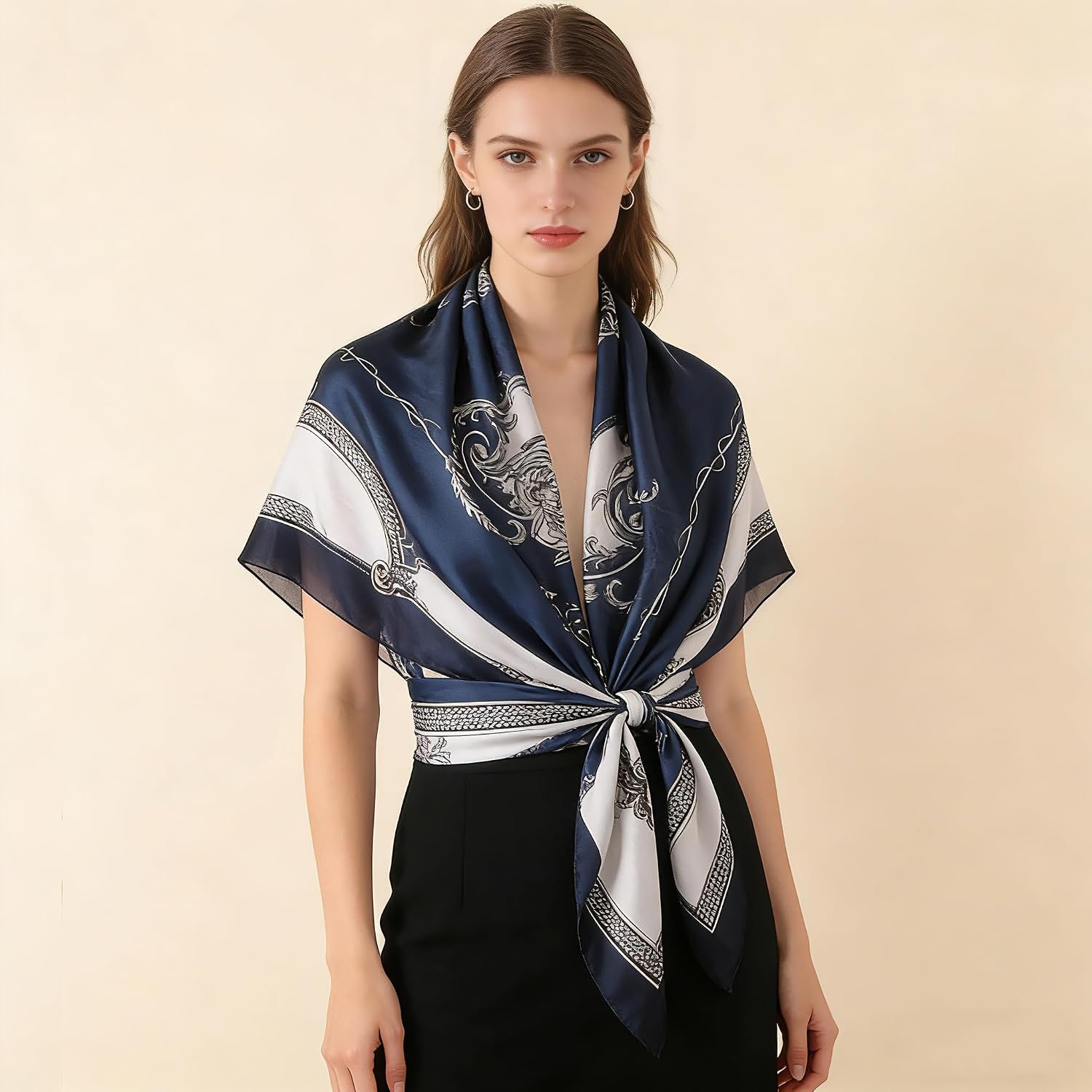
Over the shoulders, open it out flat and let it hang evenly at the front. Over a sleeveless dress this is an evening wrap. If it slides, give the two front panels a single loose knot at chest height, or twist them once behind your back and bring them forward.
As a head covering, fold it into a wide triangle, place the long edge across your forehead and tie the two corners at the nape, tucking the point under. The length here is a real advantage. A small square leaves you with stubby ends that will not tie. This is what makes it one of the better choices if you want the best silk head wrap for sun, wind or a place where covered heads are the norm.
Over swimwear, fold it lengthwise into a band, wrap it round your hips and knot at one side. The silk dries fast and does not hold sand the way towelling does.
On a plane, it goes across the shoulders and chest like a thin blanket. Cabin air conditioning is predictably cold, and a packable silk wrap deals with it better than asking for a blanket.
Who it suits, and who should look elsewhere
This suits anyone who wants one accessory to cover a lot of ground. Travellers get the most from it, because it costs almost nothing in luggage space and solves cold planes, strong sun and dress codes all at once. It also suits people who dress plainly and want one good piece that lifts an outfit, and people who run warm and cannot cope with wool at the neck.
It is less suited to deep winter as a standalone. If you want something to handle a cold snap, a wool or cashmere scarf is the right tool and this becomes the layer you wear underneath. It is also not the easy-care option. Hand wash only is a real constraint, so if you want to throw everything in a machine, choose a cotton or a washable blend instead.
Children are another one to think about. Long loose fabric around a small child is a hazard, so keep scarves of this size for adults and older kids who can manage them.
Choosing a colour you will wear
A quick rule that works for most people. Pick the colour family you already wear on your top half, then go one step brighter. If your coats and knits are navy, grey and black, a mid-tone rather than another dark neutral gives you contrast at the neck where people look. If you wear a lot of colour already, a neutral silk calms it down.
Patterns are easier than they look in silk, because the fabric folds and twists so the print breaks up rather than sitting as a flat block. A print that feels bold on the hanger usually reads as texture once tied.
Looking after it
Silk rewards a bit of attention and punishes neglect, but the routine is short.
Hand wash in cool water with a detergent made for delicates. Swirl the scarf through the water, do not rub or scrub, and keep the whole thing under two or three minutes. Rinse in cool water until it runs clear.
Never wring it. Lay the scarf flat on a clean towel, roll the towel up with the scarf inside and press gently. Then dry it flat or hang it somewhere shaded with air moving. Direct sun fades dye and heat makes silk brittle, so keep it away from radiators and dryers.
If it needs pressing, use the lowest silk setting, iron on the reverse and work while the scarf is still slightly damp. A thin cotton cloth between the iron and the silk is cheap insurance.
Two habits that make a big difference. Let perfume and hairspray dry fully before the scarf touches your neck, since alcohol marks silk. And store it folded loosely in a drawer or rolled, not stretched over a thin hanger, which leaves a line across the middle.
Getting value out of it
Cost per wear is the honest measure with accessories. A scarf that handles three seasons, several occasions and travel will be worn dozens of times a year. One that only works with a particular coat gets worn five times. Size and fibre are what decide which camp a scarf falls into, which is why the measurement on this one is worth paying attention to.
If you already own a short silk square, this is not the same purchase. The square is a styling detail. A long silk scarf for women or men at this scale is a functional layer that happens to look good.
The short version
Seventy by thirty-five inches is the size where a scarf becomes genuinely useful. Mulberry silk keeps it light and smooth so you will actually carry it. It loops at the neck, drapes as a shawl, ties as a head wrap and knots over swimwear, and it packs into nothing.
Hand wash only, dry flat, press cool. Do that and it gets softer with age rather than wearing out. If you want one accessory that earns its place in a bag all year, this is the shape to pick.