
The complete guide
How to Choose and Wear a Large Square Silk Scarf
The problem with most scarves people own
Open a drawer in most homes and you will find the same thing. A couple of thin polyester squares from a gift set, maybe a woollen winter one, and a small silk neckerchief that is too narrow to do anything except sit flat under a collar. None of them get worn much, because none of them are big enough to be interesting.
Size is the quiet reason a scarf either lives in rotation or lives in a drawer. A 20 inch square is a single trick. A 35 x 35 inch (90 x 90 cm) square is a different object. It covers a head of hair, it folds down into a slim band, it drapes across shoulders, and it still ties neatly at the neck when you want it small. One piece of fabric, several outcomes, which is why the large square has stayed the standard for serious scarf wearers for decades.
What mulberry silk actually does
Mulberry silk comes from silkworms raised on mulberry leaves. The point of that diet is the fibre it produces, which is long and even rather than short and broken. Long fibres spin into smoother yarn, and smoother yarn weaves into fabric with that particular fluid fall silk is known for.
You notice it in three ways. The scarf has weight without bulk, so it hangs instead of sticking out. It holds a knot without going stiff or bulky at the throat. And it slides over hair and skin with much less friction than a cotton or polyester weave, which is a plain property of the fibre and nothing more mysterious than that.
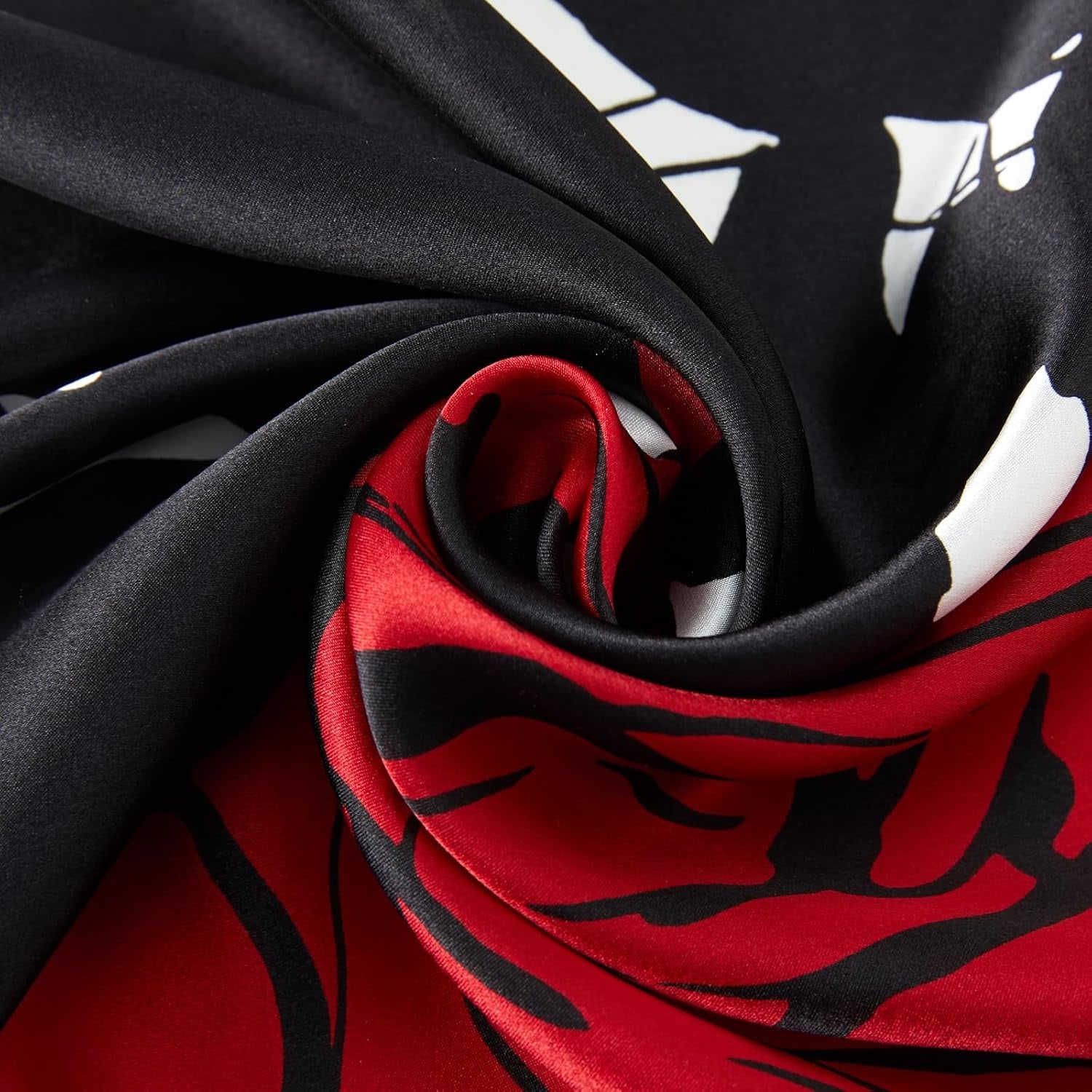
The other thing silk does well is take a print. Dyes sit bright on silk, and the surface has a soft sheen that makes colour look deeper than it would on a flat synthetic. That matters a lot with a design like this one, where red roses sit against black. On a cheap polyester square the red would read as flat and slightly plastic. On silk it reads as proper red.
Reading the print
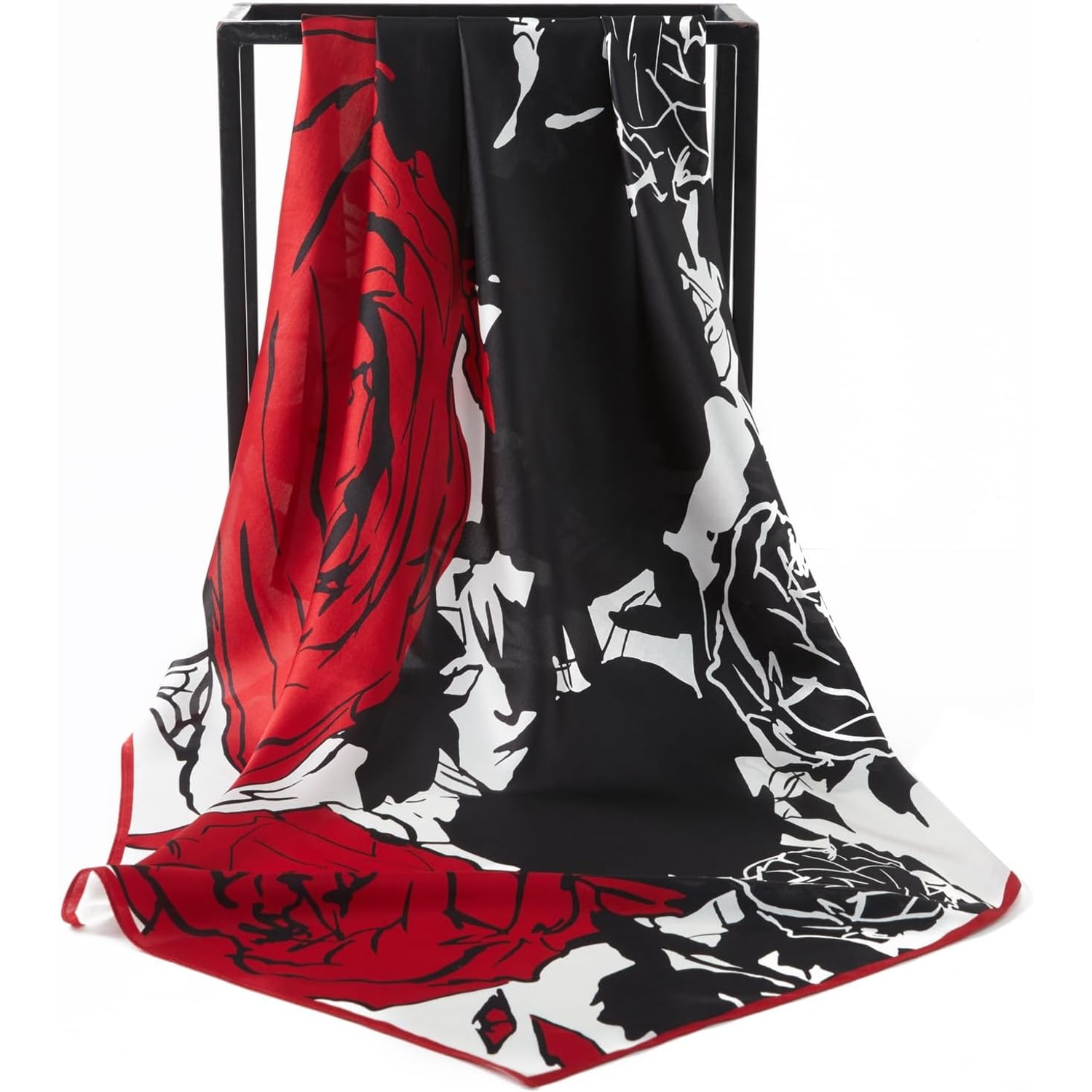
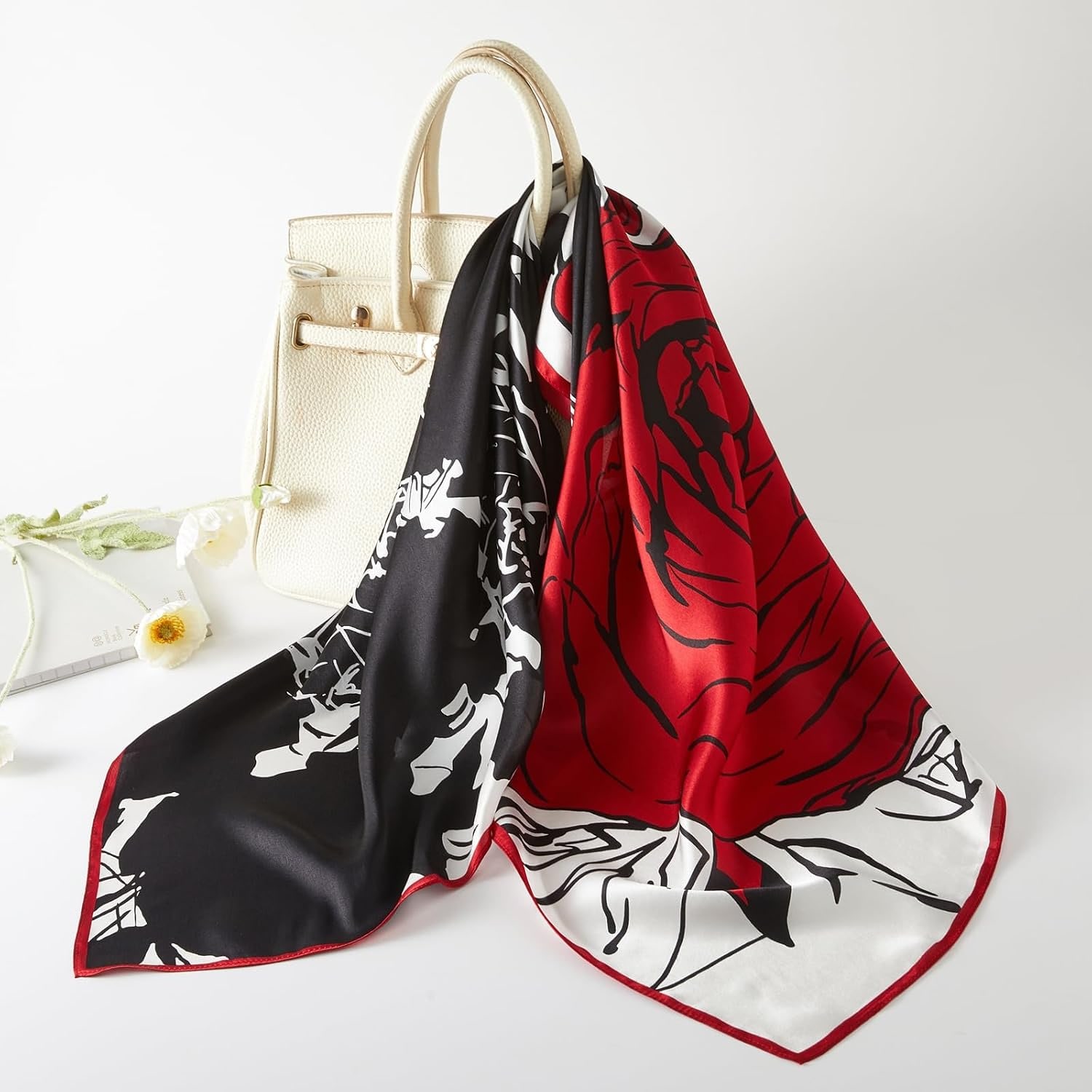
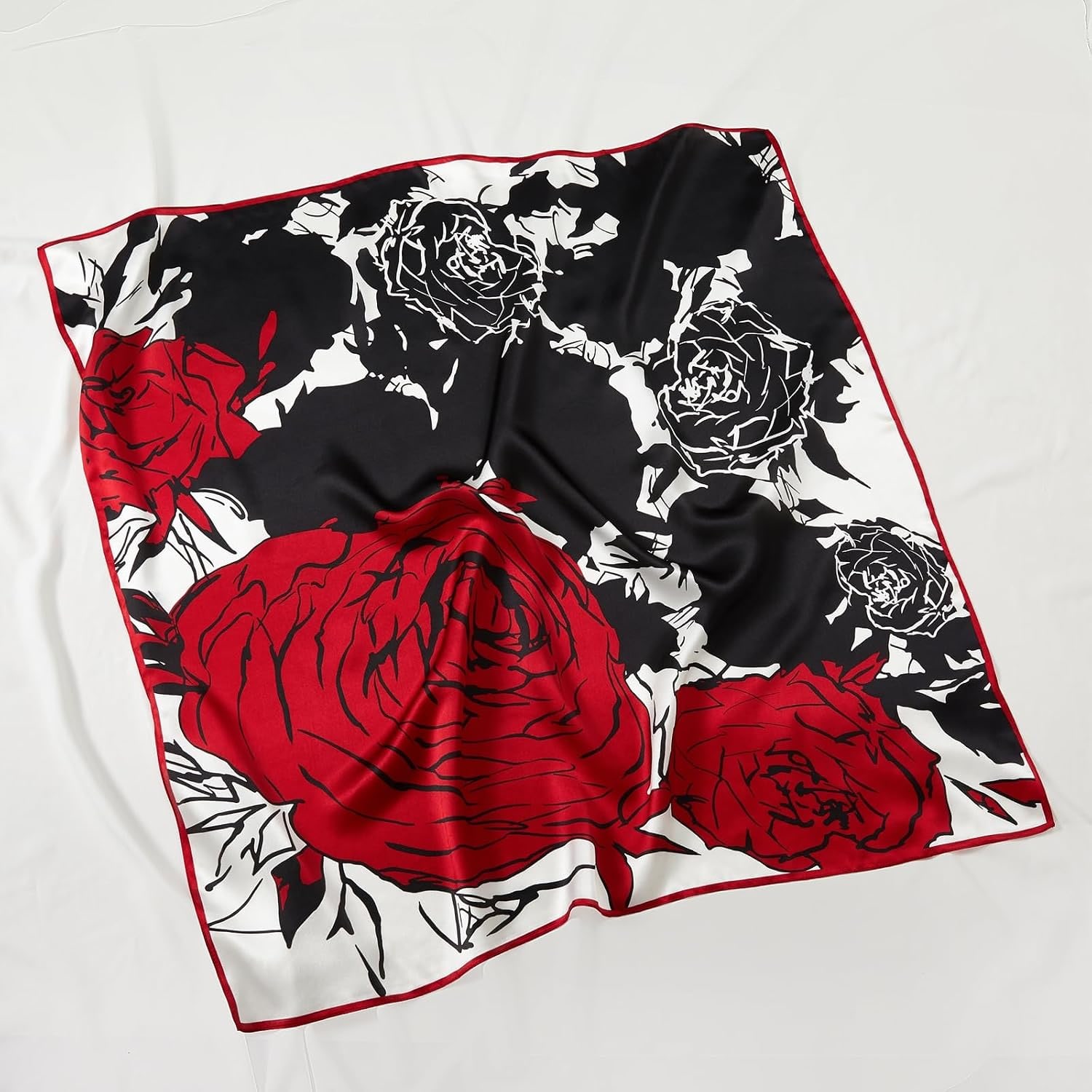
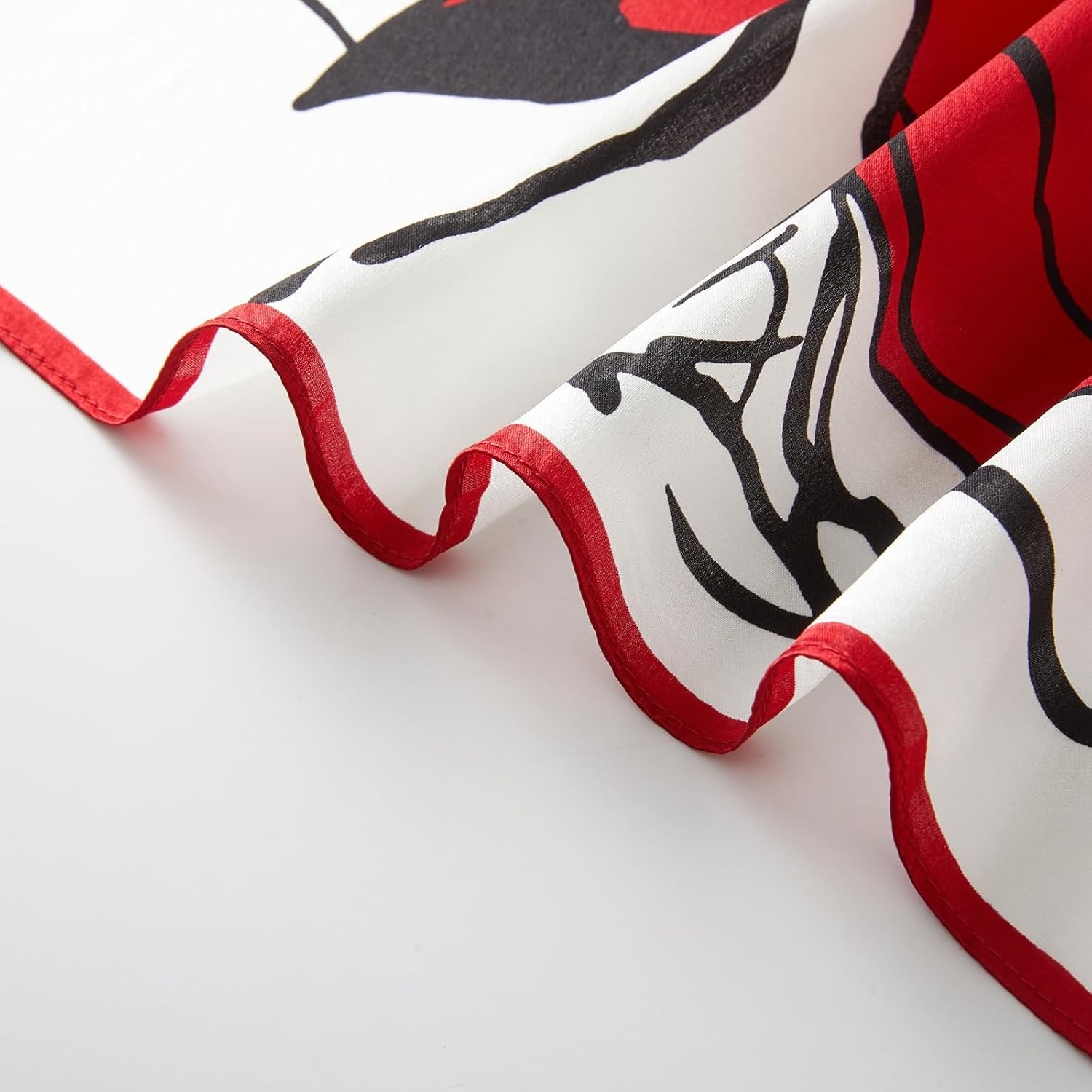
This scarf is printed with roses in red and black. The blooms are large, not scattered and tiny. That has a practical effect: a large scale print survives folding. When you roll a small ditsy floral into a band, the pattern disappears into a muddle. A big rose print still shows recognisable shapes even when most of the square is rolled away.
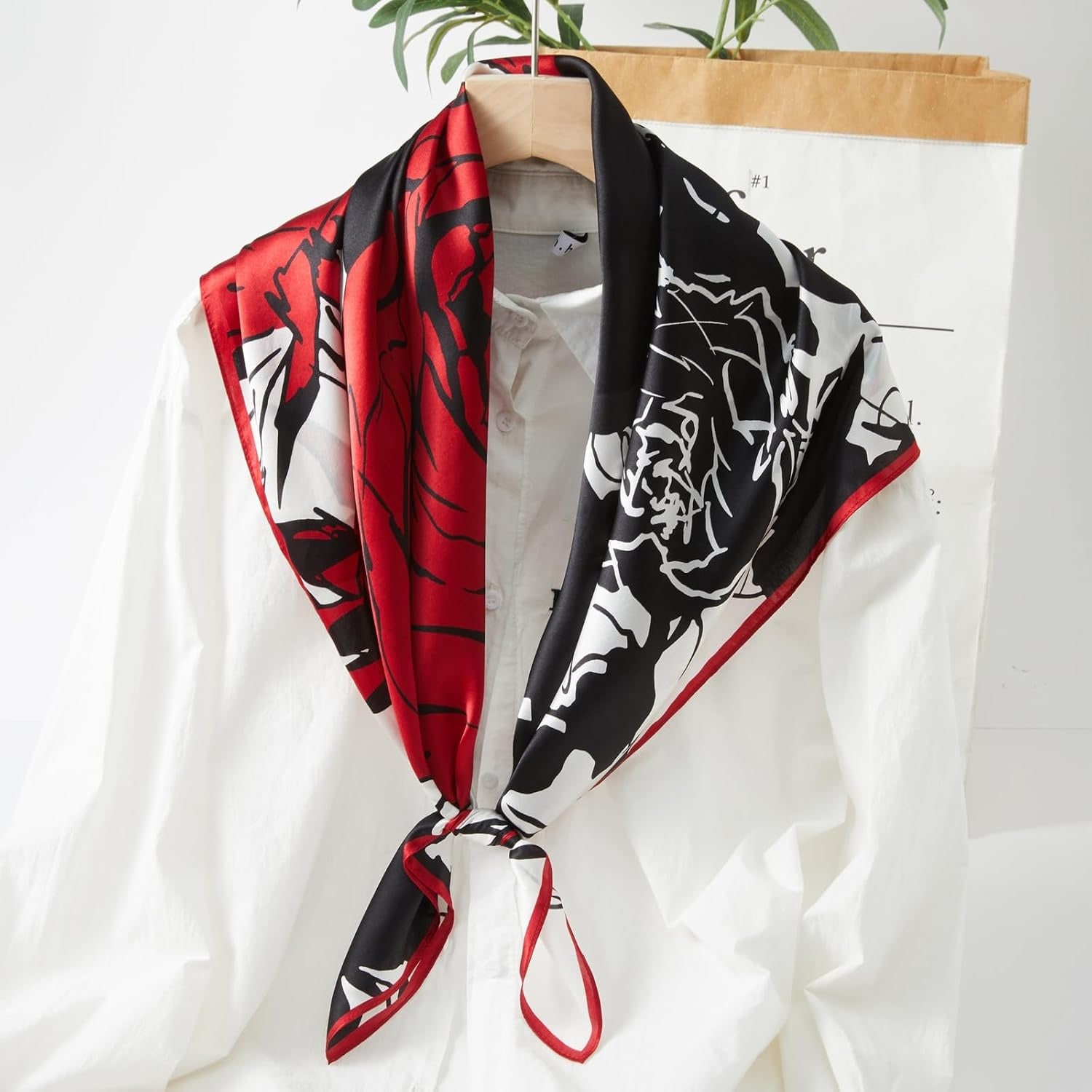
The red and black pairing is also one of the easier strong combinations to wear. Black ties it to anything black in your wardrobe. Red gives the lift. Against denim, against a grey coat, against a plain white shirt, it does the job without needing anything else to support it. If you tend to dress in neutrals and feel like something is missing, this is the kind of piece that fills the gap.
Who this size suits
A 35 inch square is the right call if you want a head covering. Anyone with long or thick hair knows the frustration of a small square that will not meet at the back. This one wraps properly, with enough left over to tuck and tie.
It also suits people who like to wear a scarf on the shoulders in the evening. Restaurants with aggressive air conditioning, outdoor tables after sunset, long flights. A silk square folded into a triangle is a light cover that packs into a handbag and comes out uncreased after a shake.
It suits anyone who wants variety out of one purchase. If you have ever bought three scarves because each only did one thing, a large square replaces the lot.
Where it is less ideal: if you only ever want a tiny neat knot at the throat and nothing else, a 35 inch square can feel like a lot of fabric to manage. In that case a smaller square is simpler. Be honest about how you will actually wear it.
Four ways to tie it
The head wrap. Fold corner to corner into a triangle. Lay the long edge across your forehead with the point hanging down the back. Bring both ends behind the head, cross them, and tie at the nape over the point. Tuck the point up under the knot for a clean finish, or leave it loose.
The bias band. Fold into a triangle, then roll the long edge toward the point until you have a narrow band. This is the version to wrap around a bun, thread through a ponytail base, use as a headband across the crown, or tie at the wrist.
The neck loop. Roll it on the bias as above, wrap once around the neck, and tie a small knot slightly off centre. Pull the knot to one side rather than leaving it dead front, which looks less staged.
The open drape. Fold once into a triangle and lay it across the shoulders with the point down the back. Either leave it loose or pin it at the front. This is the evening version.
One habit worth building: tie your knots twice. Silk is smooth and a single knot will quietly loosen over a few hours. A double knot pulled snug, or a knot plus a tuck, stays put.
Looking after it
Care here is simple but not optional. The scarf is hand wash only.
Use cool water and a mild detergent made for delicates, in a clean basin. Swirl the scarf through the water rather than rubbing or scrubbing. Rinse in cool water until it runs clear. Never wring or twist it, because that is what breaks the fibres and leaves permanent puckering along the twist line.
To dry, lay the scarf flat on a clean towel, roll the towel up with the scarf inside, and press gently to take out most of the water. Then unroll and dry flat, away from direct sun and away from radiators. Sunlight fades strong dyes faster than anything else.
If it creases in storage, a cool iron on the reverse side sorts it out. Use a thin cotton cloth between the iron and the silk if your iron runs hot, and skip the steam function. Hanging it in a steamy bathroom works too if you would rather not iron.
Two small habits protect it long term. Spray perfume and hairspray before the scarf goes on, not after, because alcohol marks silk. And store it flat or loosely rolled in a drawer rather than on a hook, which stretches one corner over time.
Choosing between silk and the cheaper option
It is fair to ask why not just buy a polyester square with a similar print. The honest answer is that they look similar in a photograph and nothing alike in person. Polyester holds a stiffer shape, the sheen is harder and more reflective, and knots sit bulkier at the throat. It also tends to slide off hair rather than staying put, because it is slippery in a different way.
Silk costs more and asks for hand washing. In exchange you get drape, a softer shine, better colour, and a piece that still looks good in five years if you treat it properly. For something you wear against the neck and over your hair, that trade is usually worth making.
The short version
This is a 35 x 35 inch (90 x 90 cm) square in 100% mulberry silk, printed with red and black roses. The size is the main reason to pick it, because it covers hair properly, rolls into a thin band, drapes on the shoulders and still works as a neck scarf. Mulberry silk gives it the drape and the slip that cheaper fabrics cannot copy. Hand wash it in cool water, dry it flat, keep it out of the sun, and it will stay in your rotation for a long time. If you want one scarf that does the work of several, a large square in real silk is the one to own.