
The complete guide
How to Choose and Wear a Small Square Silk Scarf
The problem with most scarves
Most scarves sit in a drawer. They are too big, too warm, too fussy to tie, or they only go with one coat. You buy them with good intentions and then reach past them every morning.
A small square is different because it solves a smaller problem. You have a plain shirt and a plain jumper and the outfit is fine but flat. One knot at the throat fixes it in about eight seconds. That is the whole job. It is not insulation, it is not a statement piece you need to build a look around, it is a finishing touch that happens to be made of silk.
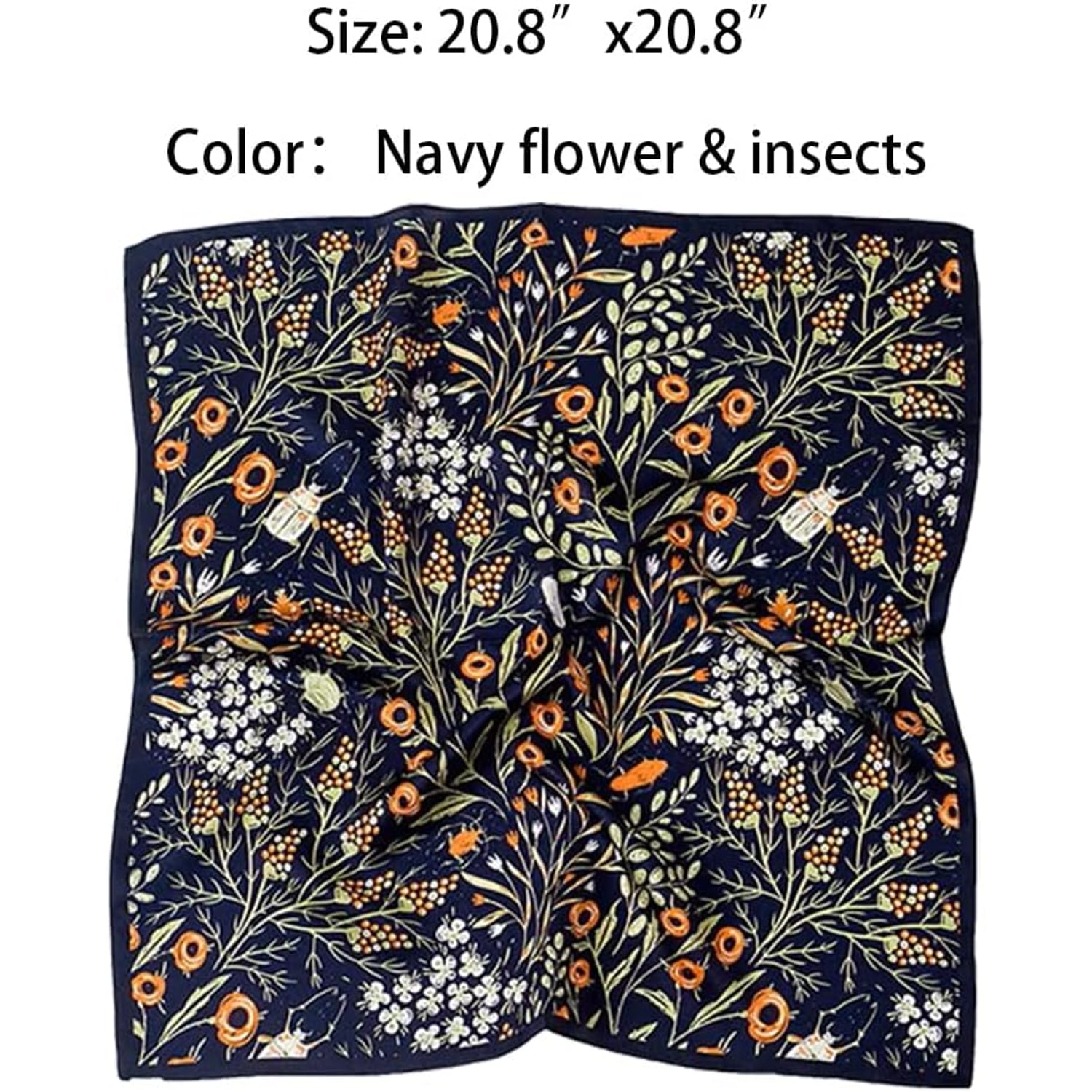
This one is 21 x 21 inches (53 x 53 cm), in 100% mulberry silk, with a navy floral print. Those three facts cover almost everything you need to know about how it will behave.
What the size actually means
Square silk scarves come in a handful of standard sizes. Small squares sit around 50 to 55 cm. Mid squares run near 70 cm. Large squares reach 90 cm and up, and those are the ones you drape over shoulders or wear as a headscarf with the full triangle hanging down your back.
At 53 cm, this is firmly in small-square territory. Folded on the bias it gives you a band roughly two to three fingers wide, with enough length to cross behind the neck and knot at the front. It will not bunch under a collar. It will not add warmth you did not ask for. What it will not do is work as a shoulder wrap, because there simply is not enough fabric. If that is what you need, look at a larger square or an oblong instead.
The small size has a practical upside too. It folds down to almost nothing. People who travel often keep one in a bag pocket because it weighs next to nothing and completely changes a plain top when they arrive somewhere.
Why mulberry silk and a satin weave matter
Silk is graded partly by where it comes from. Mulberry silk is produced by silkworms fed on mulberry leaves, and it yields a long, even filament. Long filaments mean fewer joins, a smoother surface and better shine. That is the fibre.
The weave is a separate thing. Satin weave lets threads float across several others before dipping under, which puts more surface area of the fibre on the face of the fabric. More surface means more light reflected, so you get that soft lustre, and the structure also makes the cloth more fluid.
In use this shows up in two ways. First, knots pull through easily instead of catching halfway, so you can adjust the scarf without a fight. Second, the ends fall rather than stand out stiffly. If you have ever tried to tie a polyester square and found it springing back open, you already know the difference.
There is a comfort angle as well. Skin and hair slide over silk with less friction than over cotton or wool, which is why a silk neckerchief sits against the throat all day without feeling scratchy, and why a silk hair scarf does not grab at strands when you untie it.
Reading the print
Digital printing puts the design onto the fabric with fine control. On a floral pattern that matters, because flowers have small details, thin stems and gradual colour shifts. A coarser print method blurs those. A digital print keeps petals separate and edges clean.
Navy as a ground colour is doing quiet work here. Deep blue sits next to almost every common wardrobe colour without clashing. White, ecru, grey, camel, black, tan and denim all take navy happily. It is darker than most mid-tone prints, which means it holds its own against a dark coat in winter, and it reads as less severe than black in summer.
The floral stops it from feeling corporate. That balance, dark ground with a softer pattern, is why so many people hunting for the best printed silk scarf keep circling back to navy florals. It is the combination that works in the most situations with the least thought.
One honest note. Screens render deep blues differently, so the navy may look a touch warmer or cooler in your hands than on your monitor. The pattern placement can also vary slightly from square to square on a printed design, which is normal for printed textiles.
Who it suits
If you wear plain shirts, this is for you. A neckerchief does more for a white poplin shirt than almost any other accessory.
If you have long hair and want something that will not leave a dent, folded silk around a ponytail is a reliable choice. It holds without gripping.
If you carry a structured handbag, a knot on the handle changes the look of the bag without changing the bag.
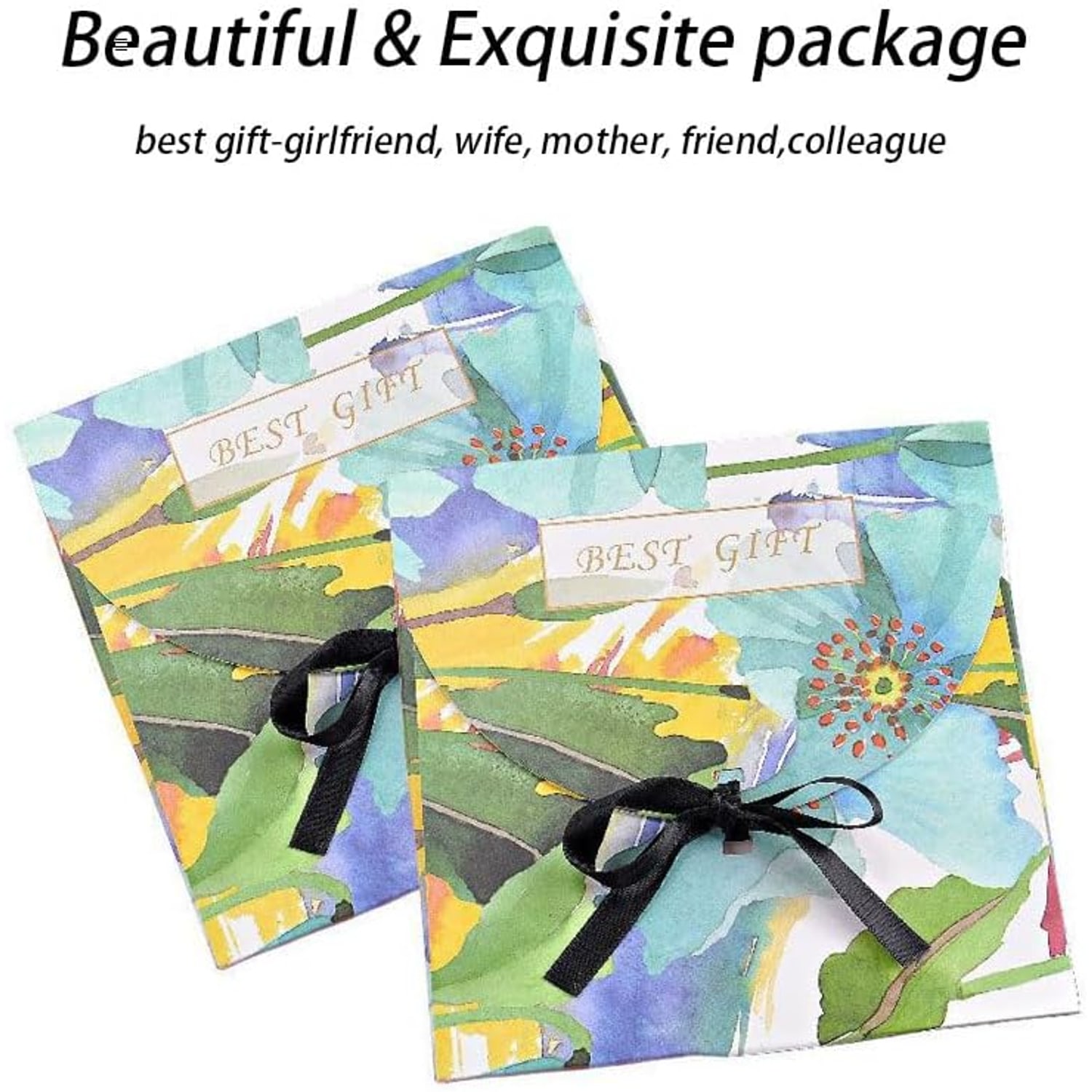
If you want something small to give as a present, a square scarf has no size to get wrong and no fit to worry about.
If you want warmth, this is not the right piece. Silk is light and breathable, and a 53 cm square does not cover enough skin to insulate. Reach for wool or a large wrap instead.
How to choose between square sizes
Think about where it will sit. For a tight neck knot inside a collar, small is right. For a looser knot with visible tails over a jumper, small still works but a 70 cm square gives you more drama. For anything that needs to cover your shoulders or your whole head, go large.
Then think about print scale. On a small square, a mid-scale pattern like this floral shows well because the folds still reveal several motifs. A very large motif would get lost once folded, since you would only see one corner of it.
Finally, think about your existing wardrobe. If most of what you own is already patterned, a plain or near-plain scarf makes more sense. If your clothes are mainly solid colours, a print gives you something to look at. For a mainly neutral wardrobe, the best navy silk scarf is the one with a print that picks up a colour you already wear elsewhere.
Tying it without overthinking
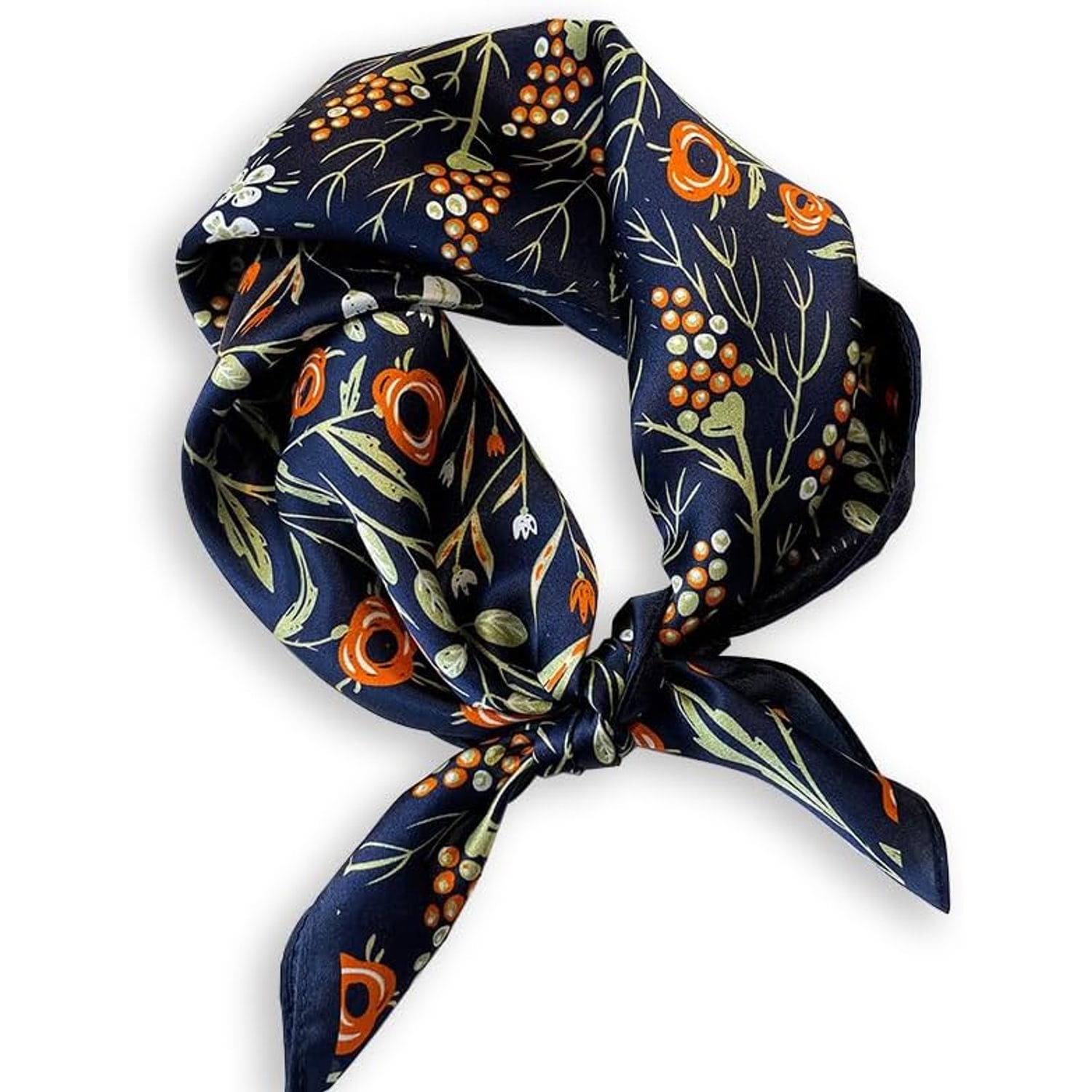
Start with the simplest version. Fold the square corner to corner into a triangle. Roll from the long edge toward the point until you have a band at the width you like. Put the centre of the band at the front of your throat, take the ends behind, bring them forward and tie once or twice slightly off to one side. Done.
From there, variations come easily. Leave the triangle unrolled and let the point sit at the front for a softer, looser look. Tie the band at the side of the neck and let the ends hang. Wrap it twice for a tighter choker effect. Use the same rolled band as a headband, knotting it underneath your hair at the nape.
None of this needs practice beyond the first couple of attempts.
Looking after it
Hand wash only. Cool water, a mild detergent made for delicates, a gentle swirl rather than a scrub. Do not soak it for long and do not use bleach.
To dry, roll the scarf in a clean towel and press the water out. Never wring it. Lay it flat or hang it over a rail, out of direct sunlight and away from radiators, since heat and strong light are what fade printed colour over time.
Press on a low setting on the reverse side, ideally while the silk is slightly damp. A thin cotton cloth between the iron and the fabric is good insurance.
The most common cause of ruined silk scarves is not washing, it is perfume and hairspray. Spray first, let it dry, then put the scarf on. Alcohol in those products can leave marks that do not lift.
For storage, roll it loosely or hang it rather than folding it into sharp creases. Keep it away from anything rough that could snag the satin surface, and take rings off before you adjust a knot.
The short version
This is a 21 x 21 inch (53 x 53 cm) square of 100% mulberry silk in a satin weave, digitally printed with a navy floral pattern. The size is right for neck knots, hair, wrists and bag handles, not for shoulder wraps. The navy ground goes with most wardrobes and the floral keeps it from feeling stiff. Care is hand wash, dry flat, cool iron on the reverse, and keep perfume away from it. Buy it if you want one small thing that makes plain clothes look considered.