
The complete guide
How To Choose A Silk Sleep Mask That You Will Actually Keep Using
The problem with sleeping in a lit room
Very few bedrooms are properly dark. There is a street light outside, a standby LED on the television, a phone charging on the nightstand, or daylight at five in the morning in summer. Add hotel rooms with gaps in the curtains and aircraft cabins where someone three rows up has their reading light on for the whole flight, and the problem gets worse when you travel.
A sleep mask is the simplest fix. It costs less than a blackout blind, it fits in a pocket, and it works in any room you happen to be in. The catch is that most of the masks people buy end up in a drawer. They are too bulky, the elastic digs in, or the fabric feels scratchy after an hour. The mask that gets used is the one you forget you are wearing.
That is where the fabric choice starts to matter.
Why silk, and why mulberry silk specifically
Silk is a smooth, fine fibre. Run your hand across it and there is very little drag. That matters on a sleep mask because the fabric is in constant contact with the thinnest skin on your body and, if you have long hair, with your hairline too. Hair and skin slide across silk with less friction than they do across cotton, which is the main practical reason people move from a cotton mask to a silk one.
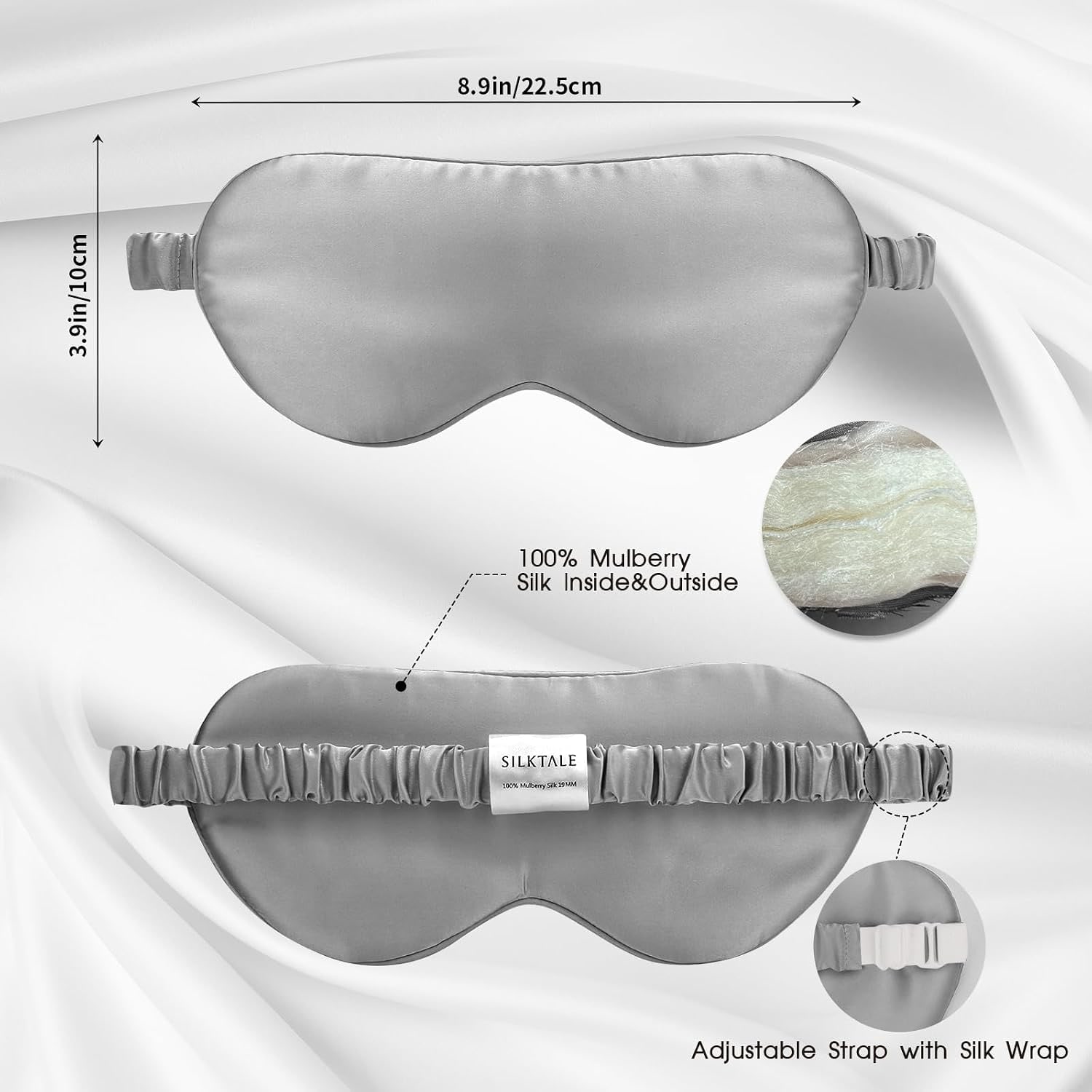
Mulberry silk is the type produced by silkworms raised on a mulberry leaf diet in controlled conditions. The result is a long, even filament rather than the shorter, more irregular fibres you get from wild silk. Long filaments mean a smoother, more uniform cloth. This mask is made from grade 6A mulberry silk, which is the top end of the standard grading scale used in the industry.
If you are comparing options and trying to pick the best mulberry silk eye mask, the two things worth checking on any listing are the fibre content and the momme weight. Plenty of masks say "silky" and mean polyester satin. That is a different material entirely.
Understanding momme weight
Momme is to silk what thread count is to cotton sheets, a shorthand for how much fabric you are getting. It measures the weight of a fixed length and width of silk. Lower numbers mean a lighter, sheerer cloth. Higher numbers mean a denser, heavier one.
For context, very light silk scarves sit around 12 to 16 momme. Silk pillowcases usually land between 19 and 25. Heavy silk used for upholstery can run far higher and starts to feel more like a structured cloth than a soft one.
This mask is 19 momme. In practice that means it has enough substance to feel like a real textile rather than a flimsy scrap, while keeping the soft drape that lets it follow the contours of your face. Go much lighter and you can see the shape of the fabric strain over your eye sockets. Go much heavier and the mask starts to sit on your face rather than settle into it. People searching for the best 19 momme silk eye mask are generally after exactly that middle ground.
The strap is half the product
Here is the part that gets overlooked. You can make a mask from beautiful silk and ruin it with a cheap band.
A bare elastic strap does two annoying things. It catches hair when you pull the mask on and off, and it presses a line into the back of your head if you wear it for more than an hour. Neither is a disaster, but both are the kind of small irritation that stops you reaching for the mask on a night when you are half asleep already.
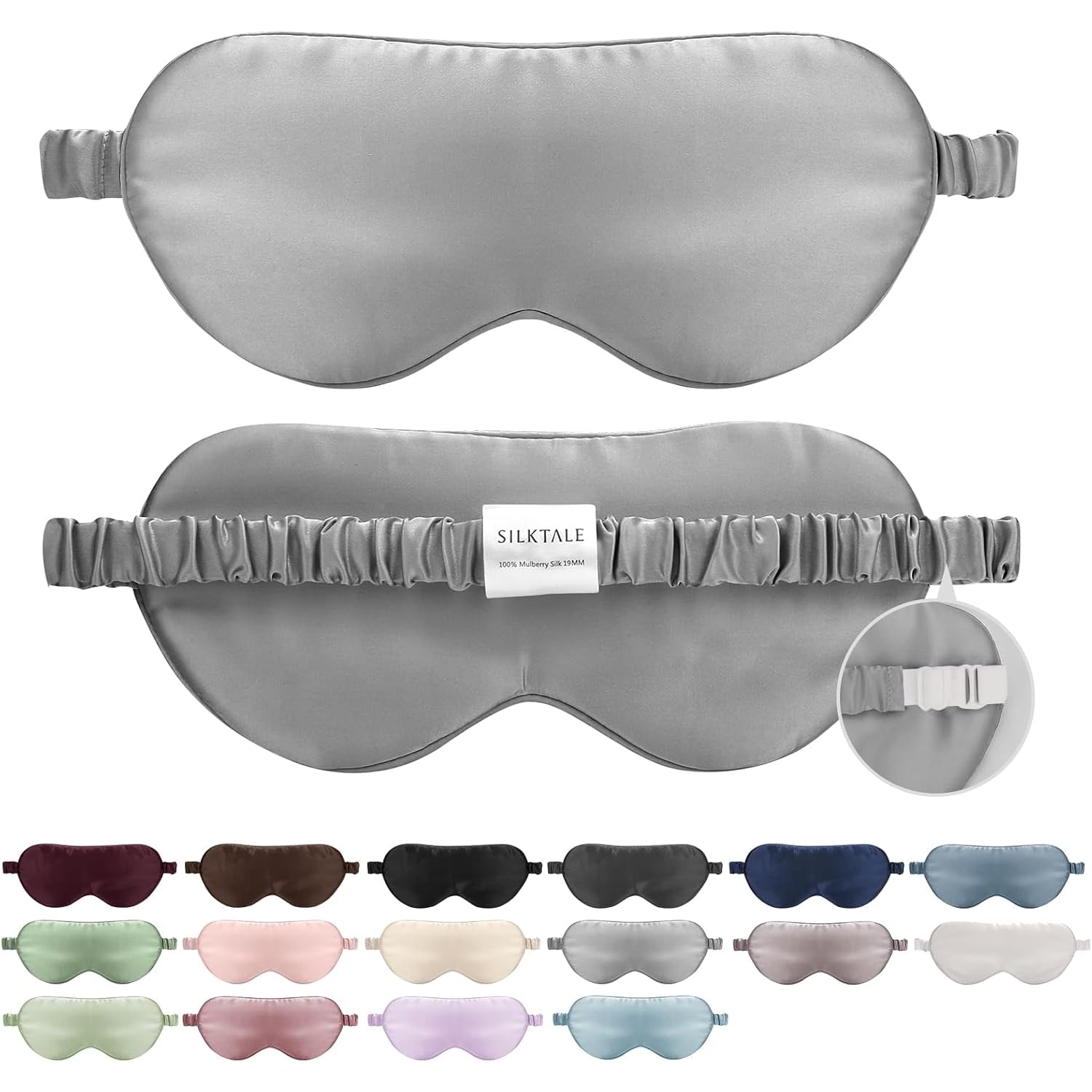
On this mask the adjustable strap is wrapped in the same silk as the mask body. The surface that touches your hair is smooth the whole way round. That is a small manufacturing detail that costs more to do, and it is one of the clearest signals that a mask has been designed to be worn rather than just photographed. If you are hunting for the best adjustable silk eye mask, look for a wrapped or covered strap rather than exposed elastic.
Adjustability matters too. Heads vary. A fixed loop that fits one person will be loose on another and tight on a third. An adjustable strap lets you set it once and forget about it.
Who this suits
Travellers. It weighs about 50 g packed and folds flat. If you fly regularly, it lives in the carry-on and comes out somewhere over the ocean. For long-haul in particular, it is one of the few pieces of travel kit that earns its space every single trip.
Light sleepers. If you wake at the first hint of daylight, a mask buys you the extra hour or two at the end of the night when sleep is often most fragile.
Shift workers. Sleeping during the day is hard. A mask is not a complete answer on its own, but combined with a decent blind it closes most of the gap.
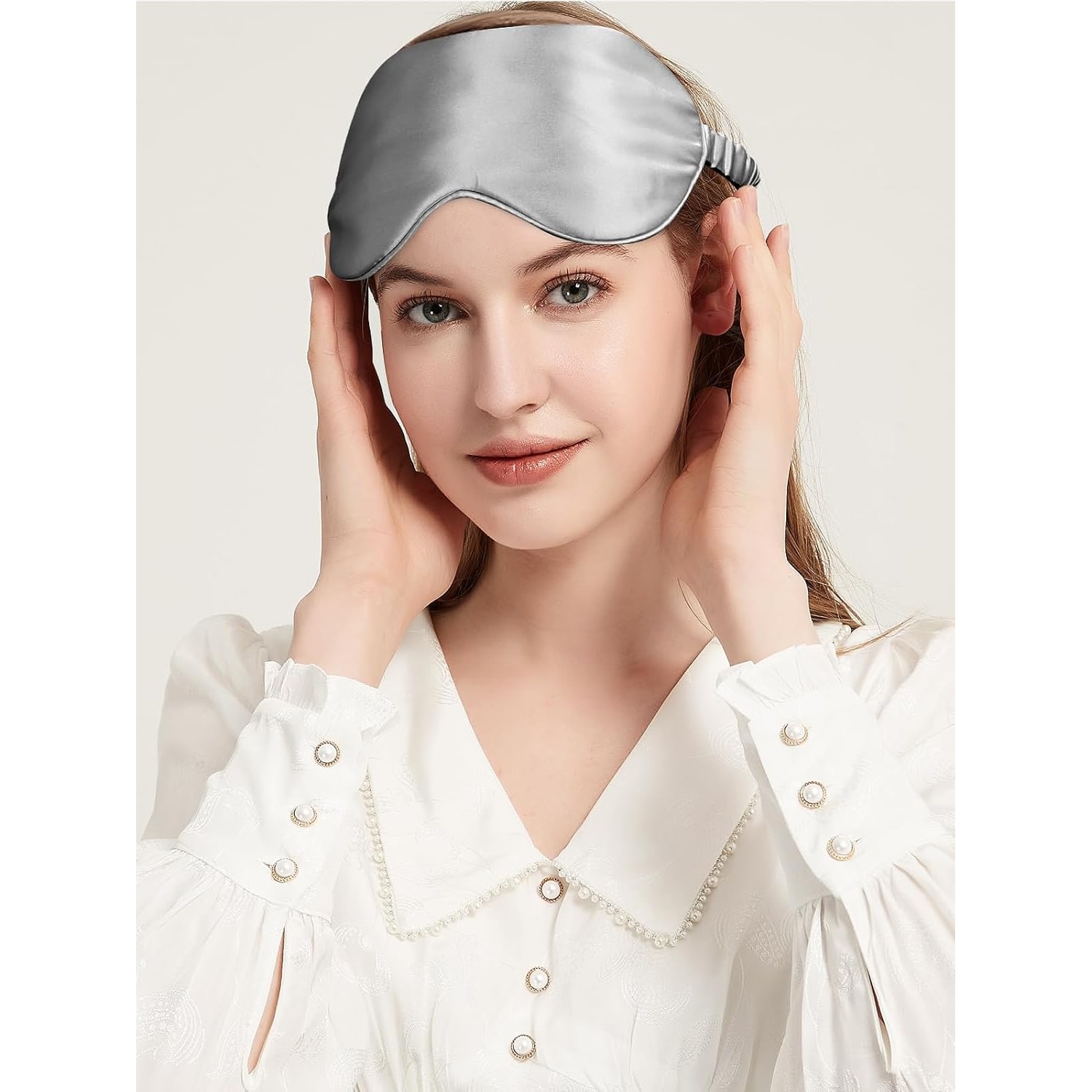
Side sleepers. Contoured foam masks can be awkward on your side because the bulk presses against the pillow. A flat silk mask has almost nothing to push against, which is why it is a common recommendation for anyone who sleeps with their face half-buried.
Anyone buying a gift. It arrives in a gift box, the sizing is adjustable so you cannot get it wrong, and silver grey is neutral enough to suit most tastes. That combination makes it an easy present.
How to choose between masks
Work through four questions.
First, what is the fabric actually made of? Look for a stated fibre content, not an adjective. "100% mulberry silk" is a fact. "Silky smooth" is not.
Second, what is the momme weight? If a listing does not say, that usually tells you something. Anywhere from 16 to 22 momme is sensible for a mask.
Third, how does the strap work? Wrapped and adjustable beats bare and fixed every time.
Fourth, how much bulk do you want? Flat silk masks are light and packable. Contoured masks with eye cavities can block more light at the edges but take up more room and feel more present on the face. Neither is wrong, but they suit different sleepers.
Looking after it
Silk is not fragile, but it does not like heat or harsh chemicals.
Hand wash in cool water with a detergent made for delicates. If you would rather machine wash, put the mask in a mesh laundry bag and run a gentle cold cycle. The bag stops the strap wrapping around something in the drum.
Skip the bleach and do not wring the mask out. Press the water out between your hands or roll it in a towel, reshape it, and lay it flat to dry somewhere out of direct sunlight. Tumble dryers are the fastest way to age silk.
If it needs a press, use the lowest silk setting on your iron with a cloth in between, ideally while the fabric is still a little damp.
A wash every week or two is about right for something worn against your face. If you use night creams or do not always get every trace of makeup off before bed, wash it more often. Oils and residues are what dull silk over time, not the washing itself.
The short version
This is a silver grey sleep mask made from 100% grade 6A mulberry silk at 19 momme, with an adjustable strap that is wrapped in the same silk so nothing rough sits against your hair. It weighs around 50 g packed and arrives in a gift box.
The weight is the practical middle ground for a mask, substantial enough to feel properly made and soft enough to settle onto your face rather than perch on it. The wrapped strap is the detail that makes the difference between a mask you use and a mask you lose in a drawer.
Wash it gently, dry it flat, and it will stay in service for a long time.