
The complete guide
How to Choose a Silk Sleep Mask That Actually Stays On
The problem with a room that is never quite dark
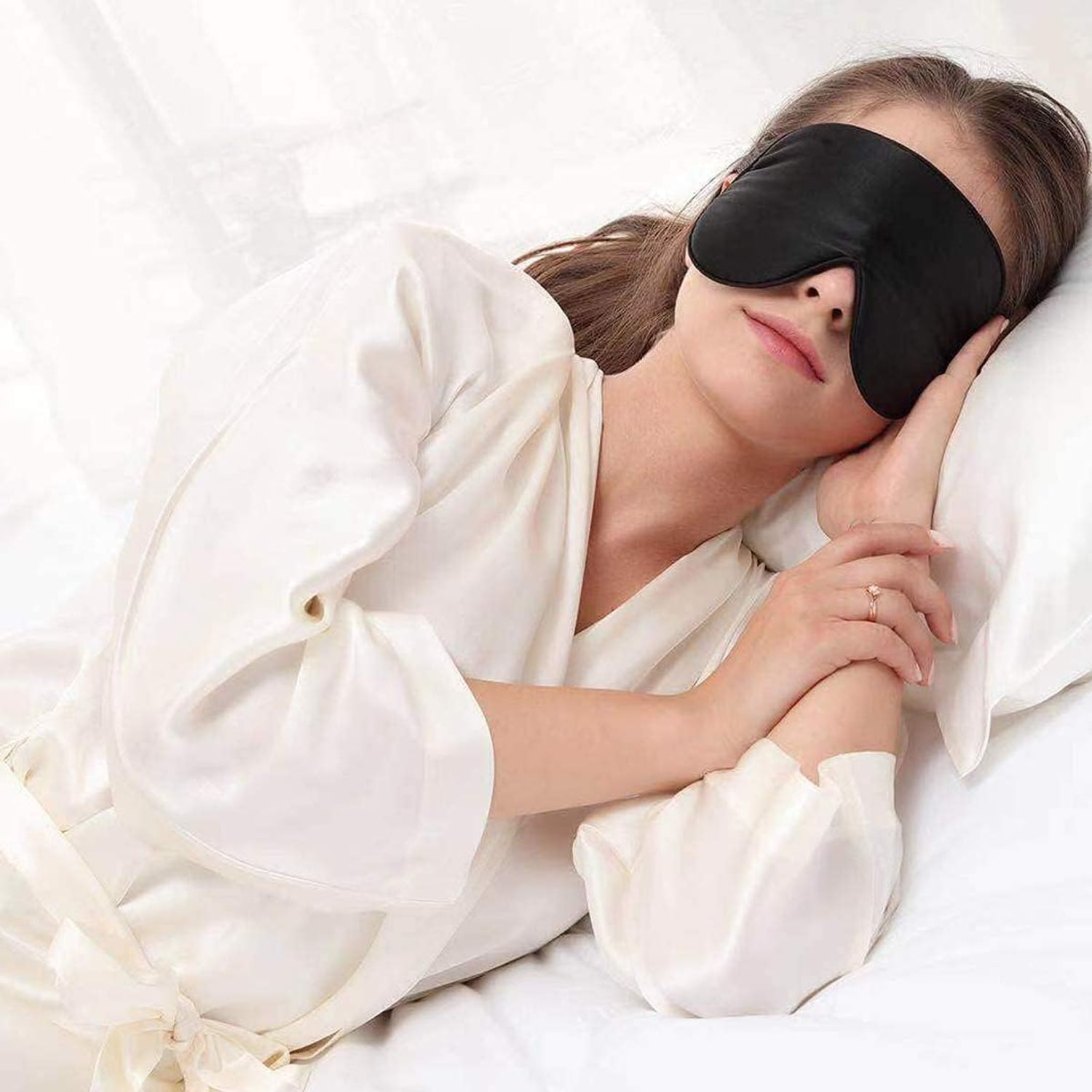
Very few bedrooms are genuinely dark. There is a streetlight through a gap in the curtain, a standby LED on a television, the glow from a phone charging on the nightstand, or in summer, sunrise at half past four. None of it feels like much when you are awake. Your closed eyelids are thin enough that light still gets through, and that light tells your body it is time to be alert.
A sleep mask is the cheapest fix for this. You do not have to buy blackout blinds, rearrange furniture or argue with a partner about the hall light. You put something over your eyes and the room becomes dark. The catch is that most masks are not very good, and the ones that are not very good end up on the floor by two in the morning.
What separates a good mask from a bad one
Three things, really. Light leakage, pressure, and whether you can feel it.
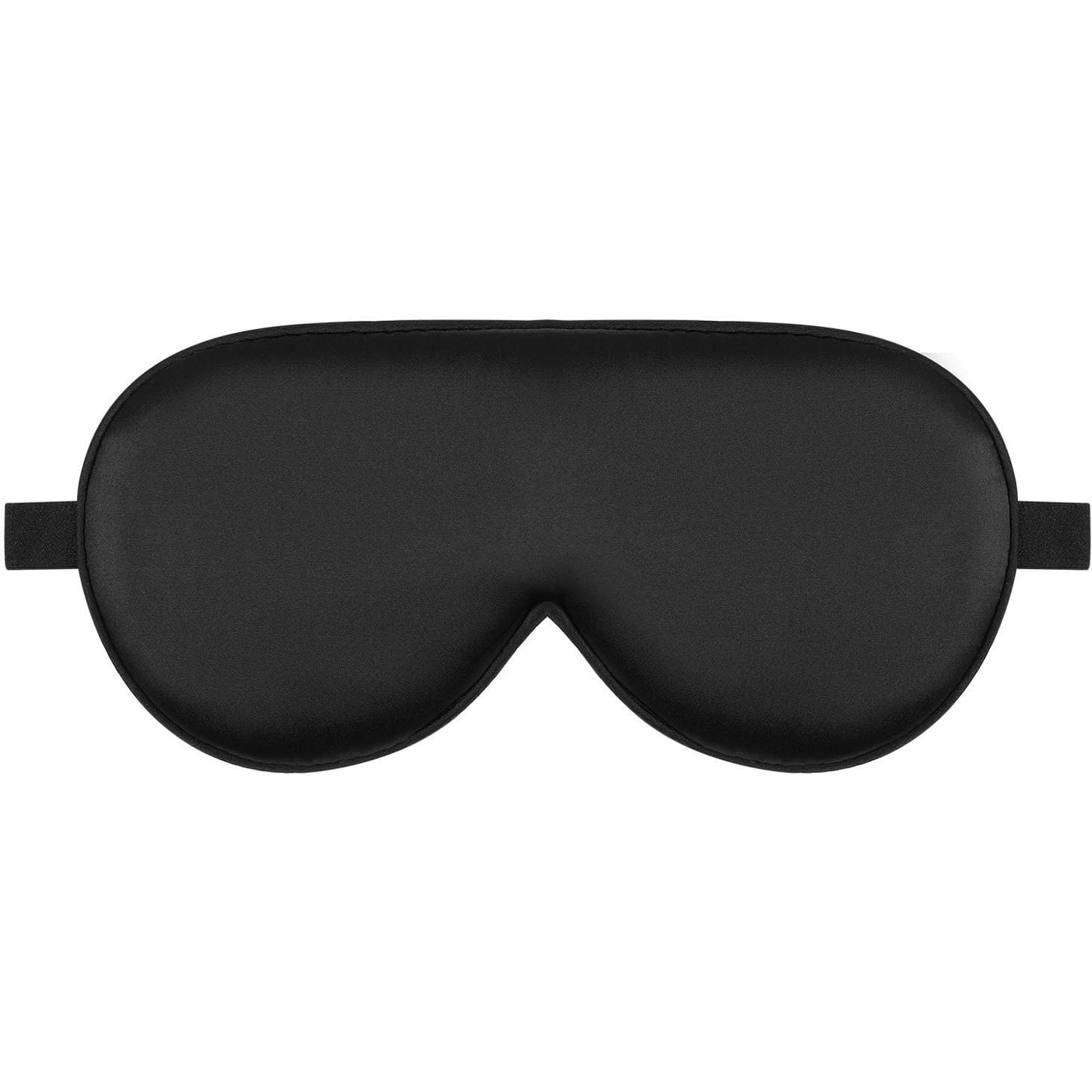
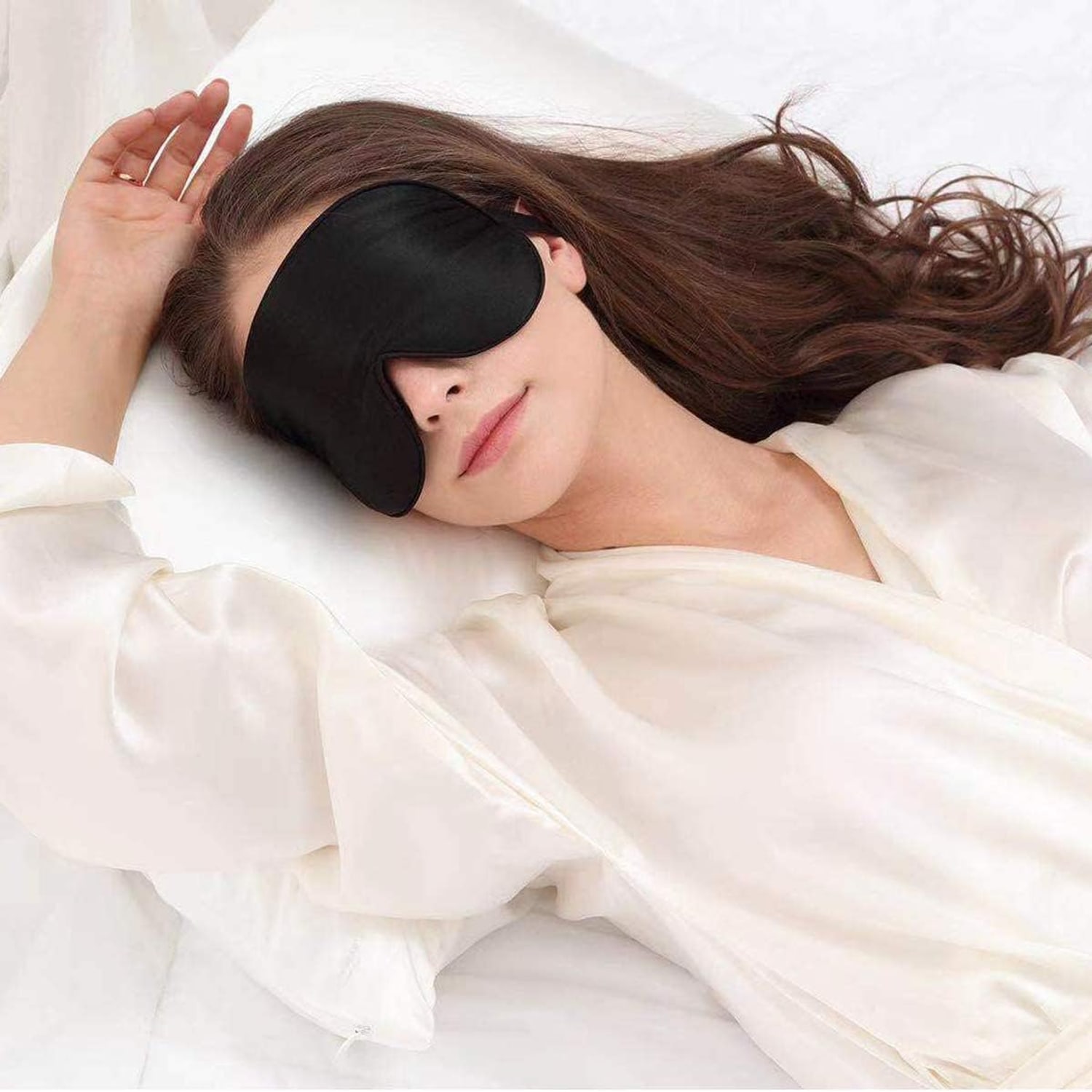
Light leakage almost always happens in the same place, the little triangle beside the nose. A flat mask panel stretched across the face arches over the nose bridge and leaves a gap on each side. That is why you can wear a mask and still see a strip of brightness at the bottom of your vision. This mask uses a higher cutout at the nose, shaped so the fabric follows the face down rather than bridging across it. It is a small change in the pattern that makes a large difference in how dark it actually gets.
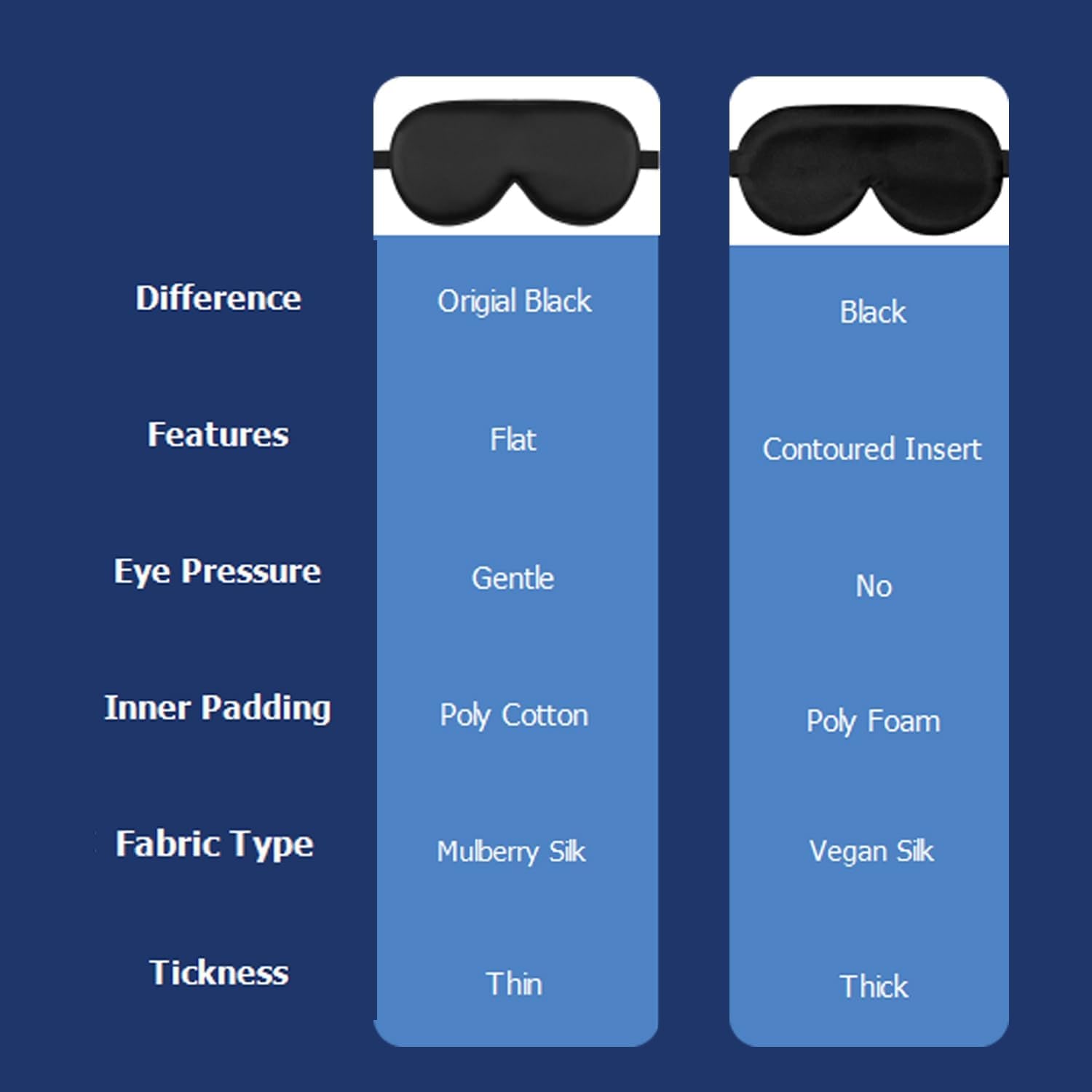
Pressure is the second issue. Thin masks pull tight across the eyeballs, which is uncomfortable and can leave you aware of your own blinking. The cotton fill here gives the mask enough body to hold itself a fraction off the lids. You feel contact, not compression.
The third is weight, and it is the one most people overlook. This mask is about 1.13 ounces. That is roughly the weight of a slice of bread. Anything heavier starts registering as an object on your face, and once your brain is tracking an object on your face, you are not falling asleep.
Why the outer fabric matters
Silk does two useful things here. It is smooth, so skin and hair move across it with less friction than they do over woven cotton or a cheap polyester satin. If you sleep on your side and your face rotates against the mask through the night, that difference in drag is noticeable by morning.
It also feels cool on contact. Anyone who has worn a fleecy or foam mask through a warm night knows the problem. The area around your eyes heats up, you start sweating under the padding, and off comes the mask. Silk does not trap heat the same way, which makes it a better pick for summer and for anyone who runs warm at night.
That combination is why a best mulberry silk eye mask tends to outlast the novelty masks people are given at Christmas. It is not a gimmick, it is just a better surface against skin.
The strap, and why so many masks fail there
Straps are where cheap masks fall apart. Thin elastic cords cut into the back of the head, tangle in long hair and lose their stretch inside a few months. A fixed-length band fits one head size and nobody else's.
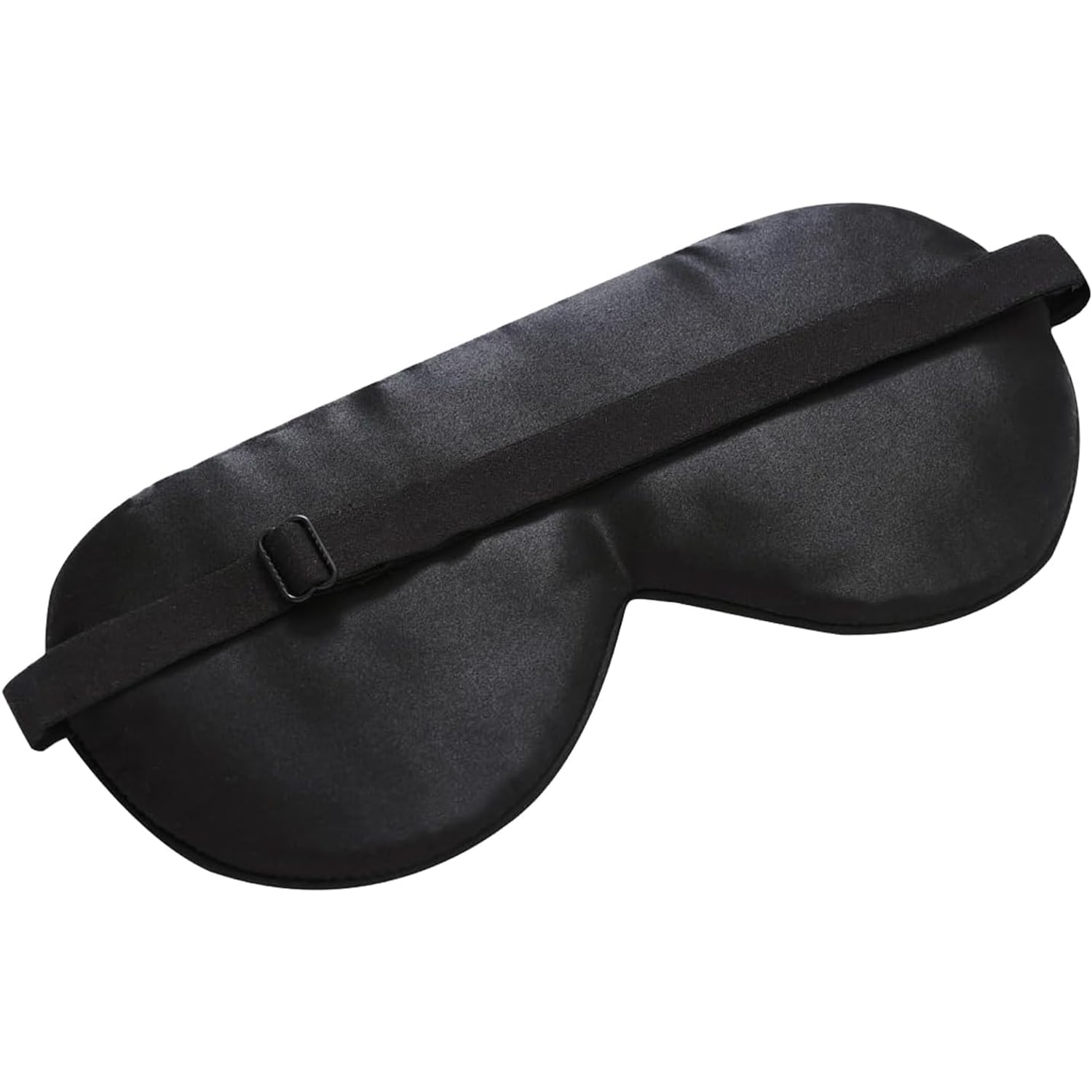
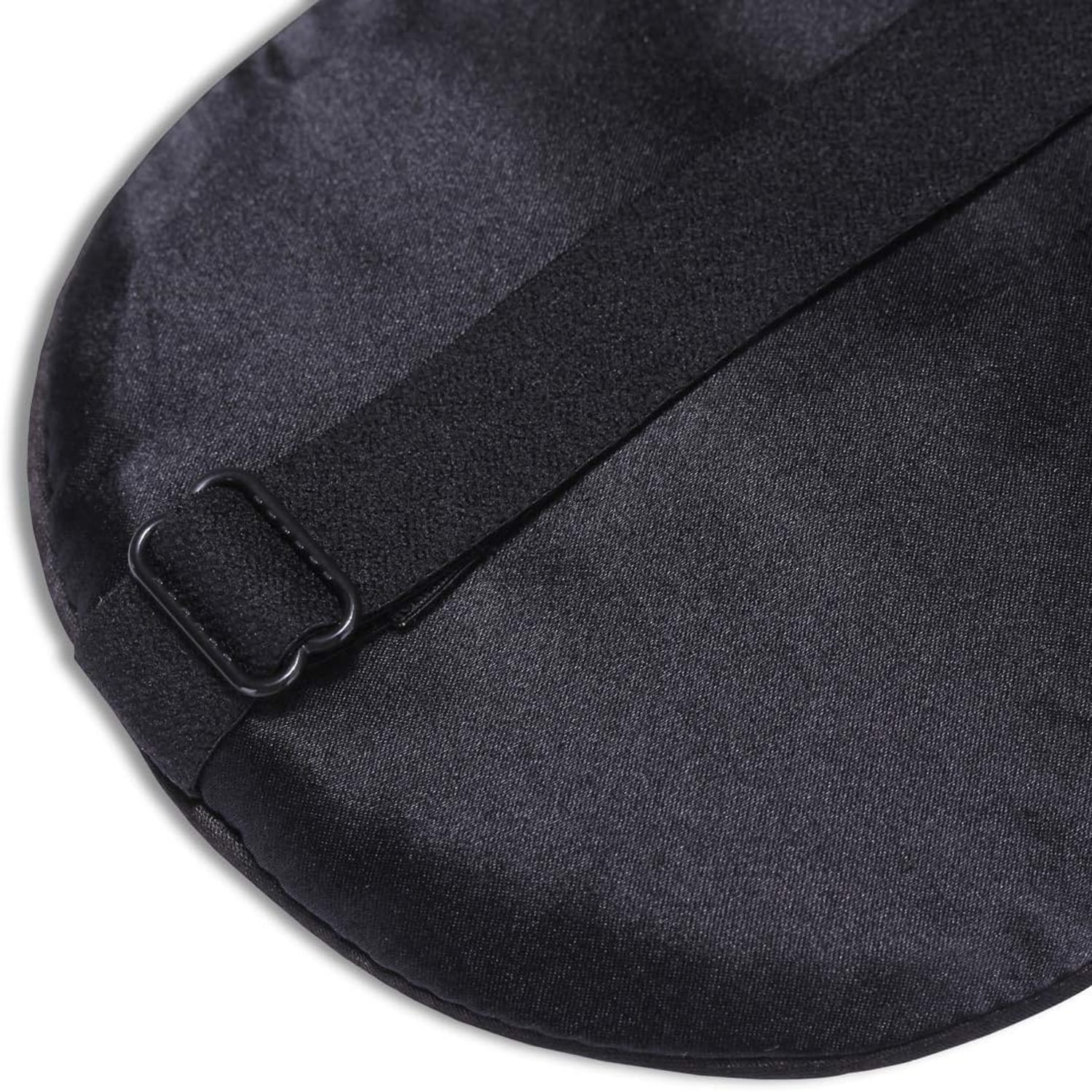
This mask uses a single wide adjustable loop that runs from 15.8 inches up to 27.6 inches in circumference. That is a big range. It covers almost every adult head, and it means two people in a household can share one mask if they are prepared to slide the buckle. The width of the loop is also doing quiet work. A broad band spreads the tension over a larger area, so it does not form a line across the back of your head.
The buckle position is worth a mention too. It sits at the back rather than off to one side. If you sleep face-down or on your side, side-mounted hardware is a nightly annoyance, a small hard lump between your ear and the pillow. Moving it to the back solves that. If you are looking specifically for a best adjustable sleep mask, this is the detail to check on any mask you compare.
Who this suits
Light sleepers in bright bedrooms are the obvious group. So is anyone sharing a room with someone who reads late or gets up at a different hour.
Shift workers probably get the most out of a mask like this. Sleeping through daylight is hard, and a mask with proper nose coverage is the difference between dozing and actually sleeping. The same goes for anyone doing long flights or overnight buses, where you have no control over the cabin lights at all. At an ounce, it is not competing for space in your bag.
Side sleepers should pay attention to the rear buckle and the low 0.43 inch profile. A thick domed mask gets shoved sideways the moment your face meets the pillow. A flatter one stays put.
It also works well as a gift, which sounds like a small thing but is not. Black goes with everything, one size removes the sizing problem, and it is a genuinely useful object rather than a decorative one.
How to choose between masks
Start with coverage. Hold the mask against your face and look for gaps beside the nose. If you can see your own cheeks in daylight, it will leak at night.
Then check the strap. Can you adjust it? Is it wide enough not to bite? Where is the fastening? A buckle on your ear is a dealbreaker if you sleep on your side.
Then feel the weight and the padding. You want enough loft to keep fabric off the lashes, and no more. Heavily padded contoured masks suit some people, but they are bulky to pack and warm to wear.
Last, think about the surface. If you wear any skincare at night, or if you have longer hair that sweeps across your face, a smooth silk face is worth the small premium over a synthetic satin.
Looking after it
Hand wash it. That is the short answer. Cool water, a mild detergent made for delicates, a gentle squeeze rather than a scrub. Do not bleach it and do not put it in the dryer, because heat is what ruins silk and tumbling is what distorts the cotton fill.
Press the water out in a towel, reshape the padded panel with your fingers and lay it flat to dry. Do not hang it from the strap, which stretches the loop over time. Keep it out of direct sun while it dries.
Every week or two is a fair washing schedule for nightly use. If you apply creams before bed, make it weekly. Between washes, store it flat in a drawer or in a small pouch rather than crumpled in the bottom of a bag, which keeps the fill even.
The short version
A sleep mask only works if you leave it on. That comes down to four things, darkness at the nose, no pressure on the eyes, a strap that does not dig in, and weight light enough to forget. This one is built around those four points. The raised nose cutout closes the usual light gap, the cotton fill keeps fabric off the lids, the loop adjusts from 15.8 to 27.6 inches with the buckle safely at the back, and the whole thing weighs about an ounce.
It is black, it is plain, it packs flat, and it works just as well in a hotel room as it does at home. If your bedroom is brighter than you would like, it is a small purchase that pays off the first night.