
The complete guide
How To Choose And Wear A Long Silk Scarf
The problem with most scarves
Most scarves are either too small to do anything useful or too heavy to wear indoors. A little square sits at the neck and nothing else. A thick wool wrap is wonderful in January and unwearable in May. So people buy scarves, wear them twice, and leave them in a drawer.
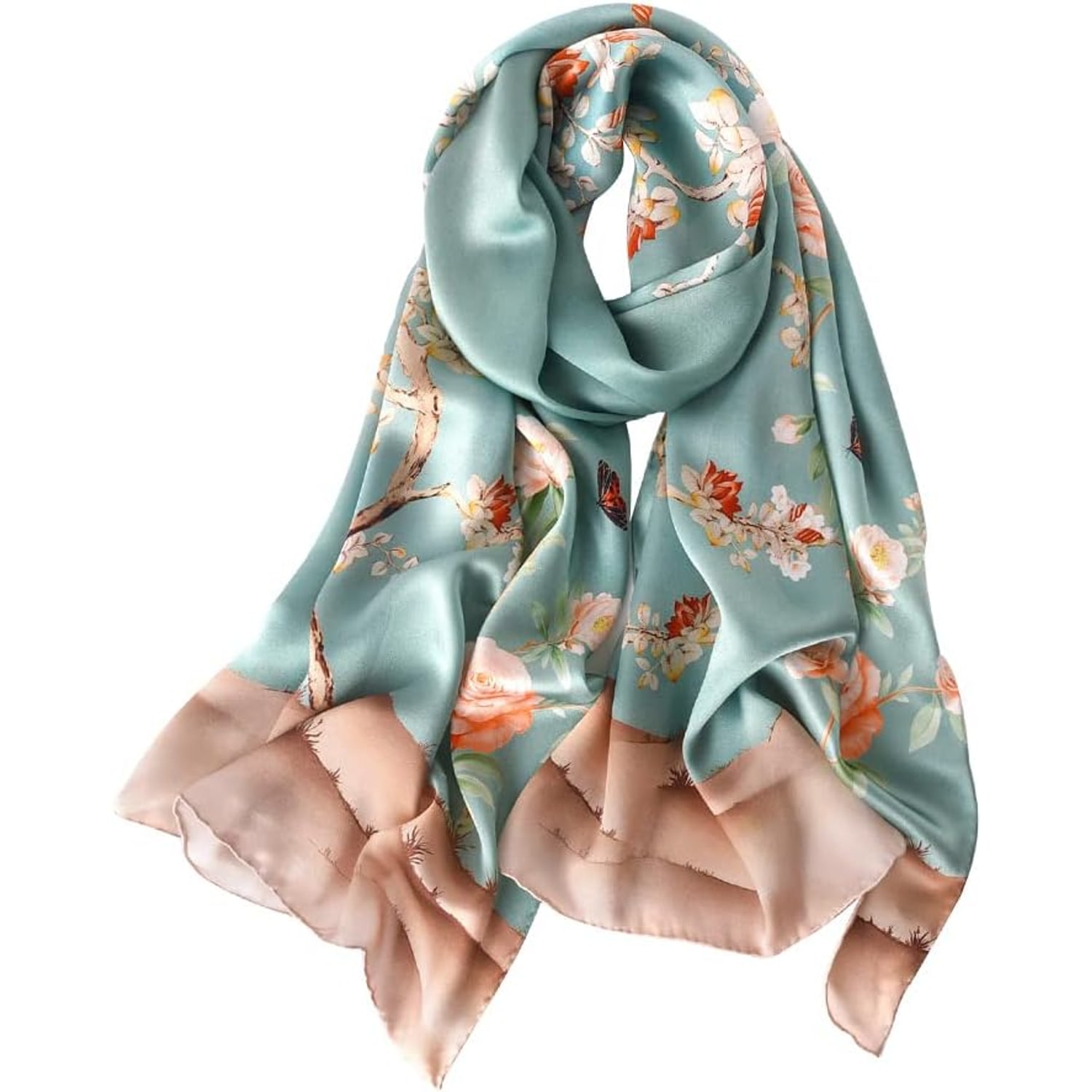
A long silk scarf solves that gap. It is light enough for a warm room and long enough to actually wrap. At 67 x 21 inches (170 x 53 cm), this one has the proportions that make a scarf flexible rather than decorative. You can loop it twice at the throat, hang it open down the front of a coat, tie it over your hair, or pull it across your shoulders when the air conditioning gets aggressive.
That versatility is the whole argument for silk. It is a thin fabric that still feels substantial, and it changes the look of a plain outfit without adding weight.
What mulberry silk and satin weave mean
Two terms show up on almost every silk listing, and they describe different things.
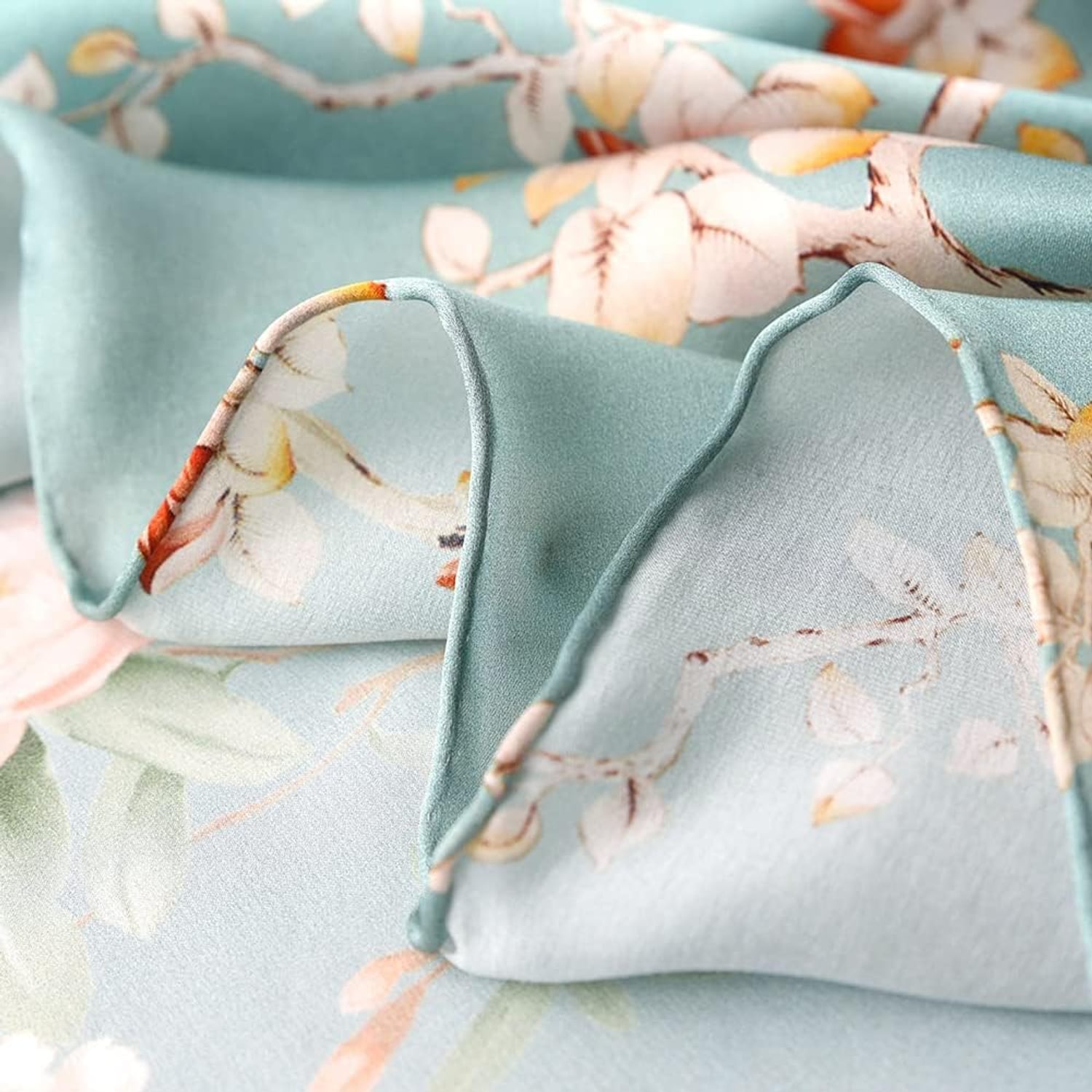
Mulberry silk refers to the source. Silkworms fed on mulberry leaves produce long, even filaments, which spin into smooth yarn with very few short fibres poking out. That is why good silk feels cool and slippery rather than fuzzy. The maker lists this scarf as 100% mulberry silk, with no blended fibre.
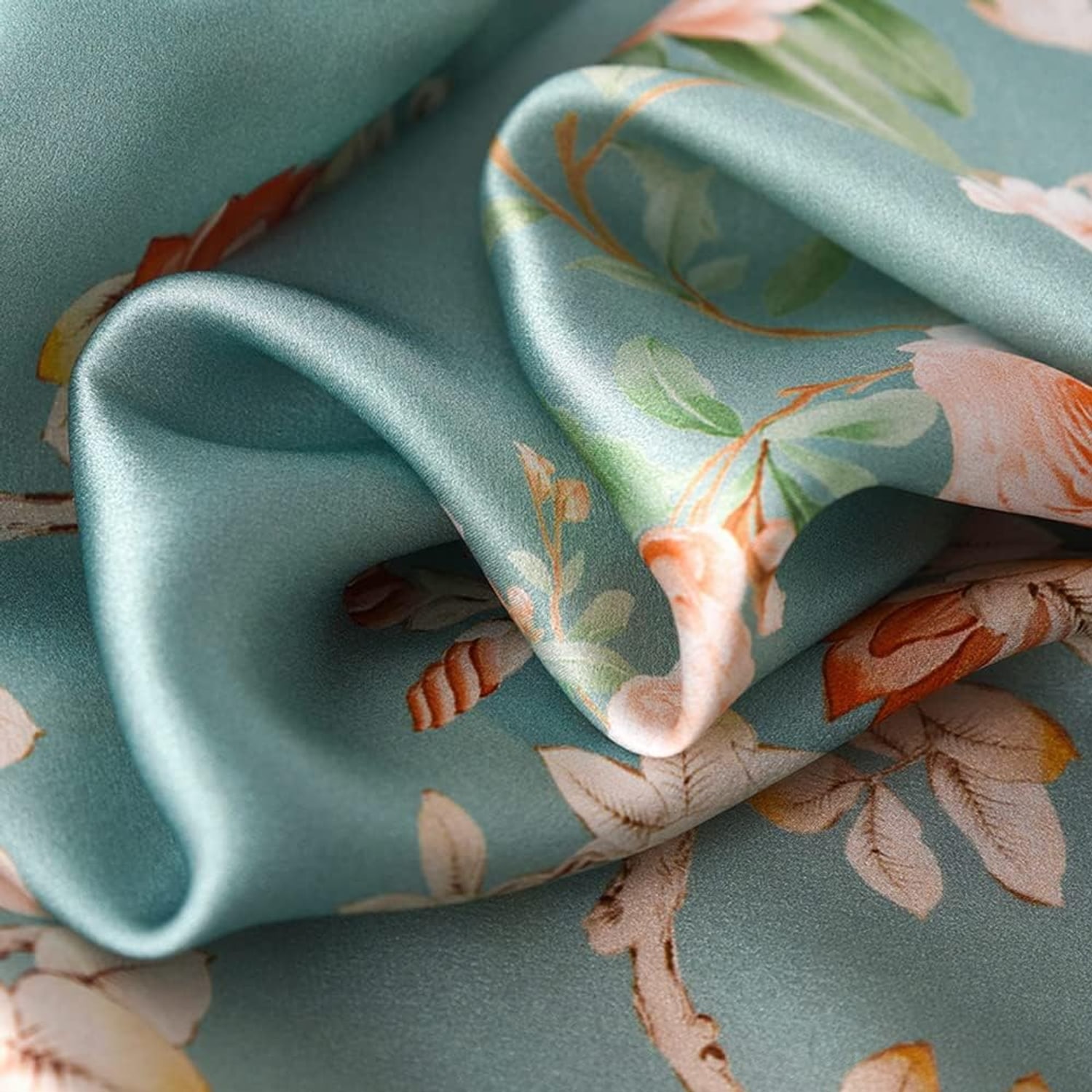
Satin weave refers to the structure. In a satin weave, each thread floats over several others before passing under one. Fewer interruptions on the surface means more unbroken reflection, which is where the sheen comes from. It also means the fabric slides. Hair and skin move over a satin-weave silk with less friction than over cotton, which is a simple mechanical fact about surface smoothness.
What the maker does not give is a momme weight, which is the usual measure of silk thickness. The description is lightweight, and a scarf of this size in lightweight silk will drape close rather than hold a shape. If you want a scarf that stands up in sculpted folds, you want a heavier silk. If you want one that falls softly and packs flat, this is the category.
Who this scarf suits
It suits anyone whose wardrobe is mostly plain. If your coats are navy, black, grey or camel and your knitwear is solid colour, a printed scarf does the work of an accessory without you having to think about jewellery. Roses on green read as a warm accent against all of those.
It suits people who move between temperatures. Offices, planes, restaurants with the door open, evenings that turn cooler than the afternoon promised. A silk wrap handles all of them because it takes up almost no room in a bag.
It suits travellers for the same reason. A long silk scarf rolls into a tube the size of a paperback. On the plane it is a shoulder cover. At the destination it is a shoulder cover again, this time for sun or for a building that asks you to cover up.
It suits gift buyers. Scarves have no sizing problem, and a floral print is a safer guess than a colour you hope someone likes. Of the things you can buy without knowing someone's measurements, a silk scarf is near the top of the list.
It is less suited to someone who wants a winter scarf. Silk is thin. It blocks a draught, it does not replace wool in freezing weather. Layer it under a coat collar if the temperature is genuinely low.
How to choose the right length and shape
Scarf shapes fall into a few families, and length decides what you can do.
A square scarf, usually around 35 inches, is for neck knots, bandeau folds and bag ties. A short rectangle sits flat under a collar. A long rectangle, which is what this is, gives you the most options because you can always shorten it with folds but you cannot lengthen a short one.
Here is the practical test. Hold a scarf up and drape it around your neck with both ends hanging. If the ends reach your waist with the scarf doubled, you can loop it. If they reach mid-thigh when single, you can wrap twice and still have ends to tie. At 67 inches, this scarf does both for most adults.
Width matters for shawl use. Anything under about 16 inches is a neck scarf and nothing else. At 21 inches, you get enough coverage to open it over the shoulders without the ends dropping to your knees. That is the sweet spot between a neck scarf and a full stole.
Ways to wear it
The loop is the default. Fold the scarf in half lengthwise, drape it around the neck, pull the loose ends through the folded loop and adjust. Takes three seconds and looks deliberate.
The open drape is for coats. Hang it flat down both sides of the front opening, no knot. It breaks up a long block of colour and adds a vertical line.
The head wrap uses the full length. Centre it over the crown, cross at the nape, bring the ends forward and tie or tuck. Silk is the right fabric here because the surface is smooth, so styled hair slides rather than catches.
The shoulder wrap is the simplest and the one most people reach for in a cold room. Open it, lay it across the back, let both ends hang at the front. Add a loose knot at the chest if it slips.
The bag tie uses whatever length is left over. Knot it through a handle and it becomes decoration until you need it.
Caring for silk without fuss
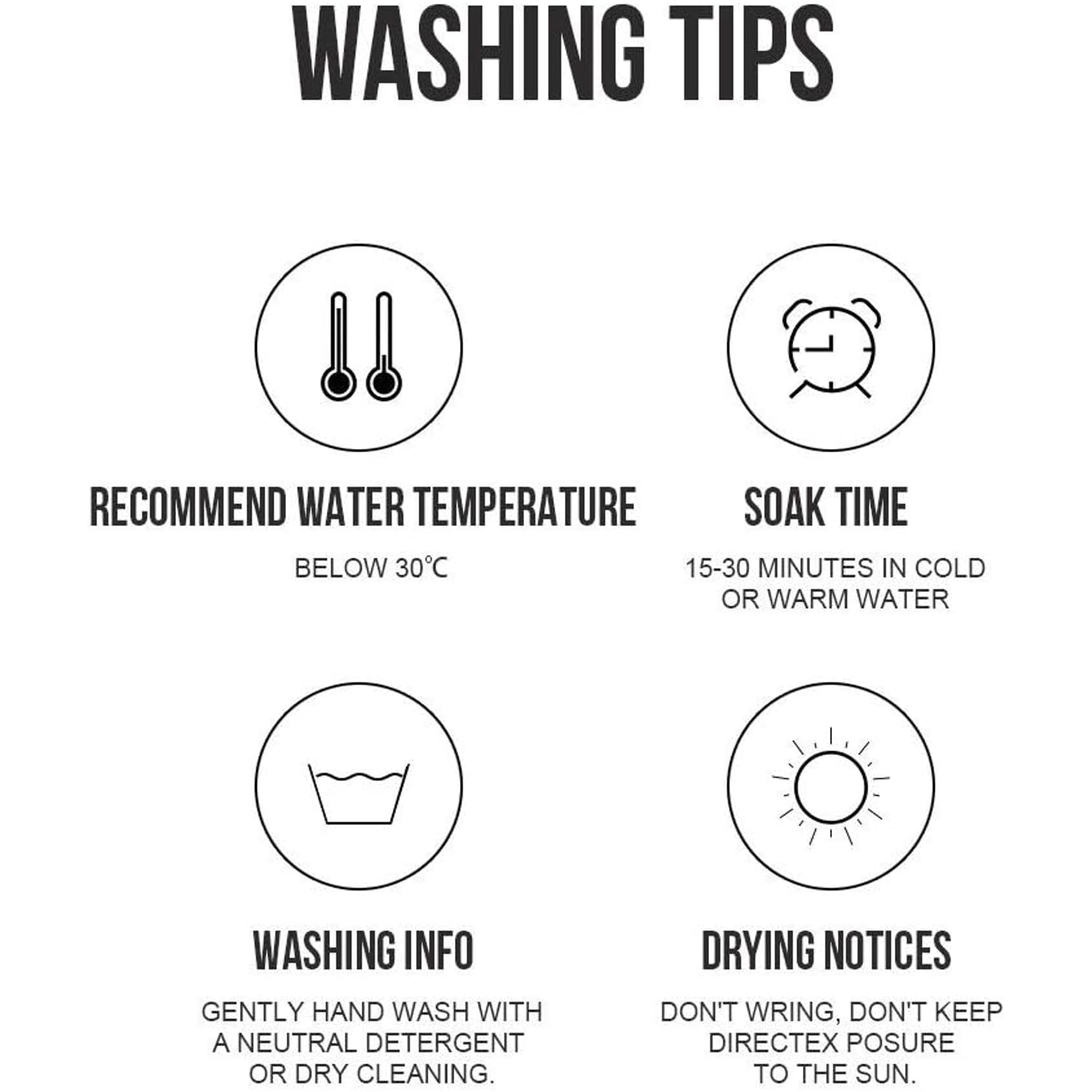
The care instruction here is hand wash only, and it is worth following.
Fill a basin with cool water and a small amount of detergent made for silk or wool. Standard laundry detergent is often too alkaline for protein fibres. Move the scarf gently through the water for a minute or two. Do not scrub, do not rub a stain hard, and do not soak it for long periods.
Rinse in cool water until it runs clear. Lift the scarf out supporting its weight, lay it on a towel, roll the towel and press. Never wring it. Twisting a satin weave can leave permanent creases in the yarn.
Dry flat or hang in the shade. Sun fades print and heat stiffens silk. Once it is almost dry, press on a low setting with a cloth between the iron and the fabric, or hang it in a steamy bathroom and let the creases drop on their own.
Day to day, apply perfume and hairspray before the scarf goes on, and let them dry. Alcohol is the most common cause of marks on silk. Check rings and watch clasps before you put it on, since a rough edge will pull a thread faster than anything else.
For storage, fold loosely or roll it and keep it out of direct light. A soft pouch or a drawer is fine. Avoid hanging it on a thin hook for months.
The short version
This is a 67 x 21 inch (170 x 53 cm) long silk scarf in 100% mulberry silk with a satin weave, printed with Chinese roses on green. It is light, it drapes, and it does several jobs: neck scarf, head wrap, shoulder cover, light shawl.
Buy it if your wardrobe is mostly plain colours and you want one accessory that works across seasons, or if you travel and want something that packs flat. Buy it as a gift if you are stuck for sizing.
Skip it if you need real warmth in winter, or if you want a structured scarf that holds its folds. For everything else, a long silk scarf earns its drawer space.
Hand wash it, dry it flat, keep it away from direct sun, and it will stay good for a very long time.