
The complete guide
How to Choose a Mulberry Silk Pillowcase, Plainly Explained
The problem with the pillowcase you already own
Nobody thinks much about pillowcases. You buy a set of sheets, the case comes with it, and that is the end of the decision. But that piece of fabric is in contact with your face for seven or eight hours a night, every night, and the ordinary cotton weave most of us sleep on is rougher than it feels to a fingertip. Press your cheek into it for hours and the texture does register. Long hair catches on it and tangles. The side of your face can wake up with the imprint of the weave still on it.
Silk is the obvious alternative, and the pillowcase is the smartest first step into it. A full silk sheet set is a serious purchase. A single case costs a fraction of that and gives you most of the daily benefit, because the pillow is where all the contact happens.
What makes mulberry silk different
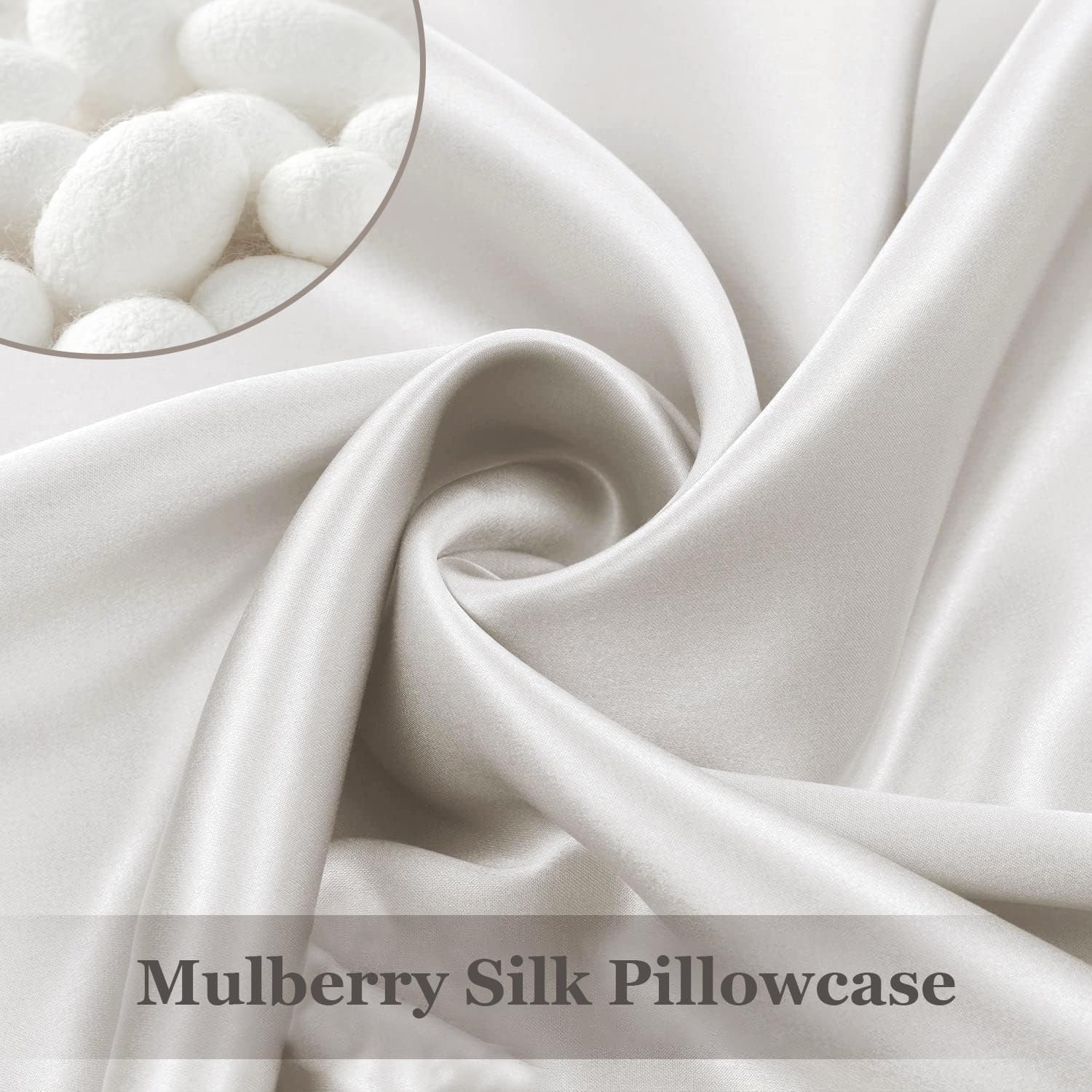
Mulberry silk comes from silkworms raised on a diet of mulberry leaves. The result is a long, even, uniform fibre, which is what lets it be woven into a fabric with that smooth, almost liquid surface. Other silks exist, but mulberry is the one used for bedding because of that consistency.
This case is 100% pure mulberry silk on both sides. That matters more than it sounds. Some cheaper options use silk on the sleeping face and a cotton or polyester back to save money. You can feel the difference when you turn the pillow over at two in the morning. Here, both sides are the same.
The practical effect of a smooth silk surface is lower friction. Your hair slides across it rather than snagging in a woven texture, and your skin does the same. That is a physical property of the fabric, nothing more mysterious than that, and it is the single clearest reason people make the switch.
Momme, and why 22 is the number to look for
If you only learn one piece of silk vocabulary, make it momme. It measures the weight of the fabric, and it is the quickest way to judge quality in silk bedding.
Silk pillowcases usually run from about 16 momme up to 25. At the bottom end, 16 and 19 momme feel light and can look slightly see-through over a dark pillow. They are fine, but they wear out sooner because there is simply less fibre there. At the top end, 25 momme is lovely and priced accordingly.
Twenty-two momme is where most people land, and it is where this case sits. The fabric has enough body to hang properly over the pillow, enough density to stand up to repeated washing, and it still feels light and cool when your face hits it. If you are comparing options and trying to work out which is the best 22 momme silk pillowcase for you, start by confirming the momme is actually stated. Listings that do not mention it are often hiding a lighter weight.
The 900 thread count listed alongside it describes a fine, tight weave. It is not directly comparable to a cotton thread count and it is not the number to shop on. Momme is.
Size, and getting it right first time
This is a standard size pillowcase at 20 by 26 inches, which is roughly 51 by 66 cm. That is the most common bed pillow size, but it is worth checking rather than assuming.
Pull the case off your current pillow and measure the pillow itself, across and down. Standard is 20 by 26. Queen is 20 by 30. King is 20 by 36. The width is the same across all three, so the number you actually need to check is the length.
A case that is too small will strain at the seams and the pillow will look compressed. A case that is too big will sag and bunch, which defeats the point of the clean lines. Spend the thirty seconds measuring.
The hidden zipper, and why closure type matters
Pillowcases close in three ways. Open ended, which is the plain tube most cheap cotton cases use. Envelope flap, where a folded panel tucks the pillow in. Or a zipper.
Open ended cases let the pillow creep out overnight. Envelope flaps are better, but the fold can work loose and end up as a ridge under your cheek, and on a slippery fabric like silk that happens more often than on cotton.
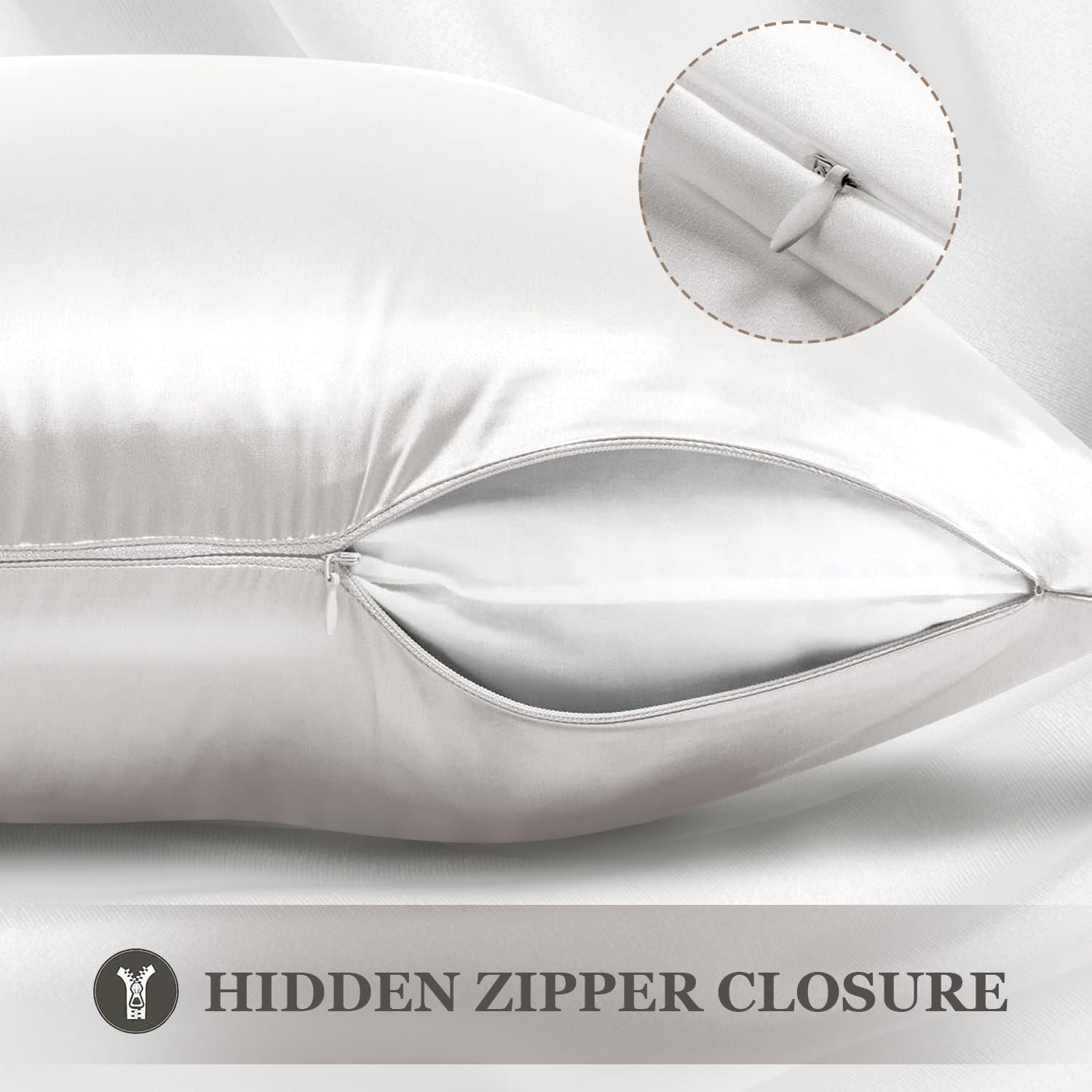
A hidden zipper solves both problems. The pillow goes in, the zipper closes, and the pillow stays fully enclosed until you decide otherwise. Because the zipper is set into the seam it stays out of sight, so the case keeps a clean rectangular shape on the bed. It also makes removing the case for washing quicker, which matters when you are doing it weekly. For anyone hunting the best hidden zipper pillowcase, that is the whole argument in one paragraph.
Position the case so the zipper end sits away from where you rest your head and you will never feel it.
Ivory, and why it is the easy choice
Colour in bedding is where people overthink. Ivory white is the forgiving option. It is warmer than a bright optical white, which means it does not sit next to your existing sheets making them look grey and tired. Under a bedside lamp it reads soft rather than clinical.
It pairs with cream, oatmeal, stone, pale grey, natural linen and plain white without any clash. If you change your duvet cover next year, it will still work. And if you are buying the best ivory silk pillowcase as a gift for someone whose bedroom you have never seen, that versatility is exactly what you want.
Looking after it
Silk asks for a little care, but not as much as people fear. The stated care here is hand wash or dry clean only.
Hand washing takes about five minutes. Fill a basin with cool water, add a small amount of detergent made for delicates, and swirl the case through gently for a minute or two. No scrubbing, no wringing. Rinse until the water runs clear, then lay the case flat on a towel, roll the towel up and press to draw the water out.
Dry it flat or hang it somewhere with air moving, out of direct sun. Sunlight is what fades dyed fabric, so shade is your friend. Skip the dryer entirely, and skip fabric softener, which leaves a film that dulls the silk surface. Bleach is out too.
If it creases, a cool iron with a thin cloth laid over the silk will settle it. Most creases drop out on their own once the case is stretched over a pillow.
The single best habit is owning two and rotating them. One on the bed, one clean in the drawer. Washing becomes something you do without planning around it, and each case gets half the wear.
Who this suits
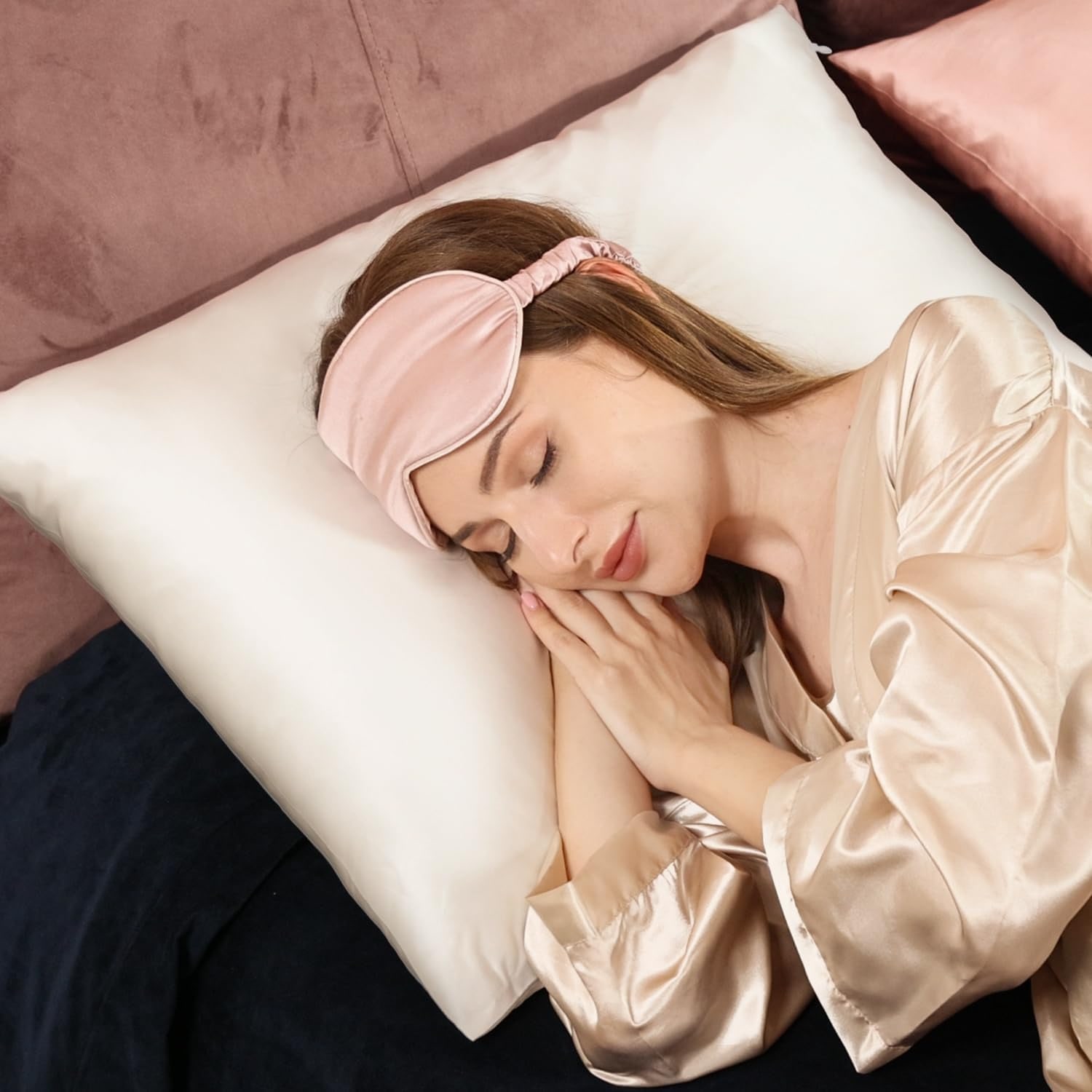
People with long hair that tangles overnight. Warm sleepers who find cotton cases hold heat. Anyone who has slept on silk in a hotel and wondered why their own bed does not feel like that. And people buying a present who want something that feels indulgent without being a gamble on taste.
It suits less well if you want something you can throw in a hot machine wash and forget about. Silk is not that fabric, and no amount of wishing changes it.
The short version
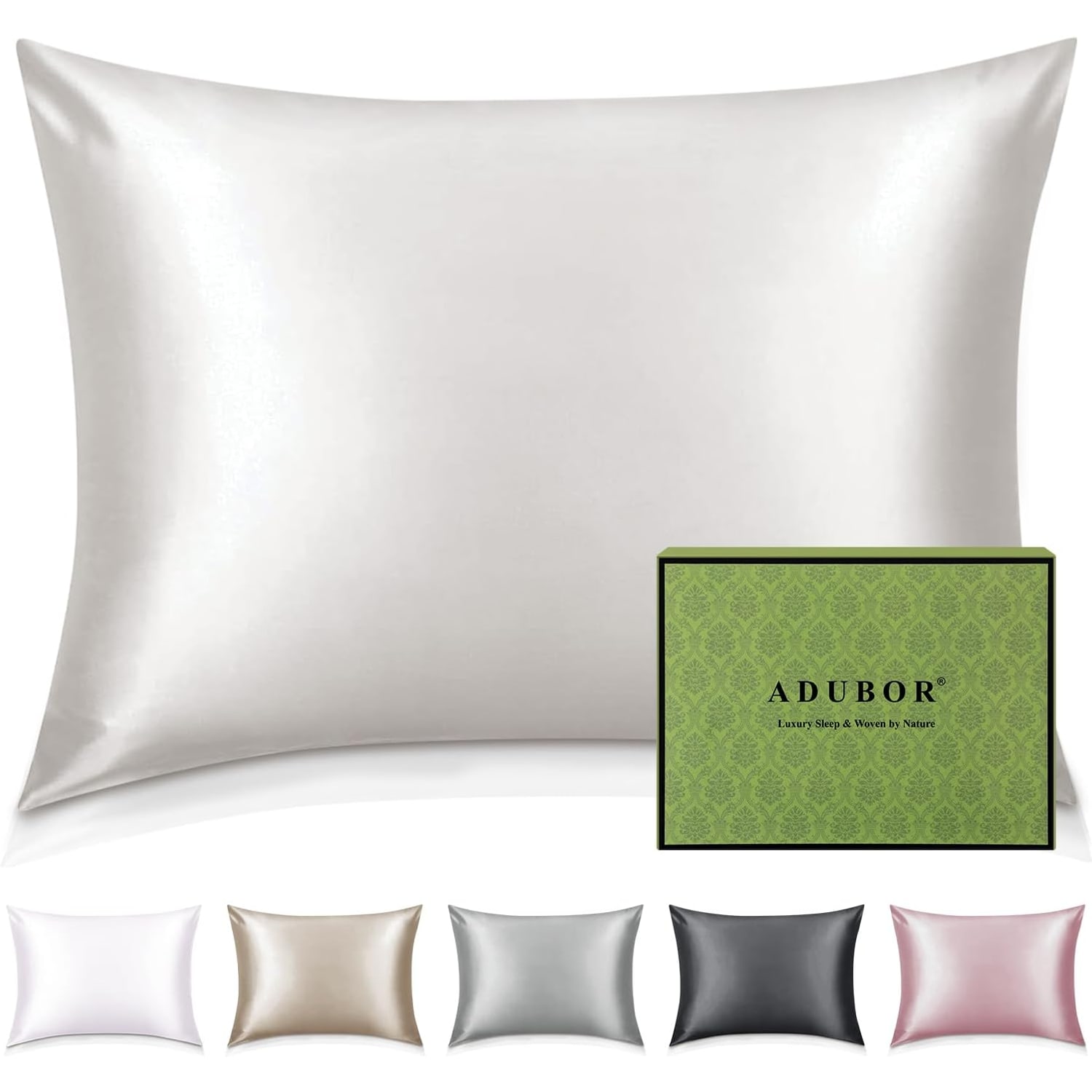
One ivory pillowcase in 100% mulberry silk, 22 momme, standard size at 20 by 26 inches, closed with a hidden zipper. Light at 95 g, solid colour, classic cut. Hand wash or dry clean, dry in shade, keep it out of the dryer.
Check your pillow measures 20 by 26 before you order. If it does, this is a simple, low-risk way to find out whether silk bedding is worth it for you.