
The complete guide
How to Choose a Silk Sleep Mask That Actually Stays On All Night
The problem with light you stopped noticing
Walk into your bedroom at two in the morning and really look. There is almost always something glowing. A router with a blue pinprick. The clock on the oven, visible through a half-open door. A streetlight that hits the gap where the curtains do not quite meet. In summer, the sun arriving at half past four while you still have two hours of sleep left in you.
None of it feels like much. That is the catch. You get used to it, and because you got used to it you stop treating it as the reason you surface at five and never properly go back under.
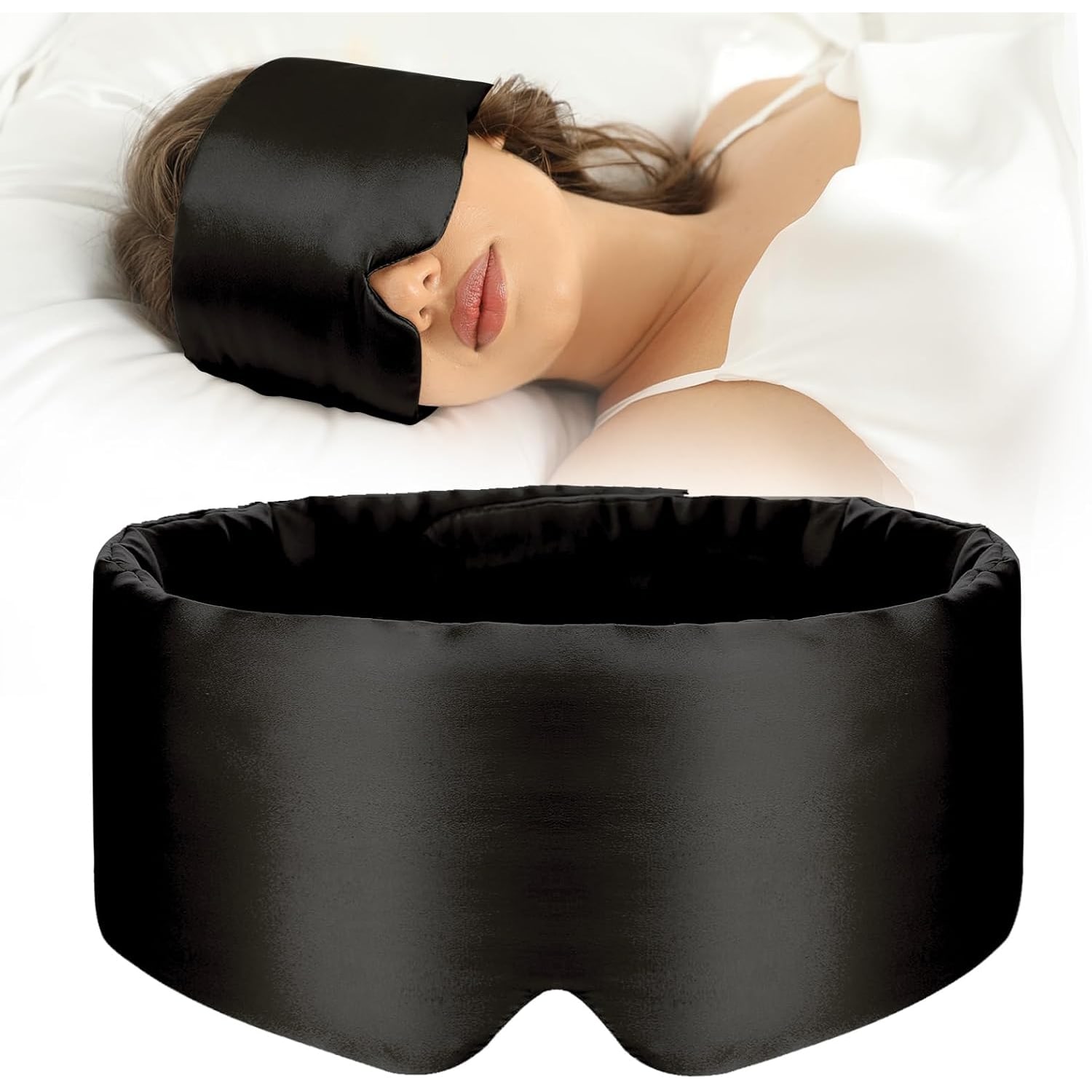
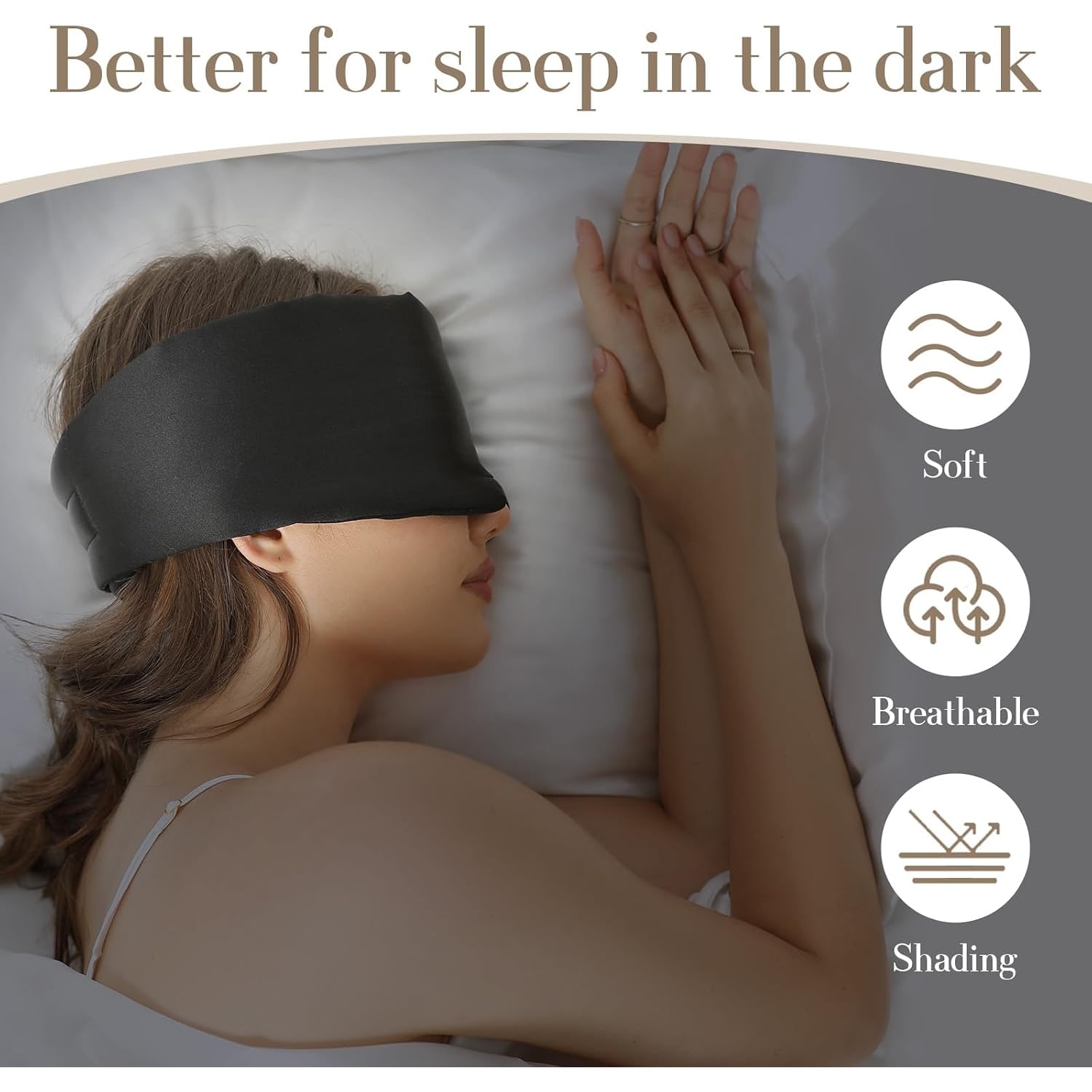
A sleep mask solves this the direct way. It puts the darkness on your face rather than trying to fix the whole room. That is a far smaller job. You can take it to a hotel, a friend's spare room, a night train or a plane seat, and the result is the same every time.
Why silk, and why mulberry silk in particular
Fabric matters more on a sleep mask than on almost anything else you own, because it spends seven hours pressed against the thinnest skin on your body.
Silk is smooth. Under a microscope the fibre is a long, even filament rather than the short, fuzzy staples that make up cotton. In practice that means less drag. Your face moves against the mask every time you roll over, and a smoother surface slides instead of catching. The fine hair at your temples does the same.
Silk also feels cool when you first put it on, and it does not trap heat the way a thick foam shell does. If you run warm at night, or you sleep somewhere with no air conditioning in August, that difference is noticeable.
Mulberry silk is the grade used for most silk bedding. The silkworms are raised on mulberry leaves, which gives a longer and more uniform fibre than wild-harvested silk. The maker lists this mask as 100% mulberry silk. The momme weight, which is the standard measure of silk density, is not stated, so treat the fibre type as the known fact and judge the hand feel when it arrives.
The band is the part people underestimate
Nearly everyone shops for a sleep mask by looking at the front. The front is the easy bit. The strap is what decides whether you still have the mask on at six in the morning or whether you flung it off in your sleep without waking.
Thin elastic cord is the cheapest option and the worst one. It focuses all the holding tension into a narrow line. You feel that line behind your ears first, then across the back of your skull, and by the small hours you have either loosened it until the mask leaks light or pulled it off entirely. It also leaves a crease in your hair.
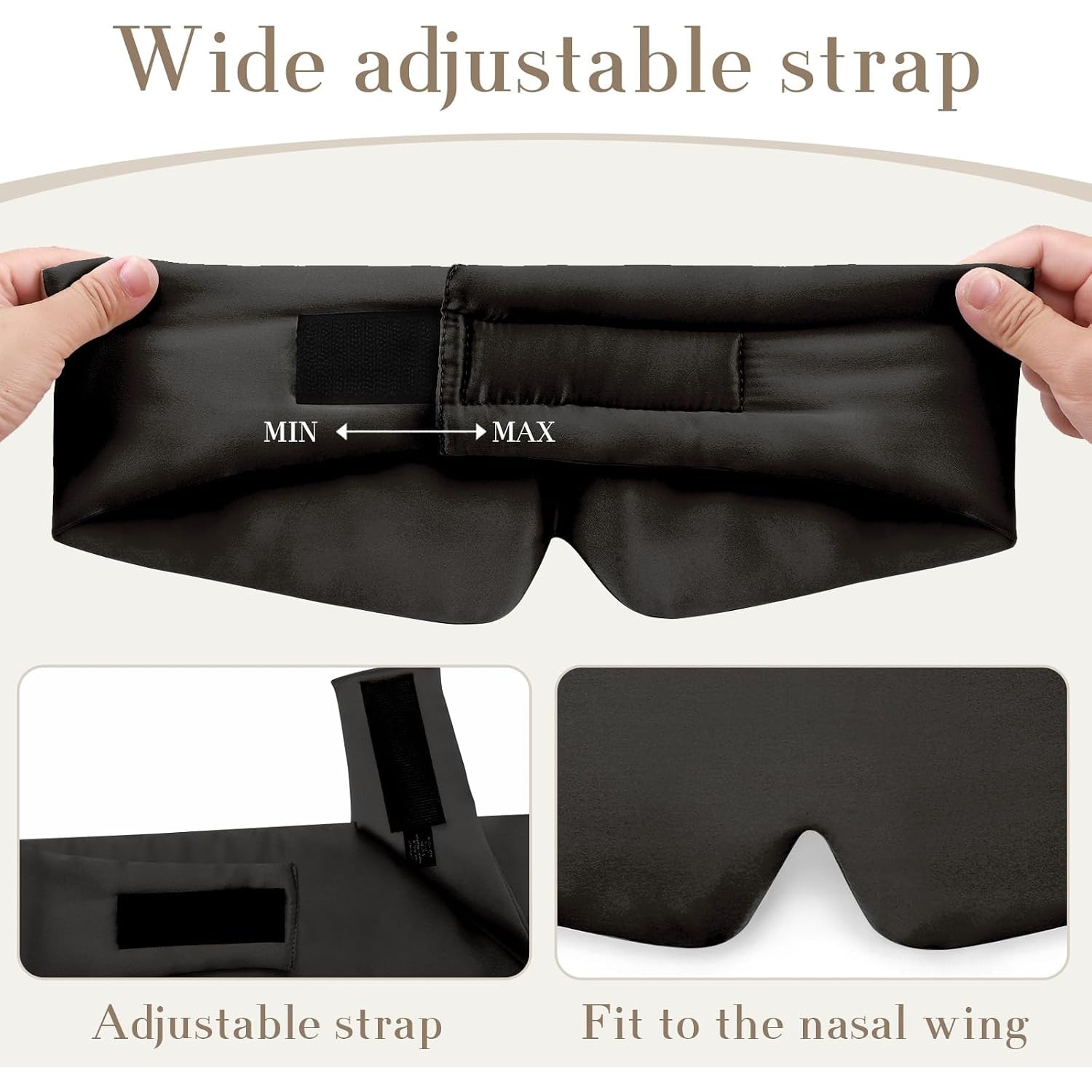
A wide band spreads the same hold across a much larger patch of skin. The pressure per square centimetre drops. You stop registering it, which is exactly what you want from something worn while unconscious.
The hook and loop closure adds the other half of the fix. With sewn-in elastic, you get whatever tension the factory decided on, stretched over however many washes the mask has had. With hook and loop you set it yourself. Try it once at your normal sleeping tightness, press it shut, and leave it. You do not have to readjust every night, and if you lend it to someone with a very different head size, one pull sorts it.
One small habit worth forming: open the strap by peeling it from one corner rather than tugging it straight apart. Hook and loop lasts far longer that way, and the silk nearby stays untouched.
Who this suits
Light sleepers at home. If your partner reads late, works late or just goes to bed two hours after you, a mask ends the negotiation. They keep the lamp on, you sleep.
Shift workers. Sleeping through the middle of the day is hard, and blackout curtains rarely do the whole job on their own. A mask closes the gap. Most people who work nights end up relying on the combination rather than either alone.
Travellers. This is the obvious one. A flat silk mask weighs almost nothing, packs into any side pocket and turns a window seat at midday into something you can nap in. It is also the one piece of sleep kit that works identically in every country.
Nappers. Twenty minutes on the sofa does not justify closing every blind in the house. The mask is quicker.
Side sleepers. A flat silk mask generally sits better against a pillow than a bulky contoured one, because there is less depth to press into. The wide band helps here too, since there is no hard elastic knot behind the ear.
Who might want something different: if you need absolutely no contact with your eyelids, perhaps because you wear lash extensions or you simply cannot stand the sensation, look at moulded contoured masks with a hollow eye cavity. That is a different build to this flat silk style.
How to choose between masks
A few things are worth checking before you buy anything in this category.
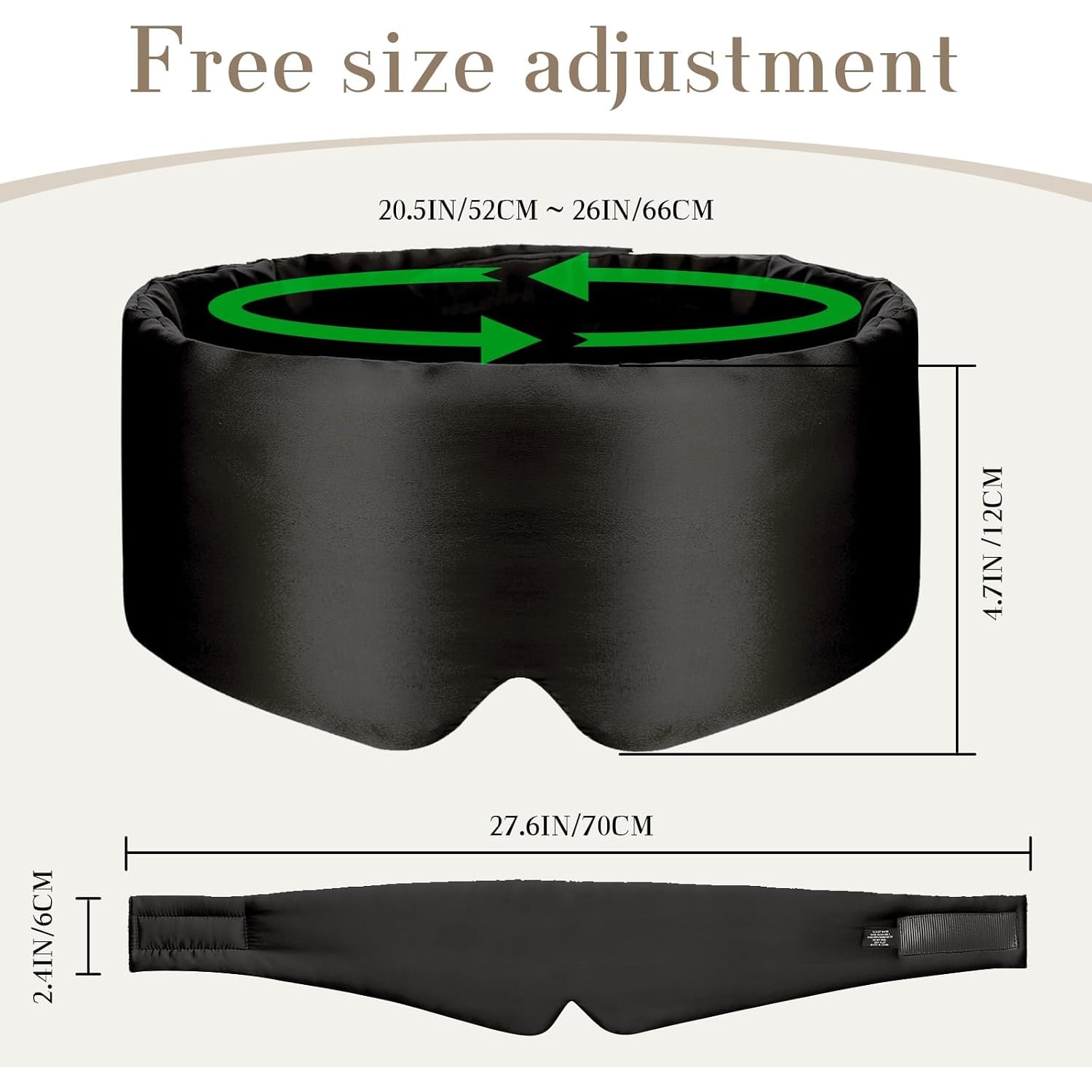
Coverage first. A mask that is too small lets light in at the bridge of the nose and along the outer edge by the temples. This one is listed as a large size, which is the right direction. If you have a broad face or deep-set eyes, generous coverage matters more than it does for most people.
Colour second, and this is less obvious than it sounds. Pale fabric reflects more of whatever light gets past the edges back toward your eyes. Solid black absorbs it. That is why a blackout silk eye mask is almost always sold in black, and it is a real functional difference rather than a styling choice.
Closure third. Hook and loop beats fixed elastic for adjustability and for keeping tension over time. Buckles and sliders are the other adjustable option, but they add hardware you can feel when you lie on your side.
Fabric last, though for many buyers it is the first thing they care about. If you have tried cotton or polyester masks and disliked the way they grip your skin, silk is the upgrade that actually addresses it.
Looking after it
Silk is not fragile, but it does not forgive a hot machine cycle.
Hand wash only. Cool water, a small amount of detergent made for delicates, and gentle squeezing rather than rubbing or wringing. Rinse until the water runs clear. Lay the mask on a towel, roll the towel to press out the moisture, then reshape and dry flat somewhere out of direct sun and away from a radiator.
Close the hook and loop strip before it goes anywhere near water. An open hook face will find silk and pull threads, every time.
Wash every week or two under normal use, more often if you wear face products to bed. Light regular washing is much kinder to silk than letting grime build up and then scrubbing. Keep it away from bleach. If you ever need to press it, use the lowest silk setting with a cloth in between, and keep the iron off the strap.
Store it somewhere it will not get crushed or snagged. A small drawstring bag is ideal, and it also stops the mask collecting lint in a suitcase.
The short version
A good sleep mask is one of the cheapest fixes available for broken sleep, and the two things that decide whether it works are coverage and strap comfort. This one is cut large in solid black 100% mulberry silk, with a wide adjustable band that fastens with hook and loop so you set the tension once.
Silk gives you a smooth, cool surface that does not drag on skin or hair. The wide band keeps pressure off any single point, which is why it stays on while you sleep instead of ending up somewhere under the duvet. Hand wash it, dry it flat, and it will keep doing the job for a long time.
If your bedroom is brighter than you would like, or you travel often and keep losing sleep to cabin lights and unfamiliar curtains, this is a small thing that makes a measurable difference.