
The complete guide
How to Choose a Silk Sleep Mask That Actually Stays On
The problem with a room that is never quite dark
Ask people why they wake at 5am in summer and most will blame the heat. Often it is the light. A thin curtain, a gap at the edge of a blind, a hallway lamp left on for a child, the green dot on a smoke alarm. Your eyes pick all of that up even when they are closed, because eyelids are not opaque.
Blackout curtains help, but they are expensive, they only fix one room, and they do nothing on a plane or in a hotel. A sleep mask fixes the problem wherever you are. It is about the cheapest sleep upgrade you can buy, and the one you can throw in a bag.
The catch is that a lot of masks are unpleasant to wear. They are bulky, they slide off, the strap digs in, or the lining feels scratchy by hour three. That is usually a materials and fit problem rather than a flaw in the idea. Which is where silk comes in.
Why silk, and why mulberry silk
Silk is a protein fibre spun as one long filament rather than short staples twisted together. That is why the surface feels smooth instead of slightly fuzzy. Mulberry silk refers to silk from silkworms fed on mulberry leaves, which produces unusually long and even filaments and therefore a more consistent fabric.
In practical terms, smooth matters because the skin around your eyes is thin and gets pushed around all night. Cotton and polyester have more drag against skin and hair. Silk slides. If you have ever woken up with a crease across one cheek from a pillowcase, you know the difference friction makes.
The other practical point is weight. Silk can be woven thin and still feel substantial. That means a mask can be slim enough to lie flat under a pillow and still feel like a proper piece of fabric rather than a scrap of lining.
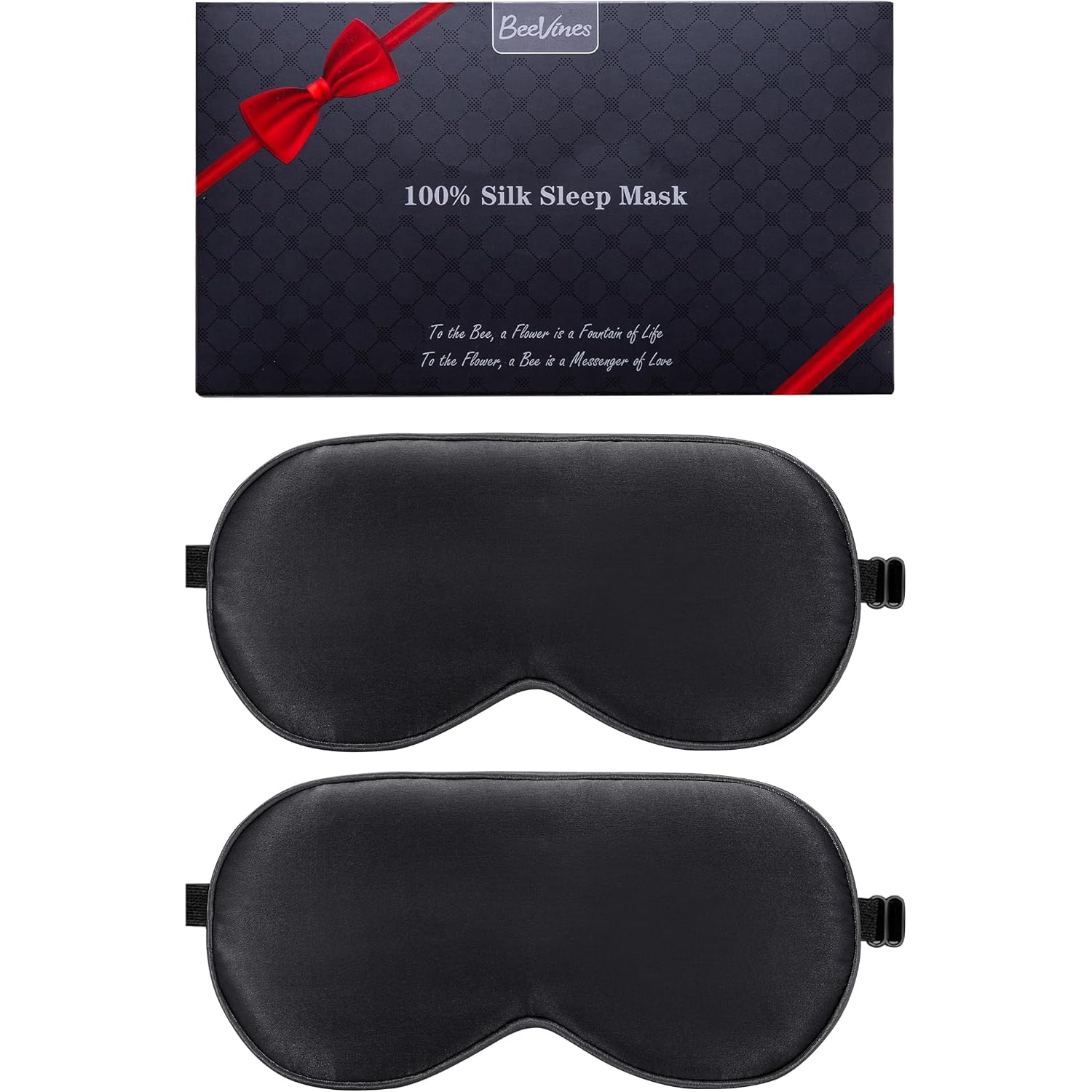
One thing to check on any silk mask is whether both sides are silk. Manufacturers sometimes put a silk face on the outside and something cheaper on the inside, which is backwards from a comfort point of view. In this set, both sides are silk. That is the side that counts.
Fit is the whole game
A mask that does not stay on is a mask you stop using after a week. Three things decide whether it stays put.
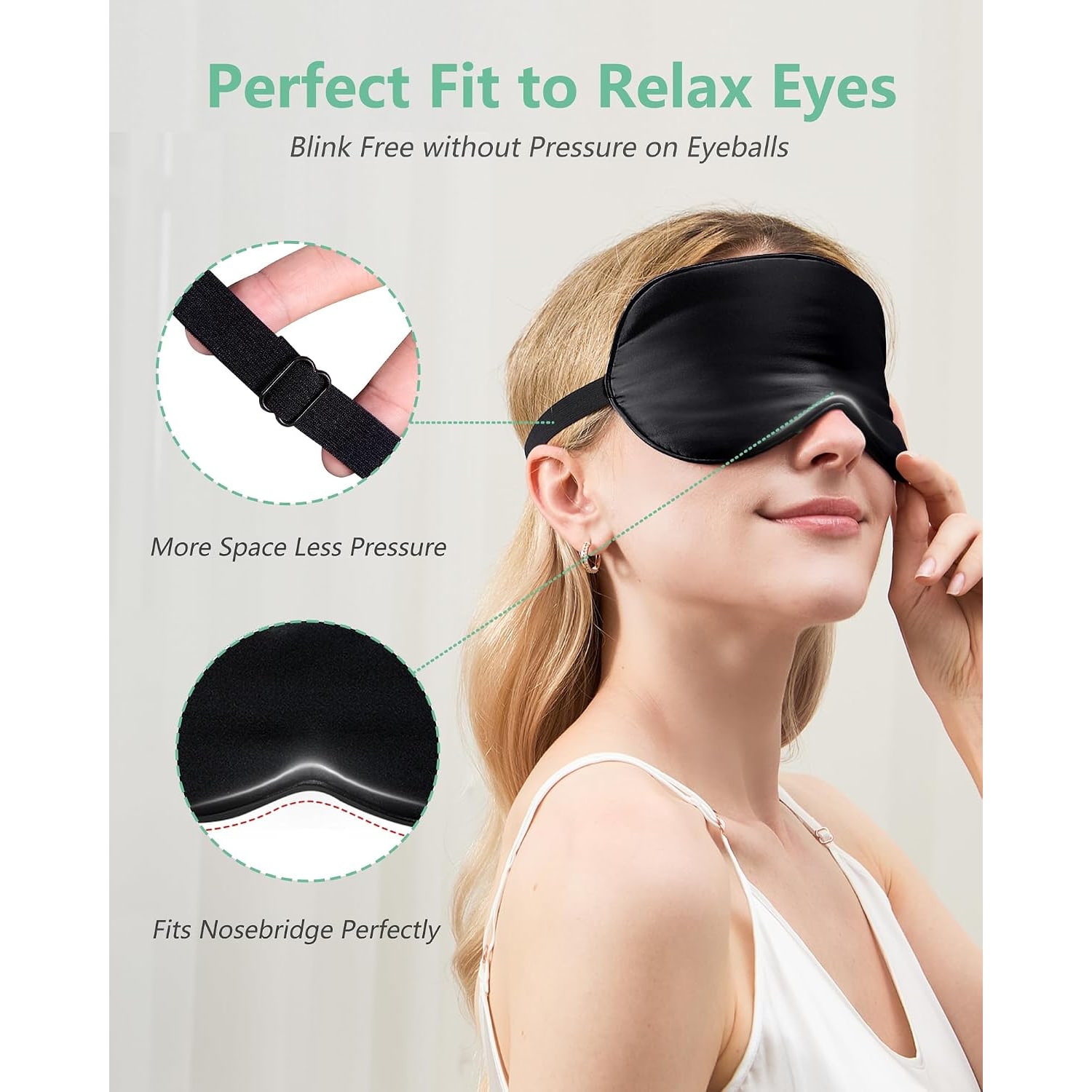
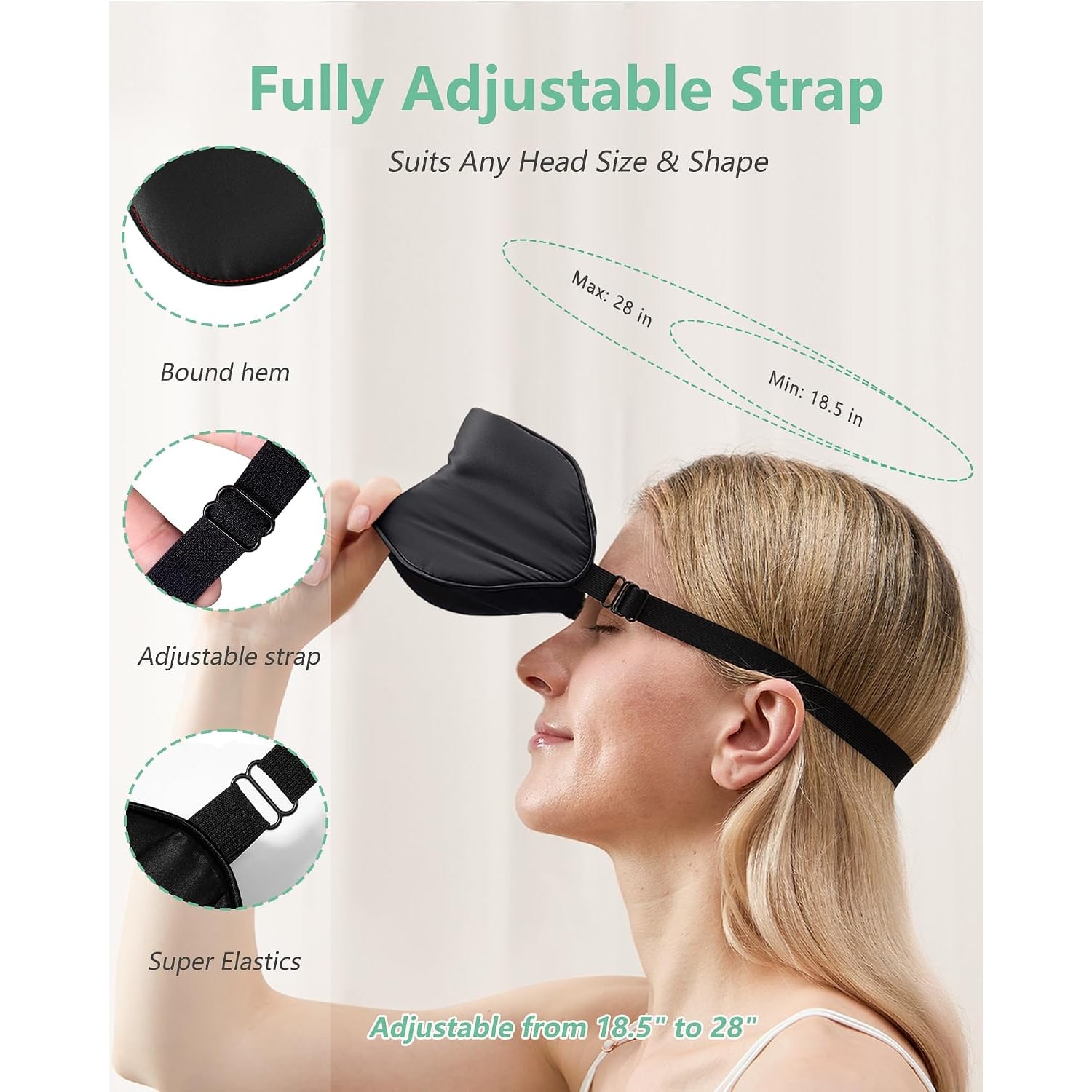
The first is strap type. An adjustable strap lets you set the tension once and forget it. Fixed-length elastic either sits too loose on a small head or digs in on a larger one. The masks in this set use an adjustable elastic band, so you set it to your own head rather than hoping the factory guessed right.
The second is bulk. A thick, heavily padded mask sticks out further from the face. When your pillow pushes against it as you roll over, that thickness becomes a lever that lifts the mask off your face. A slim mask, like this one at just over half an inch deep, has much less to grab. Side sleepers in particular notice this.
The third is panel shape. A mask that is too tall rides up onto your forehead or down onto your cheeks and never settles. At 9.4 inches wide by 5.31 inches tall, this one covers the eye area without over-reaching, which is the shape most people find sits still.
A fit tip worth knowing: tighter is not better. Over-tightening pulls the mask against the bridge of your nose, which is the exact spot that makes a mask uncomfortable. Set it just snug enough that the mask does not shift when you turn your head side to side while lying down. That is the right tension.
Who this suits
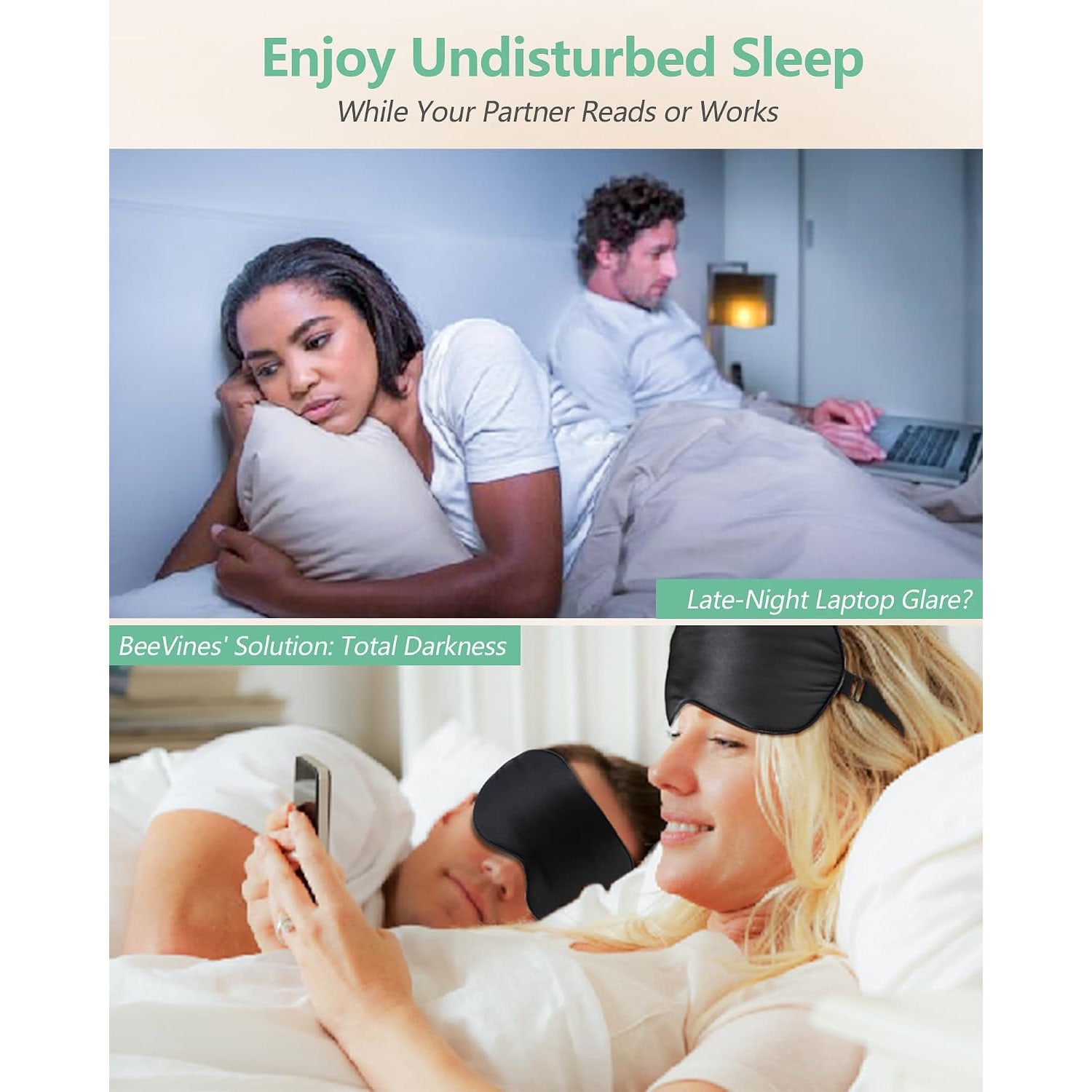
Light sleepers at home are the obvious group. If you wake with the sunrise or your partner reads later than you do, a mask solves it without negotiation.
Travellers are the next group. Overnight flights, trains, buses, hotel rooms where the curtains do not meet in the middle. A flat silk mask takes up no room and weighs almost nothing, which is why people searching for the best travel sleep mask usually end up with a slim silk style rather than a moulded foam one.
Shift workers get the most out of a mask of anyone. Sleeping during daylight is genuinely hard, and a mask plus a decent set of earplugs does more than most other tricks.
Then there are the short-rest users. People who nap on a lunch break, meditate for twenty minutes, or lie down with a headache. A mask signals to your brain that this is rest time, and the dark helps you drop off faster than you otherwise would.
The two pack suits anyone in those groups who has lost a mask before. Most of us have.
How to choose between masks
If you are comparing options, here is what is actually worth comparing.
Material on the inner face. This is the surface against your skin all night. Silk both sides beats silk outside with a synthetic lining every time.
Strap adjustability. Non-negotiable if you want it to stay on. Also check whether the adjuster itself is bulky, because a chunky plastic slider at the back of your head is annoying on a pillow.
Profile depth. Thinner is generally better for side and stomach sleepers. Deeper contoured masks have their fans, especially people who want zero pressure on the lashes, but they are harder to pack and more likely to shift.
Colour. Black hides cosmetic residue and general wear far better than cream or blush. It is also easier to gift without worrying about taste.
Washability. Silk is hand wash in cool water. If a brand tells you a silk mask is machine washable hot, be sceptical.
Price per mask. A two pack changes the maths. Divide the set price by two before comparing it with a single mask from somewhere else.
Looking after it
Silk does not need much, but it does need the right kind of care.
Hand wash in cool water with a detergent made for delicates. Swish it, do not scrub. Rinse until the water runs clear. Then press the water out between a folded towel rather than wringing it, because twisting is what breaks silk fibres and warps the shape.
Dry it flat, away from radiators, heaters and direct sun. Heat and strong light are harder on silk than washing is. Drying flat also keeps the elastic from stretching under its own weight.
Skip bleach, skip fabric softener (it coats the fibre and dulls the surface), and skip the dryer entirely. If you want it smooth, a cool iron with a cloth in between will do it, but most masks come out of a flat dry looking fine.
Wash it more often if you use night creams or serums, because oils build up on the fabric. Every week or two is a reasonable rhythm for most people. With two masks you can wash one and still sleep in the dark that night, which in practice means you actually keep up with it.
A note on what we do not know
The listing gives dimensions of 9.4 x 5.31 x 0.62 inches, a packaged weight figure, the colour, and the model reference. It does not state a momme weight, a thread count, or a country of origin, so none of those are claimed here. If a detail matters to you, ask before ordering rather than assuming.
The short version
A sleep mask is the cheapest fix for a bedroom that is not dark enough, and silk is the material that makes a mask comfortable enough to actually keep using. This set gives you two black mulberry silk masks, silk on both sides, with adjustable elastic straps and a slim profile that suits side sleepers and packs flat for travel.
Set the strap just snug, hand wash it in cool water, dry it flat, and keep the spare in your bag. That is the whole routine.