
The complete guide
How to Choose a Silk Sleep Mask That You Will Actually Wear All Night
The problem nobody takes seriously enough
Most people who sleep badly blame noise, stress or the mattress. Light rarely makes the list, which is strange, because light is the single strongest signal the body uses to decide whether it is night or morning. A gap at the edge of a blind, a charging indicator on a laptop, a partner reading at 11pm, the grey wash of a June sunrise at four in the morning. None of it feels like a problem. All of it chips away at sleep.
The fix is almost comically cheap compared to blackout blinds or a new bedroom. A sleep mask puts the dark where it matters, which is directly in front of your eyes, and it travels with you. The catch is that a lot of masks are unpleasant to wear. They are stiff, they press, they slide off, or the fabric catches on skin every time you move. Those masks end up in a drawer after a week.
That is the real question when you shop. Not whether a mask blocks light in a lab, but whether you will still be wearing it at 4am without thinking about it.
What silk actually does here
Silk gets talked about in a lot of overheated language, so here is the plain version. Silk is a very smooth fibre. When your face moves against it, there is less drag than there is against cotton or a cheap polyester knit. If you sleep on your side and your cheek presses into the mask all night, that difference is noticeable. You get less of the crumpled, creased feeling in the morning.
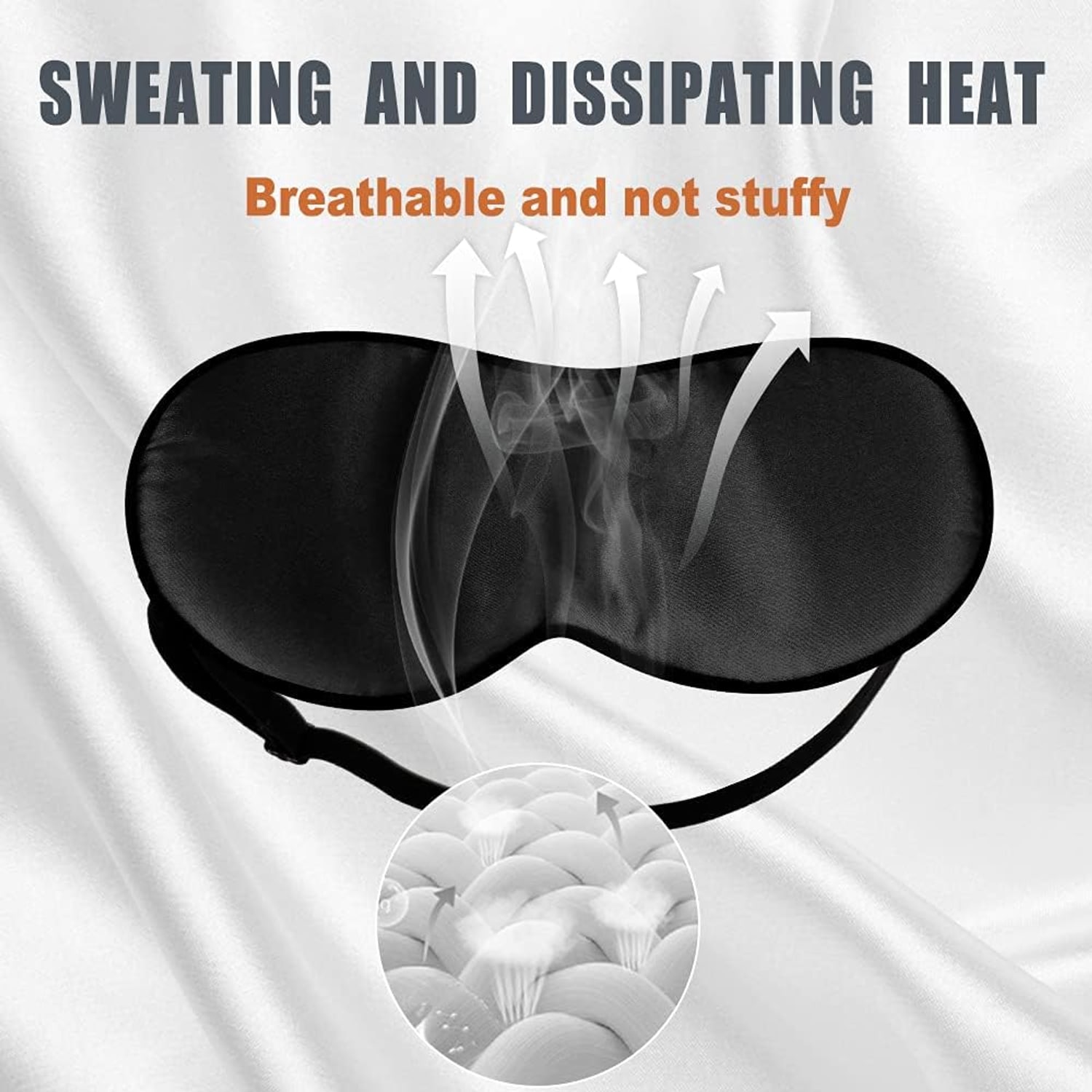
Silk also feels cool when you first put it on. It is a light fabric, so it does not add much warmth. For anyone who runs hot at night, that matters more than it sounds.
These masks are listed as 100% mulberry silk. Mulberry silk simply refers to silk from silkworms raised on mulberry leaves, which produces long, even fibres and a consistent smooth surface. A momme weight is not stated here, so judge the hand feel when it arrives rather than relying on a number.
Why width changes the experience
A standard sleep mask is a narrow band. It sits across the eyes and that is about it. It works, up to a point, but it tends to leave light leaking in around the cheeks and it has to sit fairly tight to stay put.
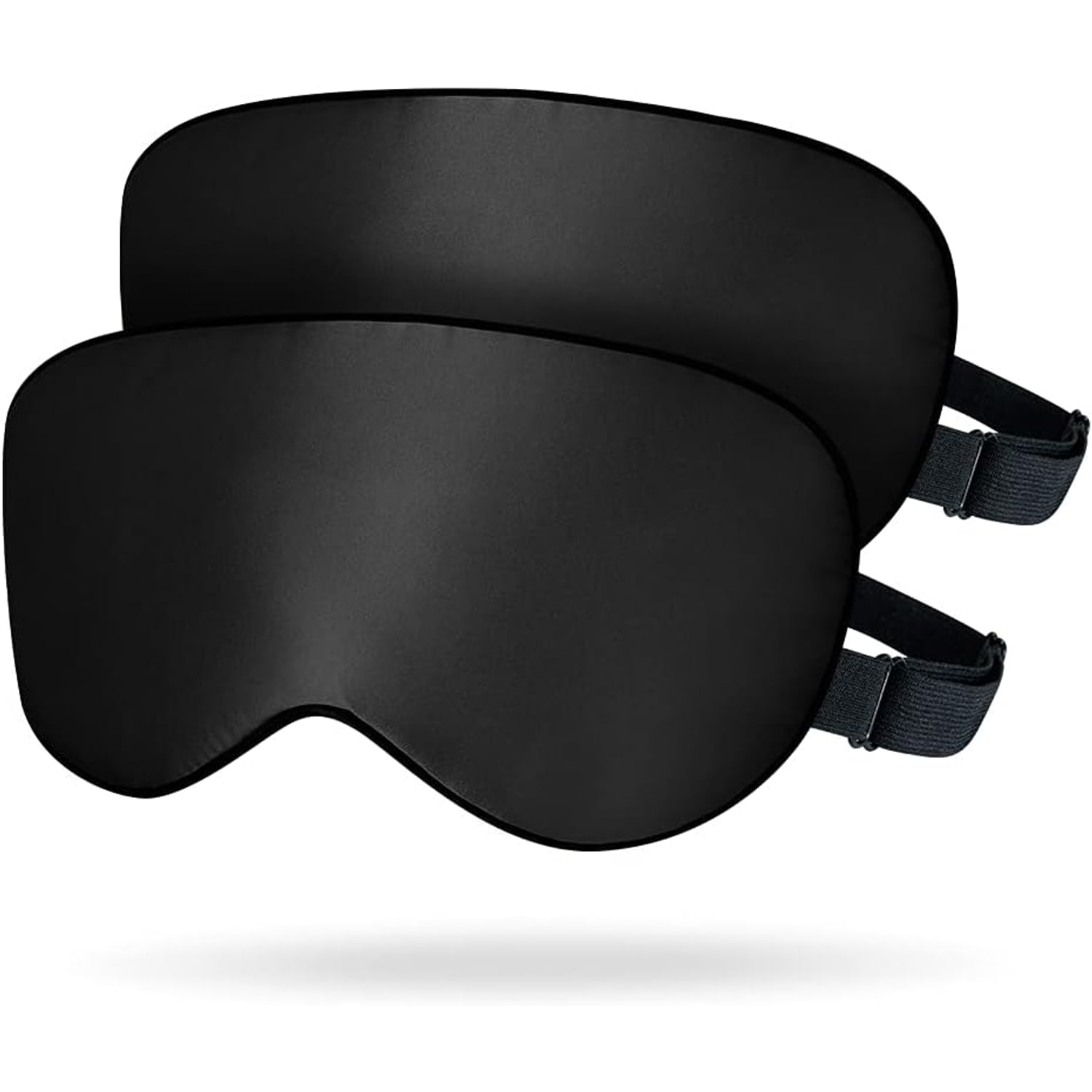
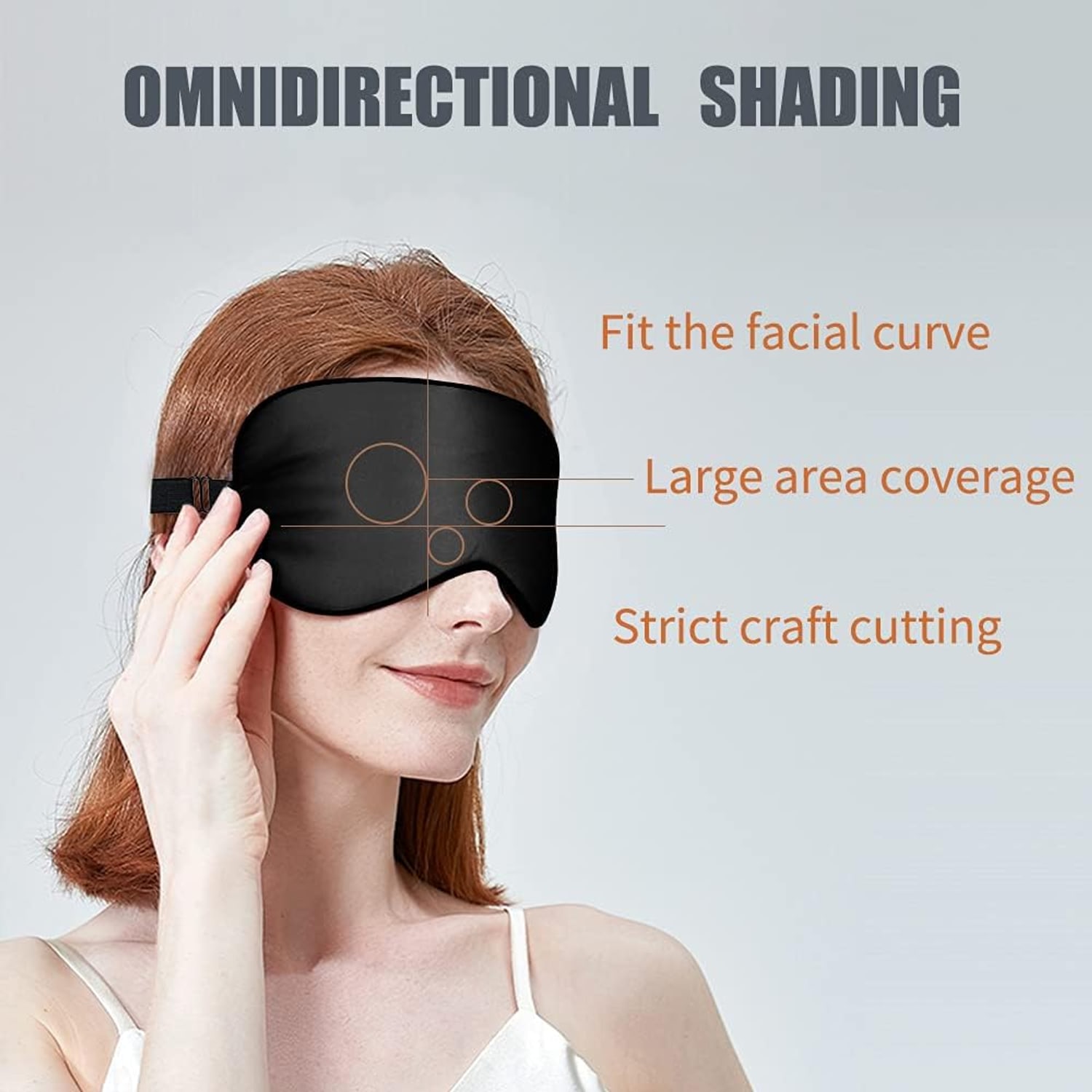
These masks are cut wider, so they cover more of the face. The lower edge is curved, following the line of the cheekbones rather than slicing straight across them. Two things follow from that. First, there is more fabric between you and the room, so less stray light finds a way in. Second, the pressure of the strap gets spread over a bigger area, which means you can wear the band looser and still have the mask stay where you put it.
That second point is the one people miss. Tight masks do not help you sleep. Pressure on the eye sockets is uncomfortable, and discomfort wakes you up just as reliably as light does. A wider mask lets you go gentler.
The strap, and why it decides everything
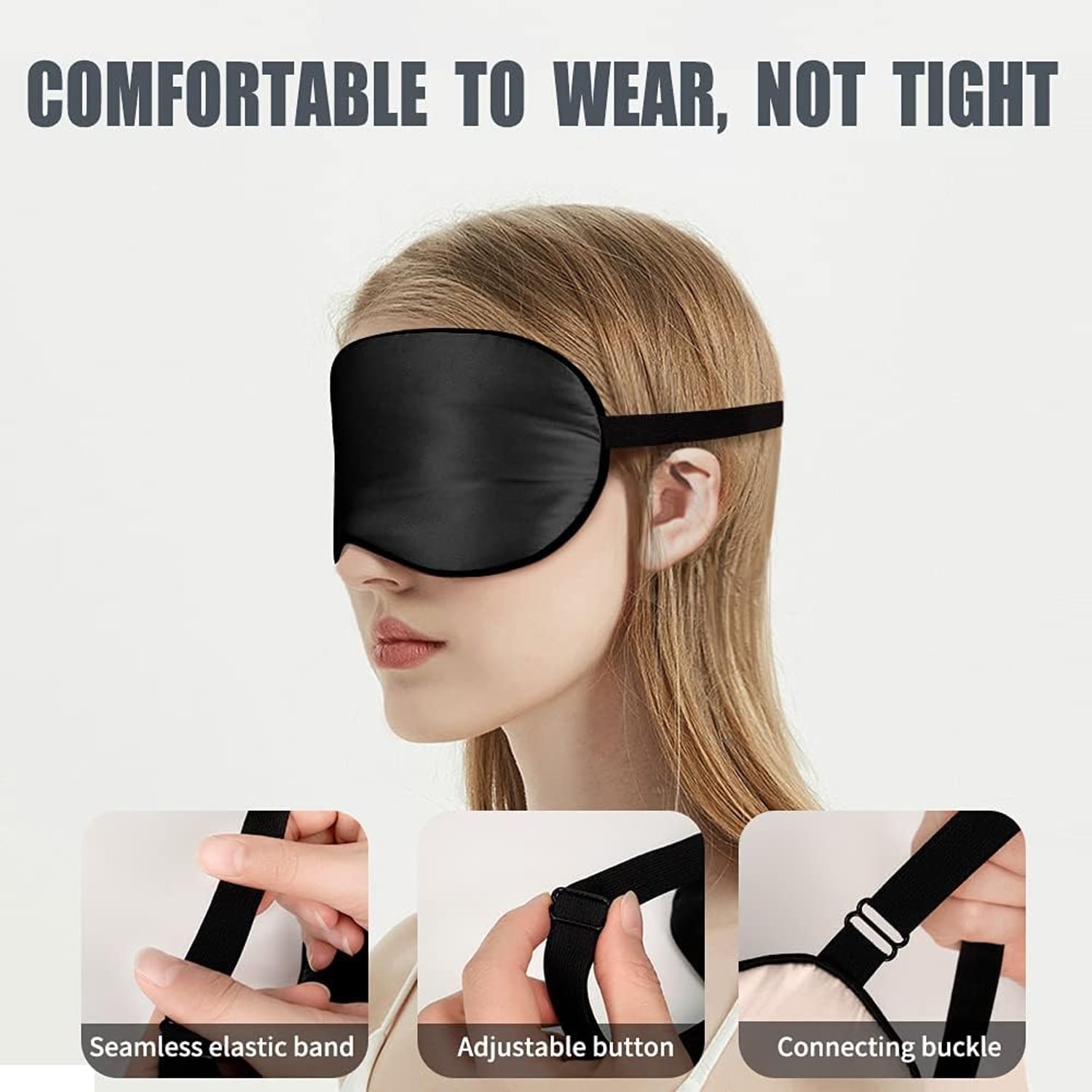
The closure here is an adjustable elastic band. There is no hard buckle, which matters if you sleep on your side, because a buckle at the back of the head is a small lump that your skull finds at some point in the night.
Set the band once. Aim for the tension where the mask does not shift when you turn your head side to side while lying down, and no tighter. Most people pull it a notch too firm at first because they are testing it standing up, with their eyes open, which is not the position it has to work in. Lie down, roll over twice, then adjust.
If you tie your hair up, think about where the band crosses. Above or below the ponytail is more comfortable than straight through it.
Who this suits
Shift workers get the most out of a wide mask, because daytime light is far harder to shut out than night light. If you finish at 7am and need to sleep until two in the afternoon, a thin band will not cut it.
Travellers are the other obvious group. A silk eye mask with adjustable strap weighs almost nothing, folds flat and fits in any pocket of a carry-on. The best travel sleep mask is simply the one that is already in the bag when you need it, which is a good argument for owning two.
Side sleepers do well with this shape, since the smooth face reduces drag against the pillow and there is no hardware pressing into the head. Light sleepers in shared rooms, anyone living on a street with a bright lamp outside, and people who nap in the afternoon all land in the same category.
Anyone with eyelash extensions should test the fit before a full night. A wider mask usually sits further from the lash line, which is helpful, but lash length varies.
Why two masks is not a gimmick
Two-packs can be padding. This one is not. A sleep mask has a habit of migrating, into a suitcase, a hotel room, the side pocket of a gym bag, the back of the sofa. Owning two means you have one permanently stationed by the bed and one in the bag.
The practical benefit is washing. Hand washing is quick but it takes a few hours to dry flat. With a single mask, washing it means a night without it, and that is exactly how people fall out of the habit. With two, the rotation looks after itself.
Both masks are black, which is the sensible colour. Black does not show marks the way an ivory or pale pink mask does, and it goes with everything, which for a bedside object means it simply disappears.
Looking after it
Hand wash only. That is the instruction and it is worth following, because a machine cycle will be rough on both the silk and the elastic. Cool water, a small amount of gentle detergent, a short soak, a gentle squeeze. Do not twist or wring it.
To dry, lay the mask on a towel, press another towel on top to take out the water, then leave it flat at room temperature. Keep it away from radiators, hot windowsills and direct sun. Heat is the fastest way to tire out both silk and elastic.
Wash every week or two under normal use. Sooner if you wear night creams or put the mask on after exercise. If it needs pressing, use the lowest iron setting on the reverse side and keep the iron away from the band.
Do not use bleach, and do not use a stain remover that contains it. Wash the masks separately the first couple of times, as you would with any dark dyed silk.
What we do not know
A few details are not stated here, and it is better to say so than to guess. There is no stated momme weight for the silk, no stated mask dimensions in centimetres, no stated weight, and no stated country of origin. The maker does not list a nose wire or moulded nose section either. What is confirmed is the fibre, 100% mulberry silk, the colour, black, the pack size of two, the wider shape with a curved lower edge, the adjustable elastic band, and the hand wash care instruction.
The short version
If light is part of why you sleep badly, a mask is the cheapest serious fix available. A wide one covers more of the face and lets you wear the strap looser, which is the real trick for all-night comfort. Silk makes it smooth against skin and lashes, and cool on first contact.
You get two, both black, both adjustable. Hand wash them, dry them flat, keep one by the bed and one in a bag. Delivery runs three to seven working days from local warehouses, and returns are open for 14 days as long as the masks are unused and unwashed.