
The complete guide
How To Choose A Silk Sleep Mask That You Will Actually Wear
The problem is almost never the bed
People spend a fortune on mattresses and pillows and then sleep in a room that is quietly lit all night. A streetlight through a gap in the blind. A router blinking green. The microwave clock across the hall. None of it feels bright when you are awake, but your eyelids are thin, and light still gets through them.
Daytime sleep is worse. If you work nights, finish a shift at seven in the morning and try to sleep until mid afternoon, you are fighting full daylight with a pair of curtains that were never designed for the job. Blackout blinds help, but they leak at the edges, and fitting them properly costs real money.
A sleep mask sidesteps all of that. Instead of making the room dark, you make the few centimetres in front of your eyes dark. It costs very little, it works in any room, and it goes in your bag.
What this one is
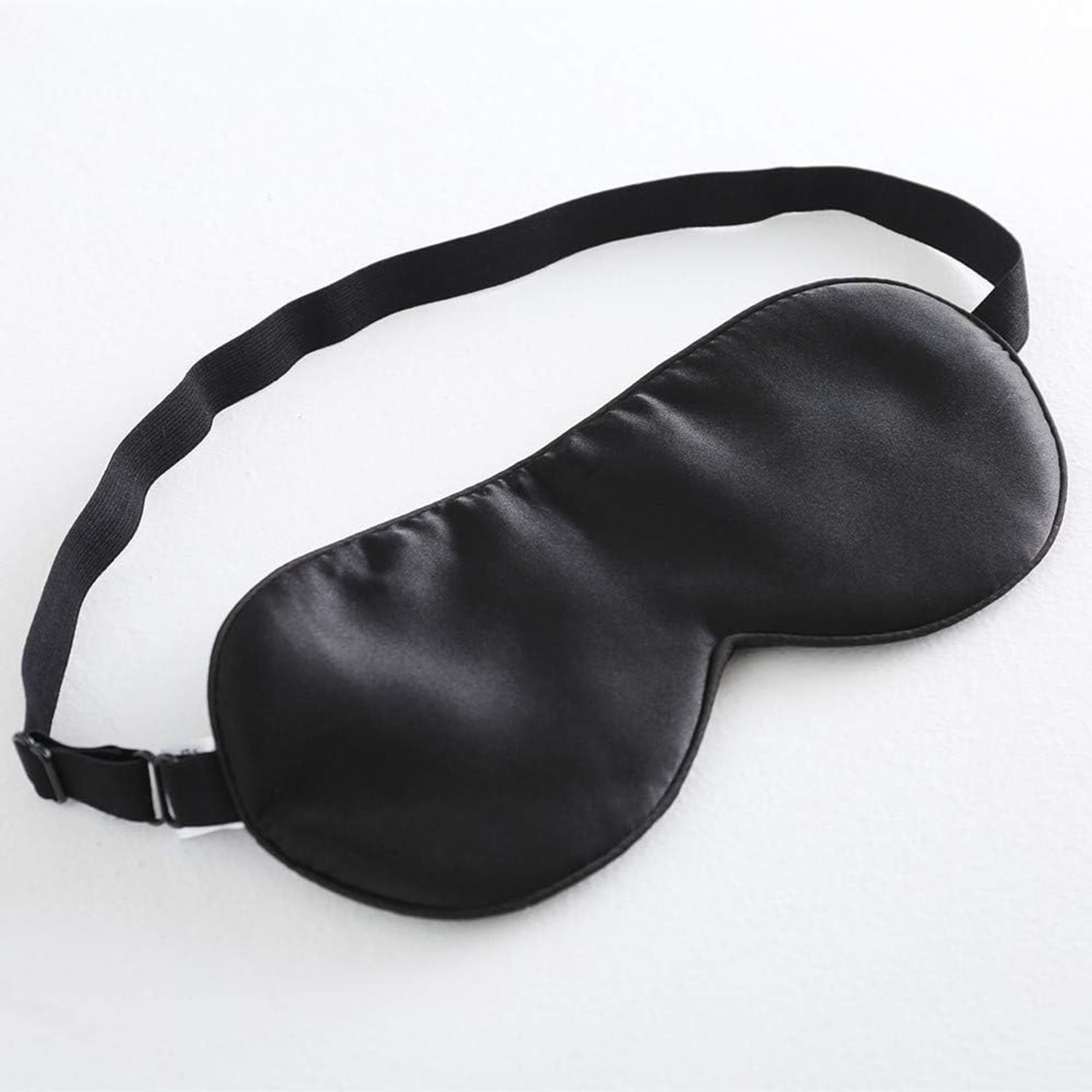
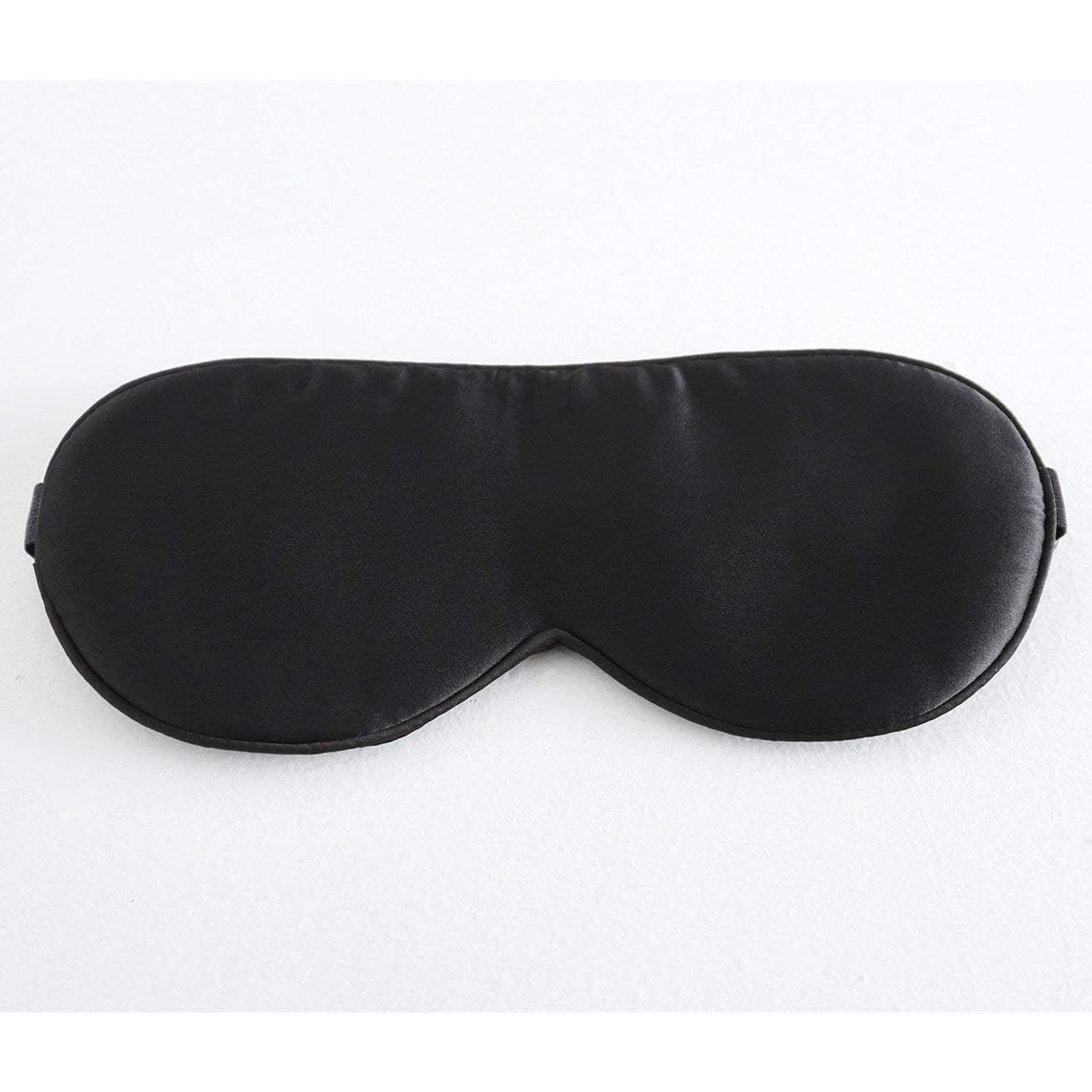
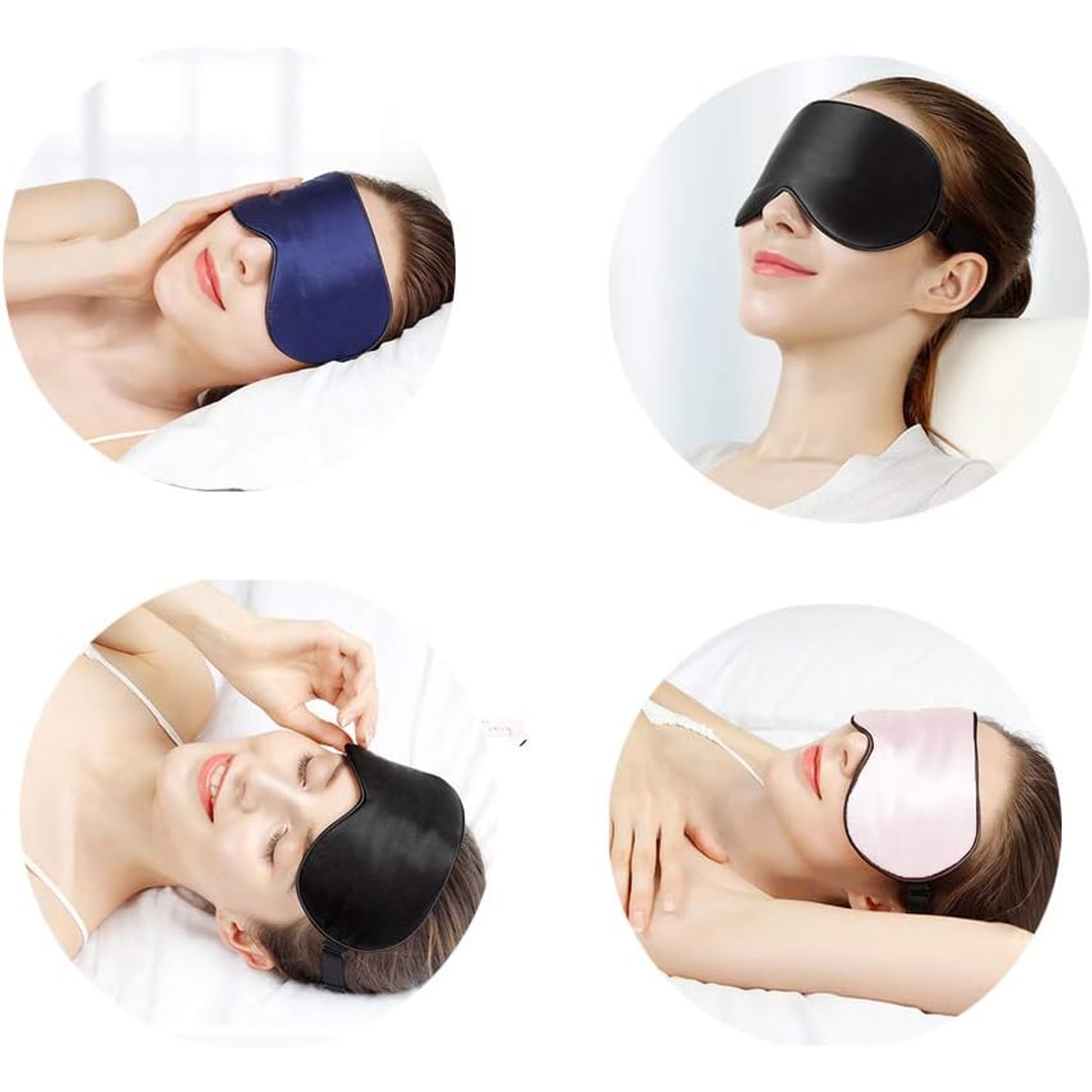
A plain black blindfold cut from 100% mulberry silk, with a fully adjustable strap. That is the whole product. No gel inserts, no moulded cups, no electronics.
Mulberry silk is the type of silk you find in better bedding and sleepwear. The silkworms are fed on mulberry leaves, which produces a long, even fibre. The result is a smooth fabric with a cool handle. For something that sits against your eyelids for hours, smooth matters more than people expect, because friction is what you notice at three in the morning.
The maker describes it as light and breathable, suitable for sleep, shift work, naps and travel, and sized for adults and older children. Care is hand wash only. The momme weight and the exact cut dimensions are not stated, so we are not going to pretend otherwise.
Why silk instead of cotton or foam
There are three common materials for sleep masks and they behave differently.
Cotton is cheap and washable. It is also comparatively rough at the fibre level, and it holds warmth. A cotton mask on a warm night can start to feel damp around the eyes.
Foam, usually in a contoured shape, blocks light well and leaves space in front of the eyes. The trade-off is bulk. A contoured mask does not fold flat, it presses firmly to seal, and side sleepers often find it shifts against the pillow.
Silk is the thin option. It sits close to the face, slides rather than drags, and does not trap heat the way foam does. It packs down to nothing. The trade-off is washing, since silk needs hand washing rather than a hot machine cycle.
If you want the thinnest, coolest, most packable option, silk wins. If you need absolute total blackout and do not care about bulk, a contoured foam mask is more effective. Most people land on silk once they have tried both.
The strap does more than you think
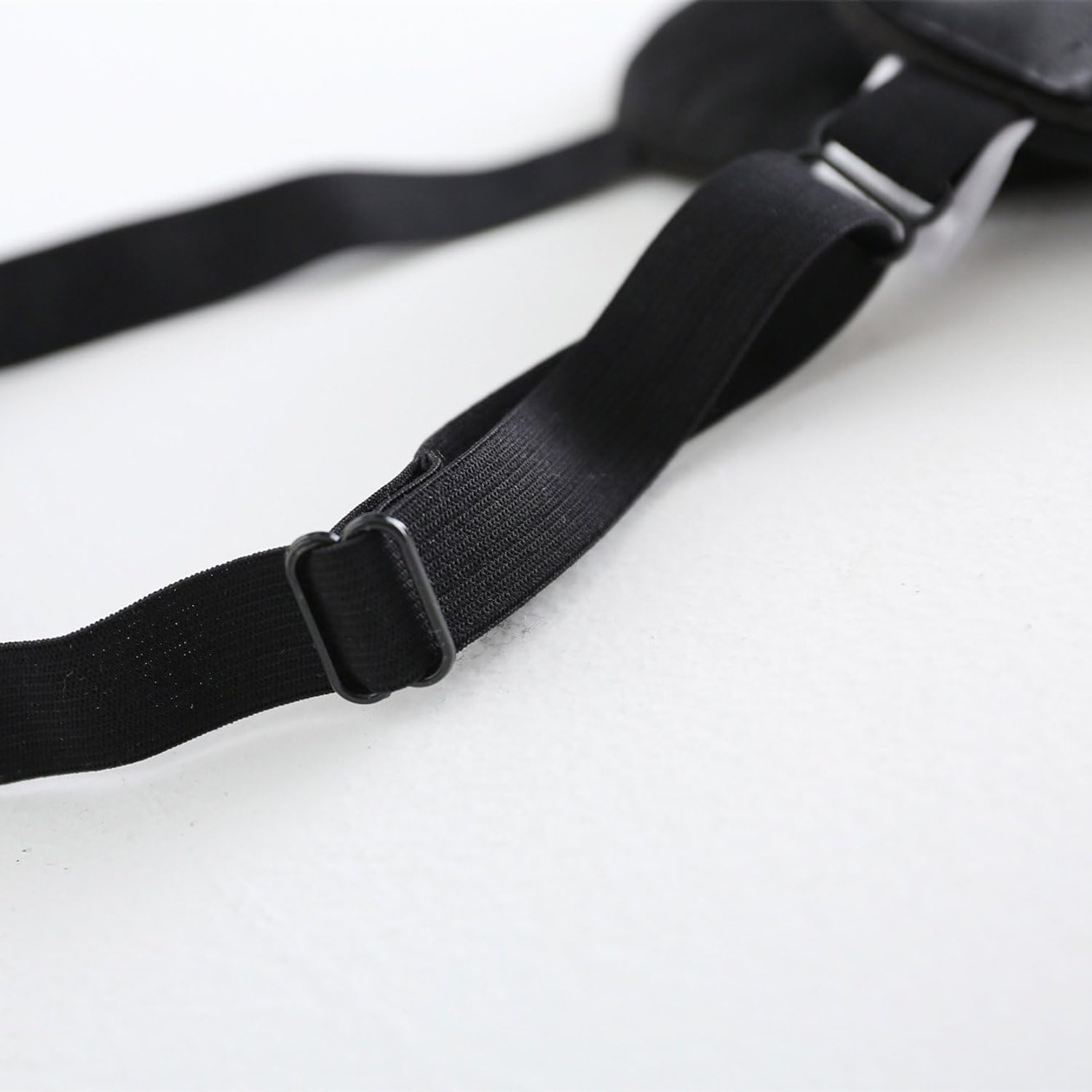
An adjustable strap sounds like a minor feature. It is actually the thing that decides whether you keep wearing the mask or abandon it in a drawer.
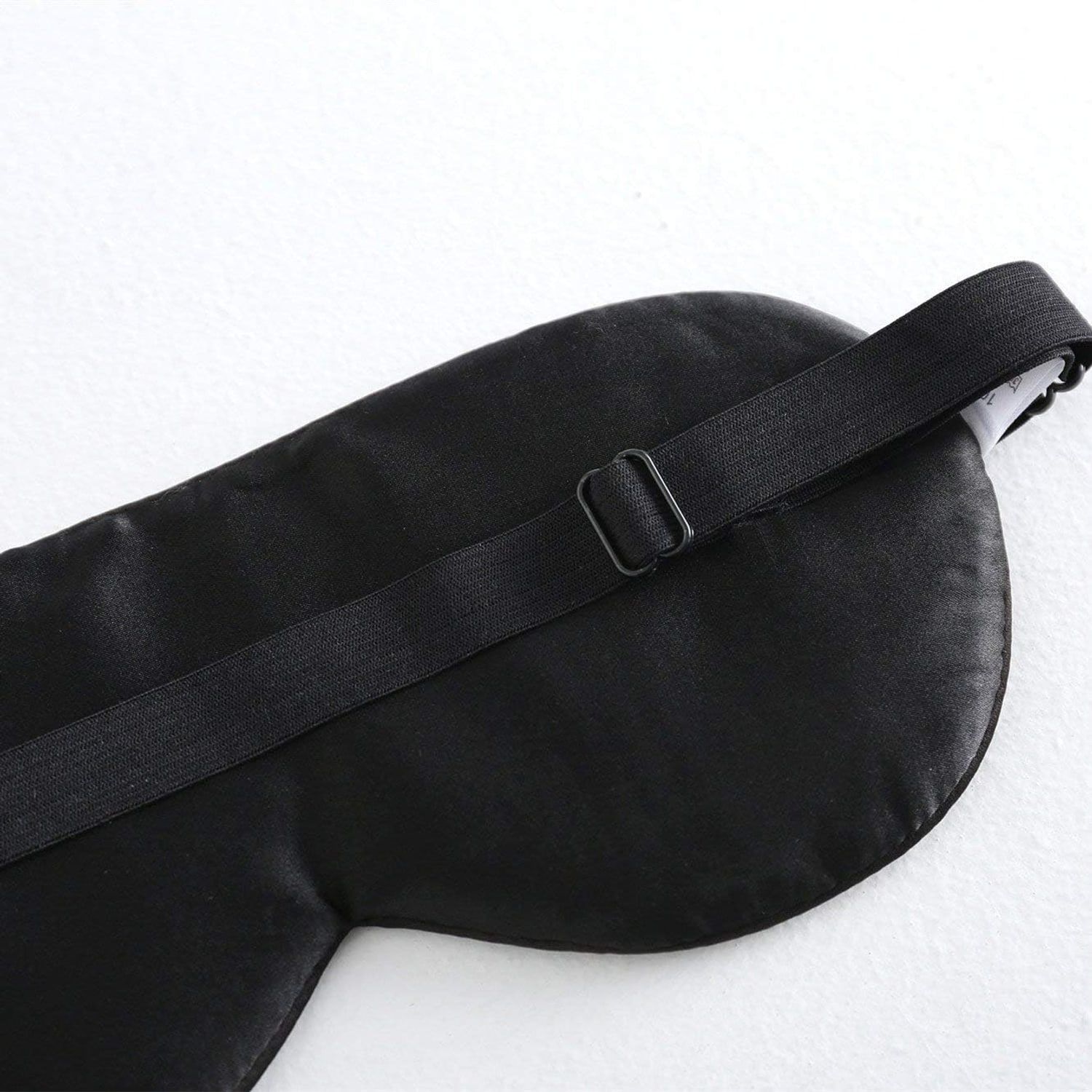
Too tight, and you get pressure around the eye sockets and a line across your forehead in the morning. Too loose, and it slides off at two in the morning and you wake up with light in your face. The sweet spot is firm enough to stay put when you roll over, loose enough that you forget it is there.
Side sleepers have an extra consideration. If the strap adjuster sits directly behind your ear and you lie on that side, you will feel it. Rotate the strap so the fastening sits higher on the back of your skull, and the problem usually disappears.
Set it once at the start, test it for a night or two, then leave it alone.
Who it suits
Light sleepers who wake at the smallest change in the room. A mask gives you a consistent dark field no matter what the bedroom is doing.
Shift workers sleeping in daylight. This is the clearest use case. No curtain arrangement beats putting the dark directly on your face.
Frequent travellers. On a plane, the cabin lights come up at odd hours and the person two rows forward has their window shade open. A lightweight sleep mask in your pocket solves it. A packable silk blindfold is one of the few travel items that justifies its space on every trip.
Anyone sharing a room with someone on a different schedule. If your partner reads late or gets up at five, a blindfold means their lamp is not your problem.
People who nap. Twenty minutes in a bright living room is far easier with your eyes covered.
Who it suits less well: anyone who needs to see a clock during the night without lifting the mask, and anyone who genuinely cannot stand having anything touching their face. Those are real preferences and no mask fixes them.
How to choose between masks
A few things worth checking when you compare options.
Fabric content. Look for a stated silk percentage. This one is listed as 100% mulberry silk. Masks described as "silky" or "silk touch" are usually polyester, which feels smooth but does not breathe the same way.
Closure. An adjustable strap is more useful than a fixed elastic loop, because head sizes vary and elastic stretches out over time. Adjustable also means one mask can serve different people.
Profile. Flat masks pack small and suit side sleepers. Contoured masks block more light but take up space. Decide which you care about more.
Colour. Black is practical. It shows nothing, it suits anyone, and it does not announce itself on a plane. A black sleep mask for travel is the default for a reason.
Care. If a mask says hand wash only, believe it. Factor in whether you will actually do that. Buying two and rotating them makes the washing much easier to keep up with.
Looking after it
Silk rewards gentle handling and punishes the opposite quickly.
Hand wash only, cool water, a mild detergent made for delicate fibres. Swirl it, do not scrub. Rinse until the water runs clear. Then press the water out between a folded towel rather than wringing, because twisting breaks fibres and leaves permanent creases.
Dry it flat, away from radiators, heaters and direct sun. It usually takes a few hours. Never tumble dry.
If it needs smoothing afterwards, press on a low setting with a cloth laid over the silk, and keep the iron away from the strap adjuster. No bleach, no stain removers, no hot water.
Wash every week or two with regular use, sooner if you use creams or oils at bedtime. The habit of washing it gently and often is what keeps a silk mask in good shape for years rather than months.
Small details that make it stick
Keep it in the same place every night, usually on the bedside table or under the pillow edge. A mask you have to hunt for is a mask you stop using.
If you travel, buy a second one and leave it permanently in your carry-on. The cost is low and you never arrive somewhere without it.
Give it a week before you judge it. The first couple of nights with anything on your face feel odd. By night four, most people stop noticing, and by the end of the week the room without it feels too bright.
The short version
This is a plain black blindfold in 100% mulberry silk with a strap you adjust yourself. It is thin, breathable and packs flat, which makes it as useful on a plane as it is at home. Silk is smoother against the skin than cotton and cooler than foam, and the adjustable strap means it fits a range of head sizes including older children.
Care is hand wash only and that is not negotiable if you want it to last. Cool water, gentle detergent, dry flat.
If light is what wakes you, or what stops you falling asleep in the first place, this is one of the cheapest fixes available. Keep one by the bed. Keep a spare in your bag.