
The complete guide
How to Choose a Silk Sleep Mask If You Sleep on Your Side
The problem with most sleep masks
Almost everyone who has tried a sleep mask has a story about the one that did not work. It rode up the forehead by two in the morning. It pressed so hard on the eyes that there were red marks at breakfast. It was warm, or itchy, or so bulky that lying on one side felt like resting your head on a folded towel.
Here is what is actually going on. Most eye masks are designed as if people sleep flat on their backs, perfectly still, for eight hours. Real sleep is nothing like that. You roll. You press one cheek into the pillow. You shift the pillow around in the night. Anything thick or padded gets caught between your face and the mattress, and once it moves, light gets in and you are awake again.
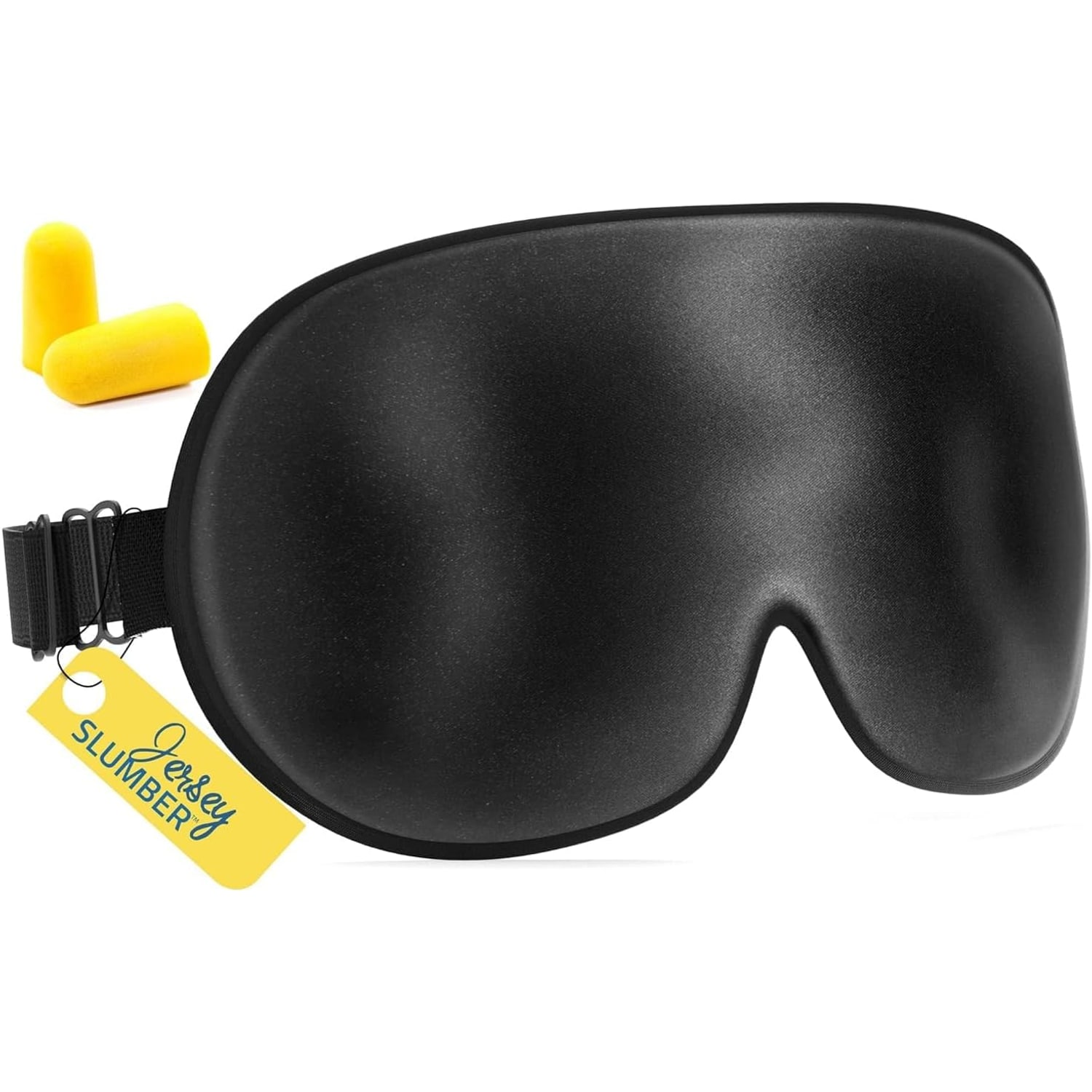
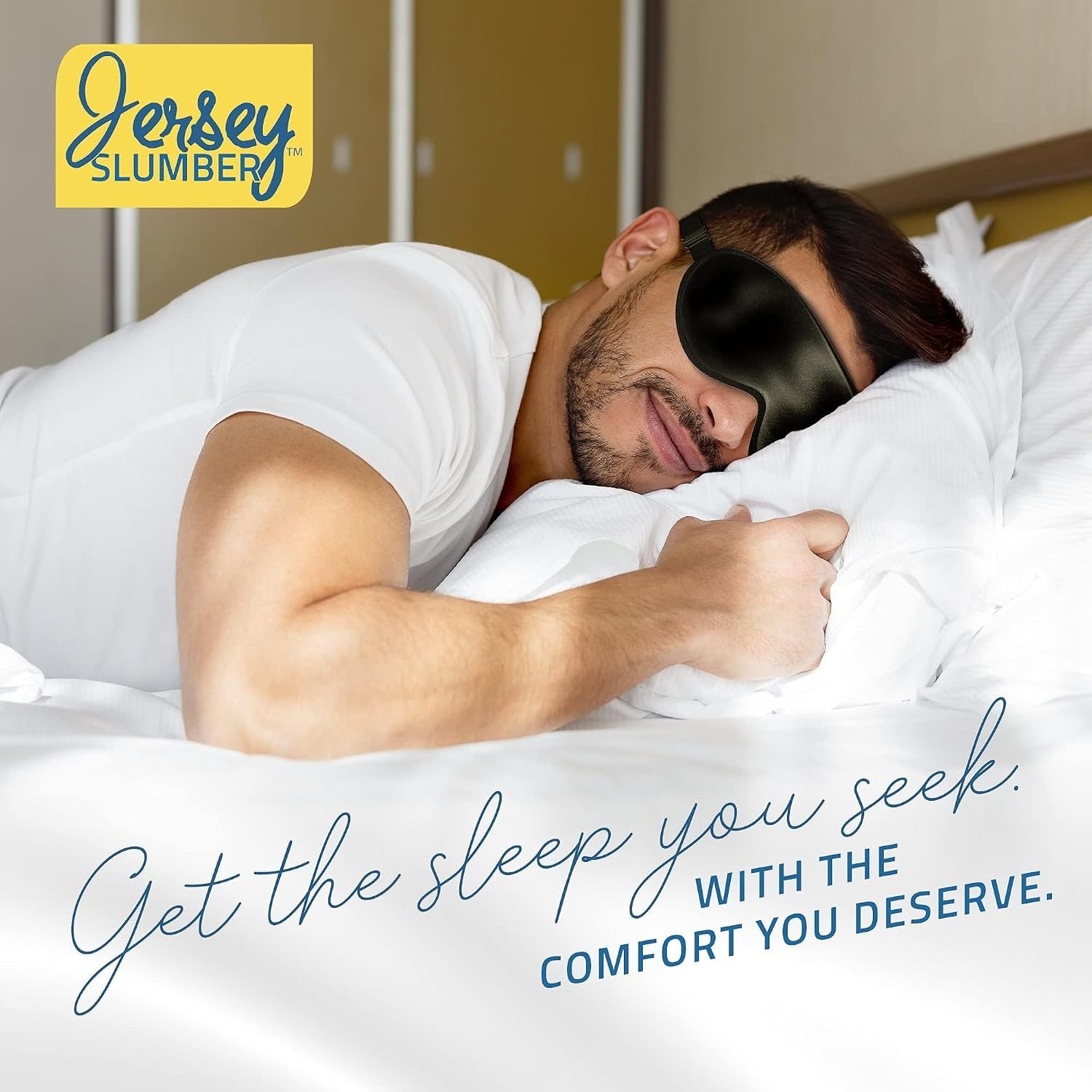
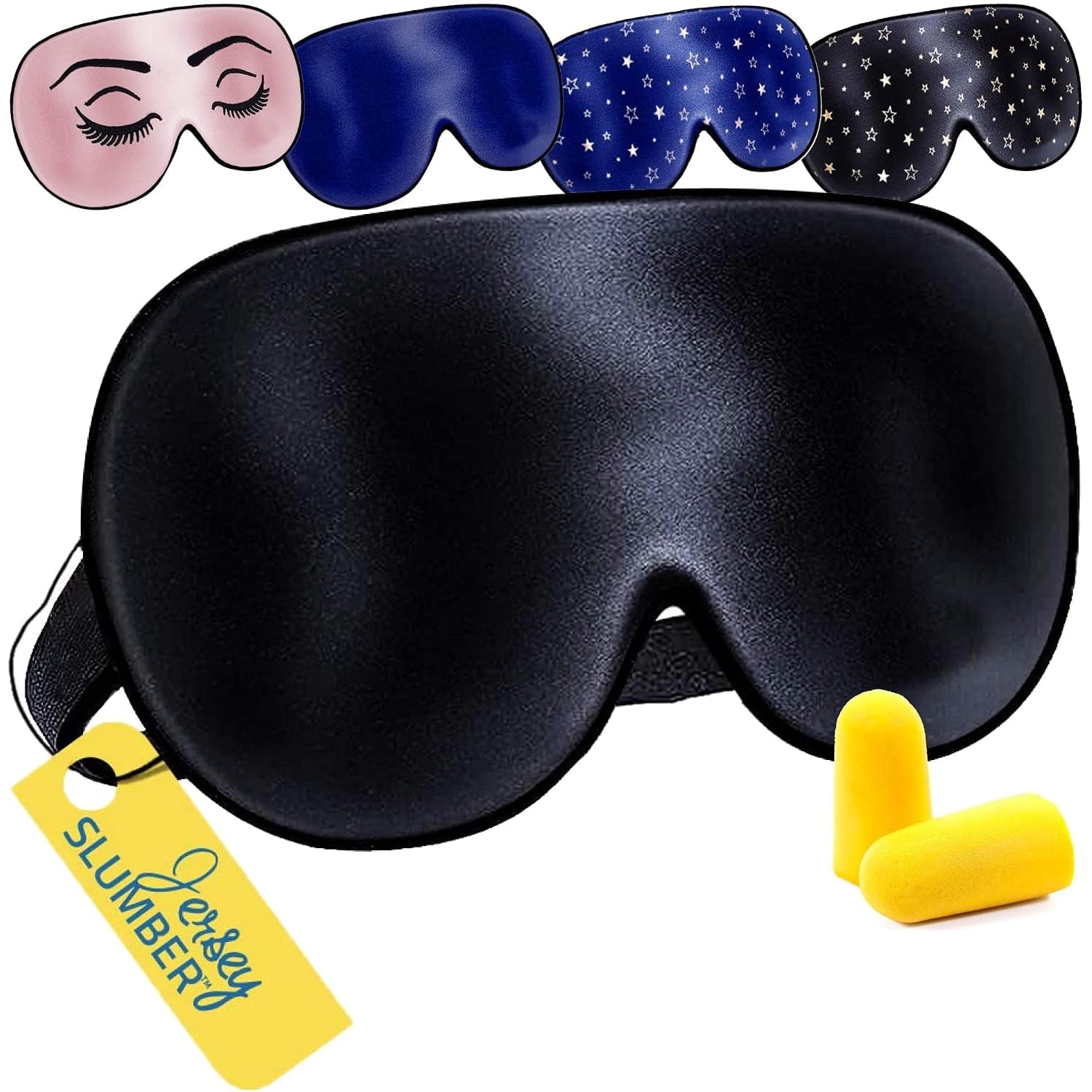
A black silk sleep mask for side sleepers solves this differently. Instead of adding padding to block light, it keeps the panel thin and close to the face, so there is almost nothing to be squashed. At roughly 8 x 4 inches and about 0.2 inches deep, it lies flat. When your face turns into the pillow, the mask goes with it rather than being shoved aside.
How a slim silk mask works
Three things decide whether a mask stays comfortable overnight: the shape, the strap and the fabric.
Shape comes first. A low-profile panel sits close to the skin and spreads across the eye area without a rigid frame. There is no moulded shell to catch on a pillow edge. That is why the best sleep mask for side sleepers is usually the thin one, not the plush one.
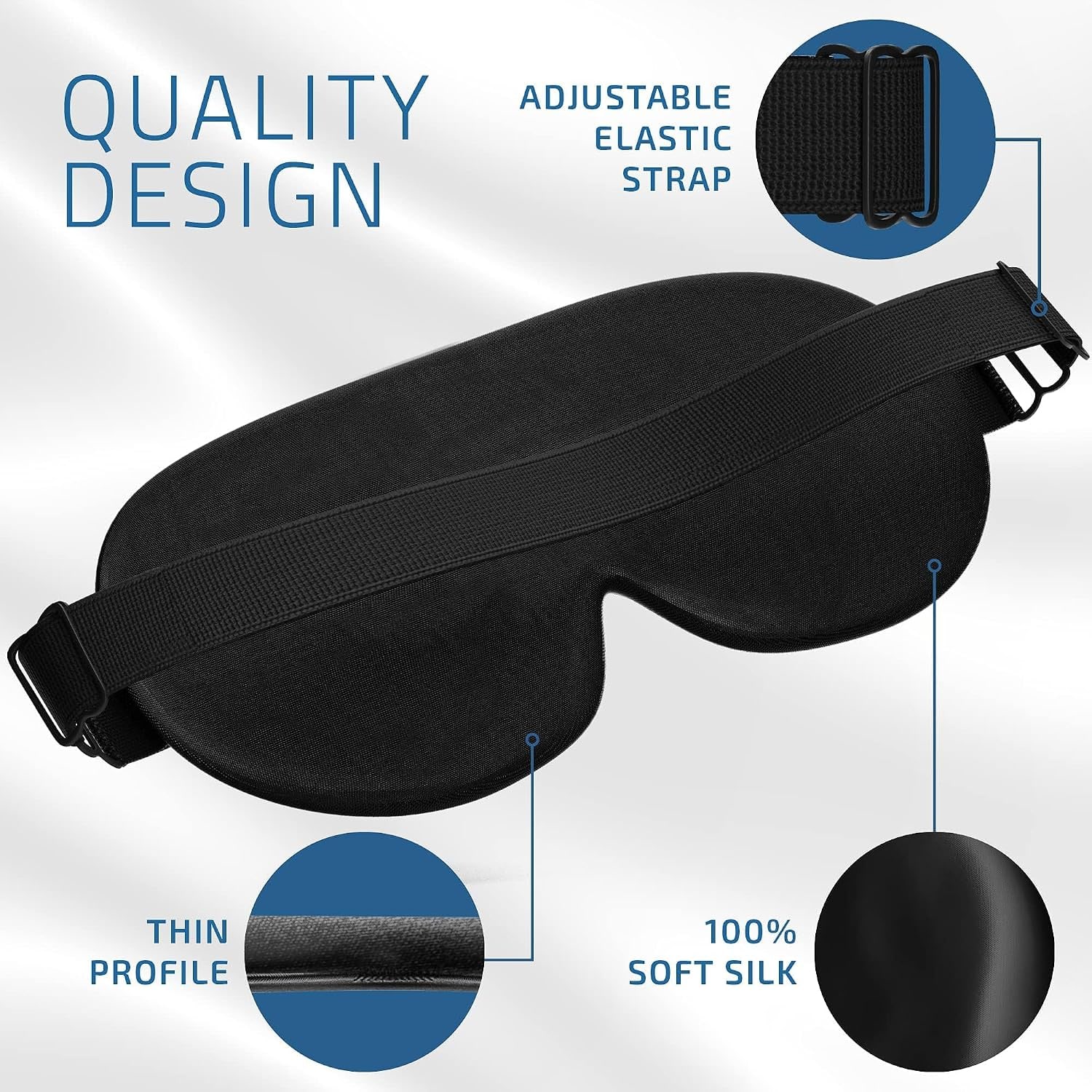
The strap does the holding. This mask uses an adjustable elastic, which lets you find the point where the panel stays flat without pressing. Too tight and you wake with a line across your temples. Too loose and you wake with the mask around your neck. Adjustable means you get to find the middle instead of hoping a fixed band happens to suit you.
Fabric decides whether you keep wearing it. Silk is smooth and cool against the skin, and it moves over the face with less friction than a woven cotton. That matters when you are turning over several times a night. A rougher fabric drags, and dragging is what wakes light sleepers.
Who this suits
Side sleepers are the obvious group, and the slim build is aimed squarely at them. But the same design works for plenty of other people.
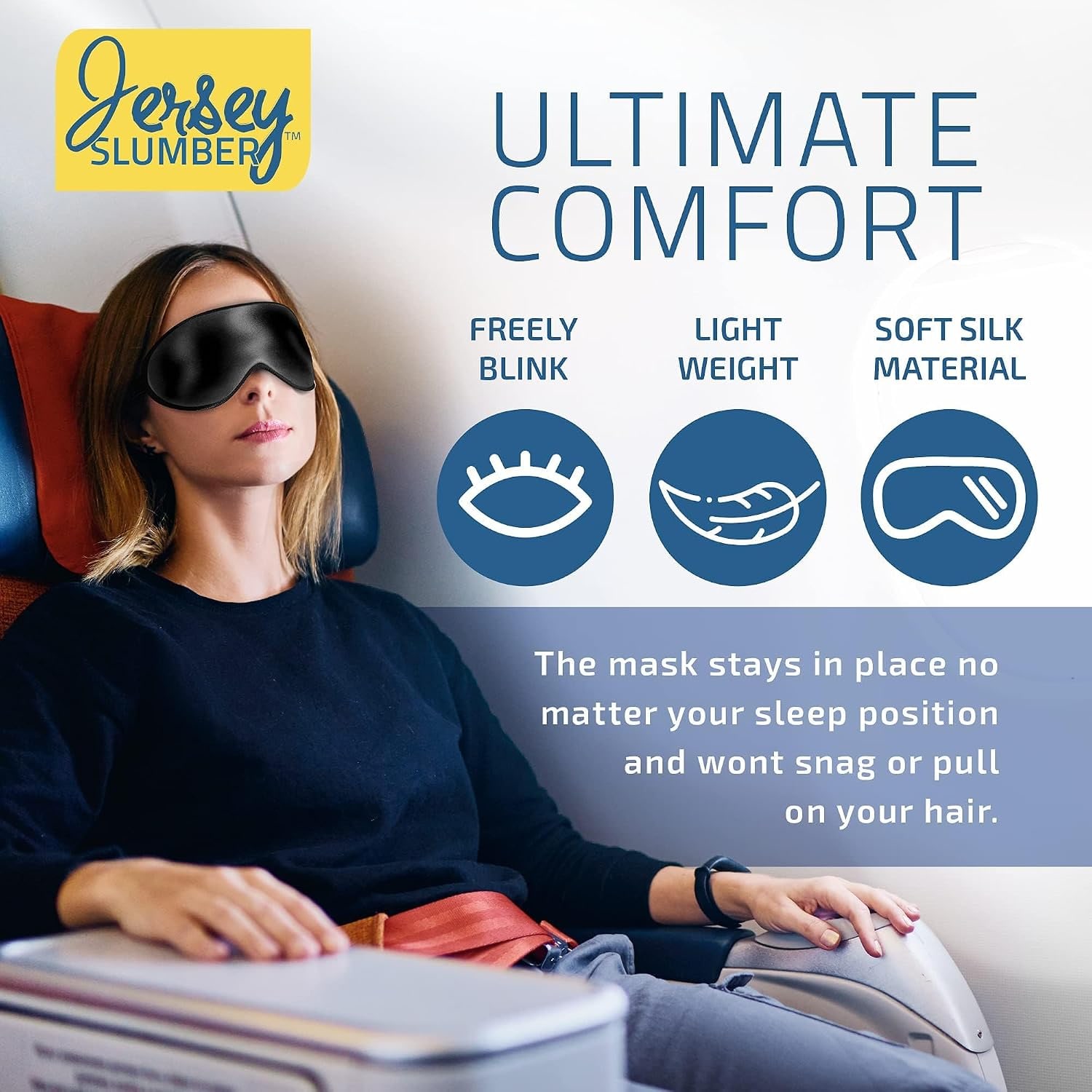
Travellers get a lot out of it. The mask weighs about 0.16 ounces and folds flat, so it adds nothing to a carry-on. On a long flight, the cabin lights come up for meals at times that have nothing to do with your body clock, and a good travel eye mask is the difference between dozing and actually sleeping.
Shift workers are another. Sleeping during daylight is hard, and curtains rarely do the whole job. A black mask handles the gap between the blind and the window frame, the glow from a hallway and the light from a phone screen on a bedside table. If you work nights, keeping the best sleep mask for night shift in your bag means you can rest anywhere, including a break room chair.
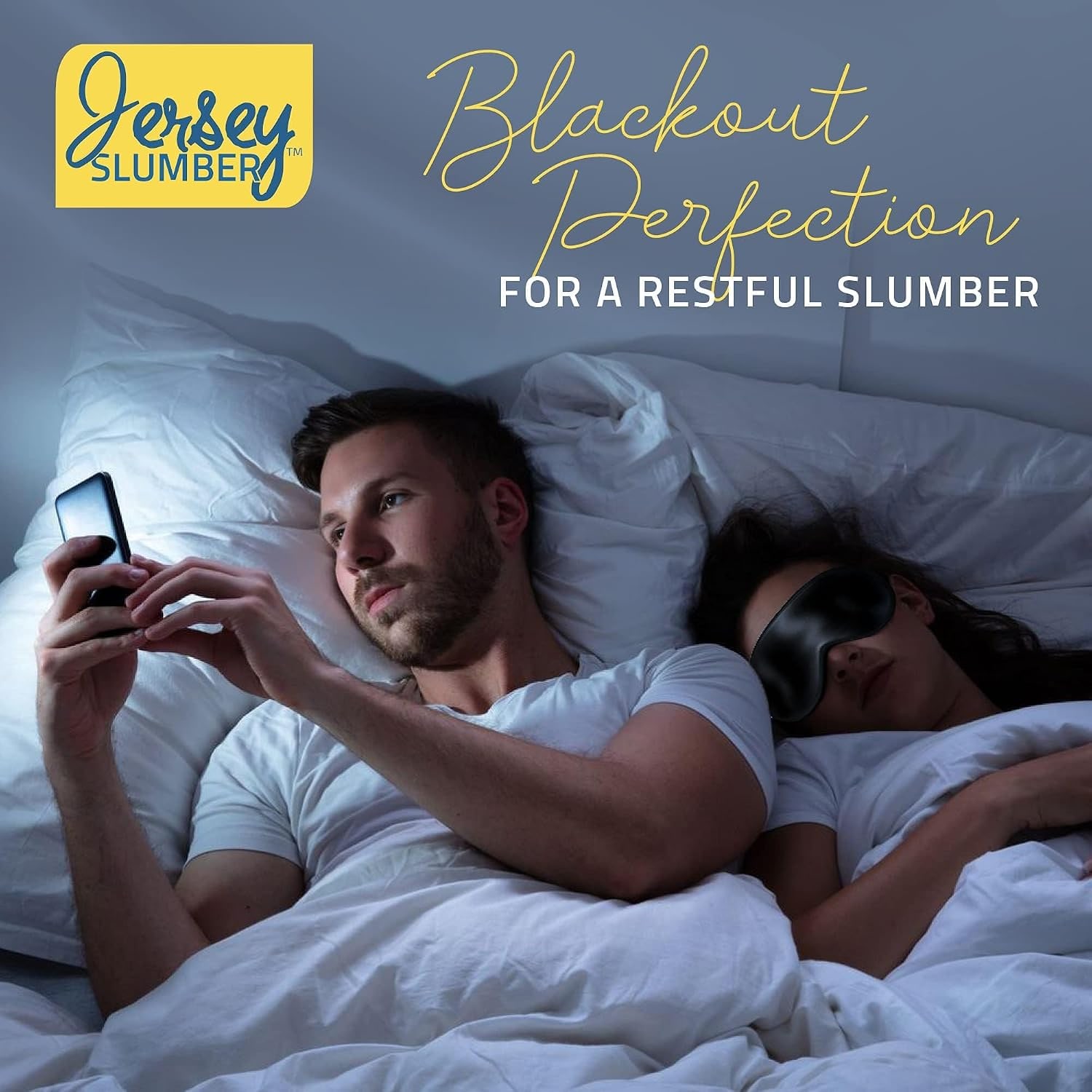
New parents, students in shared housing, hospital patients and anyone with a partner who reads late all fall into the same category. So does anyone who wears lash extensions and wants a mask that rests lightly rather than pressing in.
Choosing the right mask
A few things are worth thinking through before you buy.
Profile. If you sleep on your side, go slim. Cupped and contoured masks give your eyes room to open underneath, which some people love, but they are bulkier and they fight with a pillow. A flat mask is the easier companion for side sleeping and for packing.
Closure. Adjustable beats fixed. Heads vary more than mask makers allow for, and an adjustable elastic takes the guesswork out. It also lets you change the tension as the elastic softens with age.
Colour. Black is the pragmatic pick. It hides the small marks that any face-worn item picks up, it looks neutral in any room, and nobody minds seeing it on a nightstand in a shared space. A good black sleep mask is also the one you are least likely to lose track of in a dark bag.
Fabric. Silk is popular for a reason. It is smooth, it feels cool when you first put it on, and it does not feel plasticky in a warm room. If you have tried a synthetic mask and found it hot, the fabric was probably the problem.
How many. One mask at home and one in the travel bag is the setup most regular users land on. It is a small item, it costs little, and the spare means you never have to remember to pack it.
Getting the fit right on night one
Put the mask on while sitting up, with the panel centred over your eyes and the strap sitting around the widest part of the back of your head, a little above the base of your skull. If the strap slips down toward your neck, raise it. If it creeps up toward the crown, lower it.
Now set the tension. You want the panel resting on your face, not pressing. A simple test is to open your eyes behind the mask. If your lashes brush the fabric hard or you feel pressure on the eyelids, loosen it. If you can see a bright wedge of light beside your nose, snug it up a touch.
Then lie down in your usual sleeping position and check again. Fit changes when your head is on a pillow, and that is the position that matters. Side sleepers in particular should test on the side they favour.
Give it a few nights. Wearing something on your face is a habit, and the first night or two can feel odd even with the best lightweight sleep mask. Most people stop noticing it by the third night.
Caring for it
Silk likes gentle handling, and so does elastic. Hand wash in cool water with a mild detergent. Swish it, do not scrub. Press the water out between your hands or in a towel rather than wringing or twisting, which stresses the seams and the strap.
Reshape the panel while it is damp and dry it flat, away from radiators, direct sun and the dryer. Heat is what ages both silk and elastic fastest. Skip bleach and fabric softener entirely.
Wash it every week or two with regular use. If you wear moisturizer, sunscreen or makeup to bed, wash more often. Store it flat in a pouch or a drawer rather than leaving it stretched over a bedpost, which tires the elastic faster than wearing it does.
With that routine, a mask like this lasts a long time. When the strap eventually goes slack and will not hold its setting, that is the signal to replace it.
A few honest limits
No mask is a perfect light seal. Faces vary, and a sliver of light can find the gap beside the nose bridge on some people. Adjusting the strap height and tension fixes it most of the time.
A mask is also only one part of the picture. Dark curtains, a cooler room and keeping screens out of the last half hour before bed all do work that a mask cannot do on its own. Think of it as the piece that handles what the curtains miss, and as the piece you can take with you.
The short version
If you sleep on your side and other eye masks have failed you, the problem was probably bulk. A thin black silk panel around 8 x 4 inches, weighing about 0.16 ounces, with an adjustable elastic strap, stays flat against your face and keeps doing its job when you roll over. It is comfortable enough for home, small enough for a carry-on, and cheap enough to own two.
Set the strap once so it holds without pressing, hand wash it in cool water, dry it flat, and it will see you through a lot of nights.