

The complete guide
How to Choose a Silk Bonnet (And What 25 Momme Actually Means)
The problem nobody mentions until it is too late
You go to bed with your hair looking fine. You wake up and it looks like it has been through a wind tunnel. Curls have flattened on one side, the ends feel rough, and whatever you did the night before has to be redone.
The culprit is not sleep. It is friction. Cotton weaves are made of short fibres twisted together, and under a microscope that surface looks like fine sandpaper. Every time you turn your head, your hair drags across it. Multiply that by seven or eight hours and a few hundred nights a year and you can see why hair that gets handled gently during the day still ends up roughed up by morning.
A silk bonnet solves this in the simplest way available. It puts a smooth surface between your hair and everything else, and it keeps your hair gathered in one place instead of spread across a pillow.
What makes this one different
Two things, really. The silk and the construction.
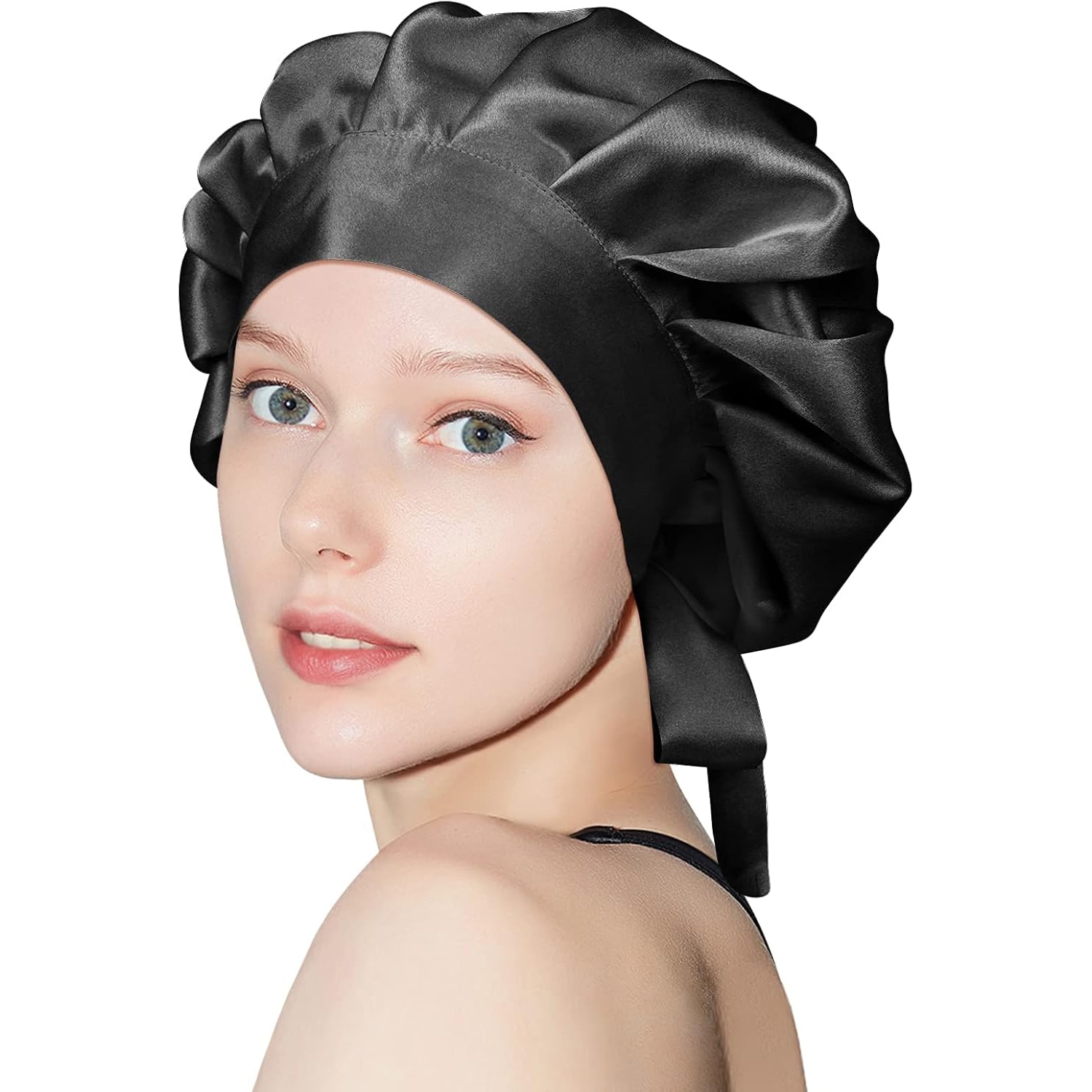
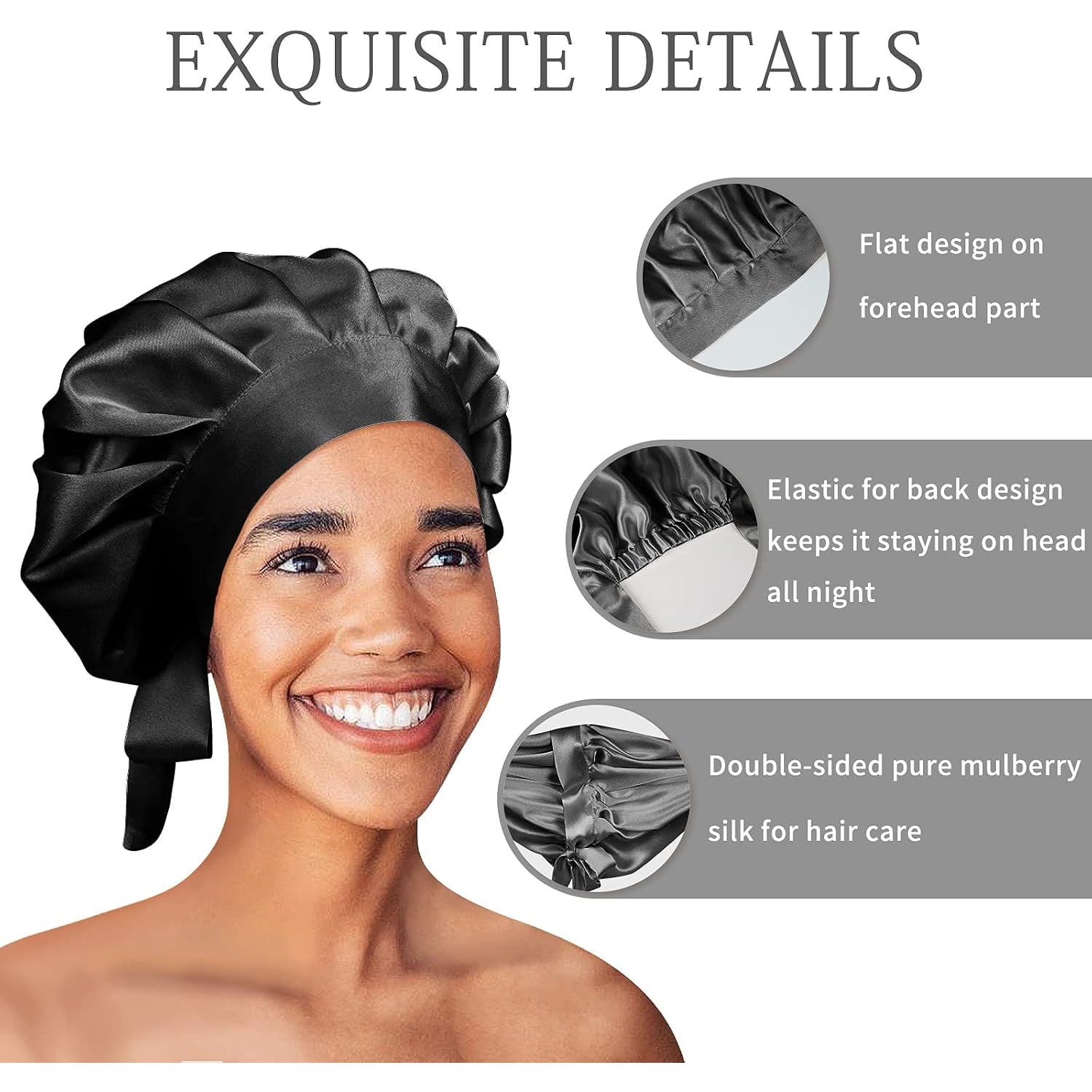
This is a double layer bonnet, with 100% mulberry silk on the inside and the outside. That sounds obvious, but it is not how every bonnet is built. Plenty of them use a silk or satin outer with a cheaper lining, which means the layer actually touching your hair is not the layer described in the headline. Here there is no gap between what you see and what you feel.
The silk is 25 momme, grade 6A mulberry silk. Momme is the weight measure used for silk fabric. Think of it as roughly how much a set area of the cloth weighs, so a higher number means a denser fabric. Sleepwear silk often lands around 16 to 19 momme. At 25, this sits at the heavier end. You notice it the moment you pick the bonnet up. It has body. It falls rather than floating, it keeps its shape across the crown instead of flattening against your head, and it does not have that papery crispness that thinner silks can have.
Grade 6A describes the raw silk filament before it was woven, with 6A sitting at the top of the grading scale used in the industry. Together with the momme weight, it tells you this is not a budget-weave bonnet with a silk label on it.
Who it suits
The maker suggests this bonnet for short to medium curly hair, and that is a sensible place to start. Curly and coily textures catch on cotton more than straight hair does, because the strands are not lying parallel to each other. Every twist and bend is another place to snag. If that describes your hair, a low friction cover at night makes a visible difference by morning, and it is why so many people hunting for the best silk bonnet for curly hair end up looking at momme weight first.
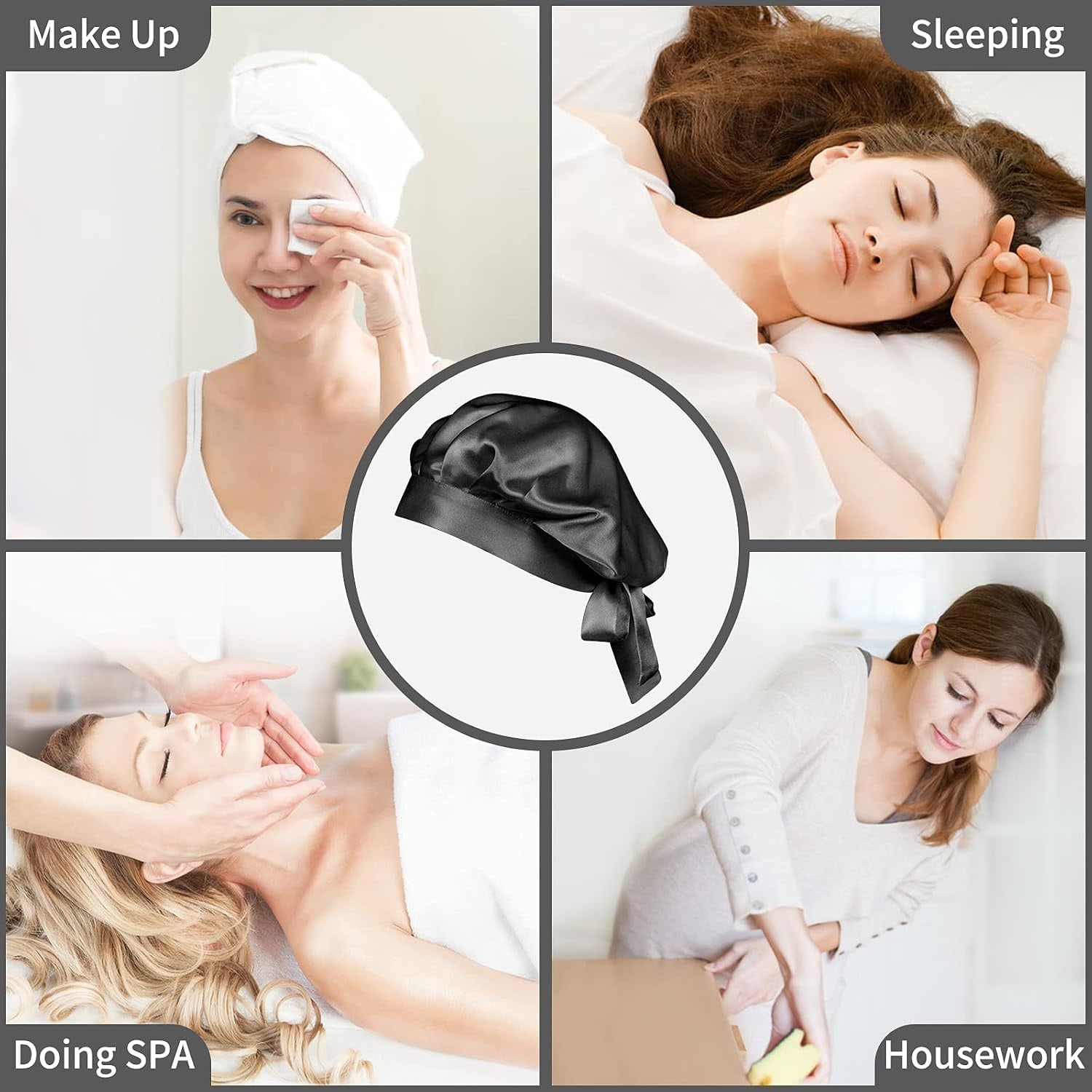
That said, nothing about the bonnet is restricted to curls. People with straight hair use one to keep a blow dry looking neat for an extra day. People with fine hair like that it stops the ends roughing up. People with short hair wear it simply because it is comfortable.
Where you need to think twice is length and volume. One size with an elastic edge covers a wide range of head sizes, but it cannot create space that is not there. If you have a lot of hair to tuck away, measure how big a bundle you are dealing with when it is coiled at the crown. Long braids, big twist-outs and waist-length hair usually want a deeper bonnet. Short to medium hair tucks in without a fight.
How the fit works
The opening has an elastic edge finished with a small bow. That band is what holds the bonnet on while you move, and it is adjustable, so the fit is not fixed at one circumference.
The trick with any elastic bonnet is placement. Sit the band just above your hairline, not down across your forehead. Pulled too low, elastic presses into the skin and you wake up with a line. Sat correctly, you barely notice it. If the fit still feels tight, loosen the adjustment rather than stretching the fabric, because stretching is what kills elastic over time.
Tuck your hair in properly before you lie down. A bonnet that comes off during the night has almost always come off because hair was pushing it out of position from the inside, not because the elastic failed.
Living with silk
Silk is a protein fibre, closer in structure to hair than cotton is. It is strong for its weight, but it has preferences. It dislikes heat, it dislikes harsh detergents, and it dislikes being wrung out.
Care here is hand wash only. Cold water, a neutral detergent made for delicates, no bleach. Swish it around for a minute or two, rinse it clean, then press the water out between the folds of a towel. Do not twist it. Hang it to dry in the shade, away from direct sun, radiators and heat vents. It will be dry in a few hours.
Skip the dryer entirely. Heat is the fastest way to ruin good silk, and a dryer combines heat with constant tumbling. A couple of minutes at the basin once a week is all this needs.
How often to wash depends on what you put in your hair. If you use oils, creams or leave-in treatments, the inside of the bonnet will pick them up and dull the surface faster. Washing weekly keeps it smooth. If you use very little product, you can stretch it longer.
Why black is the practical choice
Pale silk shows everything. Oils, product residue, the faint mark of a hair treatment. Black does not. It also matches whatever you sleep in, it looks tidy if someone knocks on the door, and there is no print to fade unevenly over months of washing.
Solid dyes do sometimes release a small amount of excess colour on the first wash. Wash it on its own in cold water the first time and it will settle after that.
What to compare when you are shopping
If you are looking at more than one bonnet, these are the things worth checking.
First, whether the silk is on both faces or just the outside. A silk bonnet with a polyester lining is not doing the job you bought it for.
Second, momme weight. If a listing does not state one, that usually tells you something. A 25 momme silk bonnet costs more to make than a 16 momme one, and makers who use the heavier fabric say so.
Third, the closure. Elastic bands, drawstrings and tie backs all work, but they suit different sleepers. An adjustable silk bonnet with elastic is the lowest effort option because there is nothing to tie before bed.
Fourth, size and depth, measured against your actual hair volume rather than against a general description.
The short version
This is a black bonnet made from 25 momme, grade 6A mulberry silk, with silk on both the inside and the outside. It closes with an adjustable elastic edge and a bow, comes in one size made to fit most heads, and the maker suggests it for short to medium curly hair. Hand wash it cold, hang it in the shade, and keep it away from heat.
If you want a smoother surface for your hair at night and you like the idea of a heavier silk that holds its shape, this is a straightforward way to get there. And if you are not sure whether the fit will work for your hair, ask us before you order rather than after.